
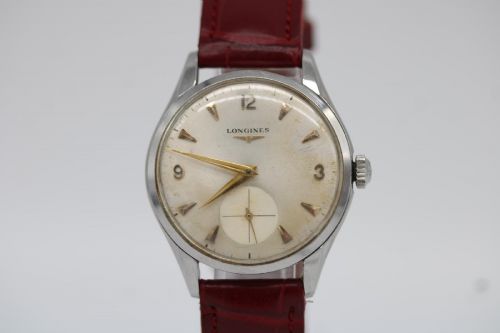
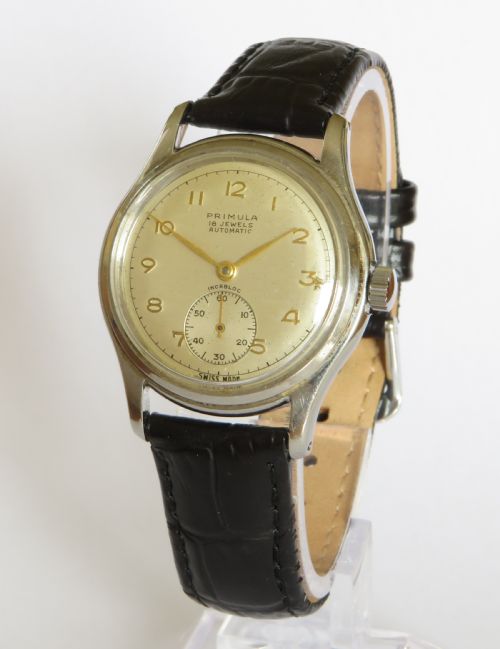
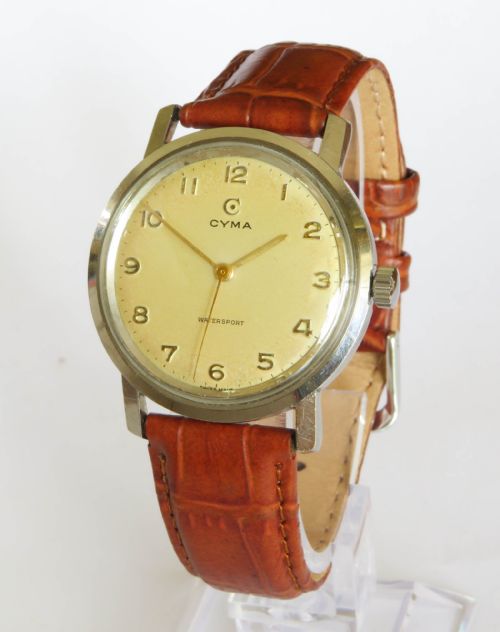
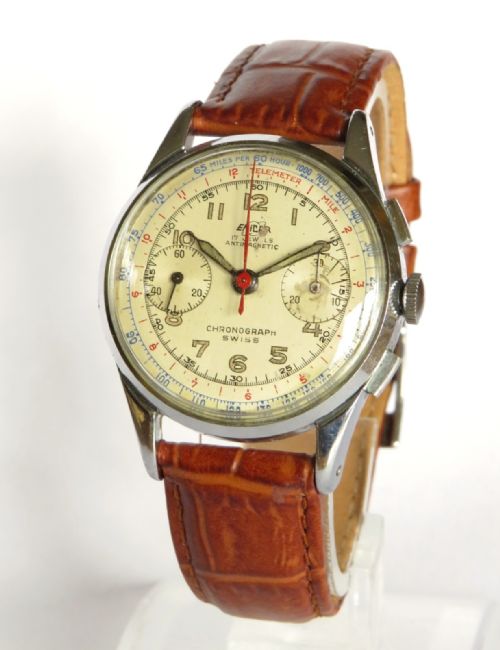
1950s Swiss Wrist Watch
A 1950s swiss wrist watch brings mid-century engineering and clean dials to the wrist, offering dependable mechanical timekeeping.
1950s Swiss Wrist Watch
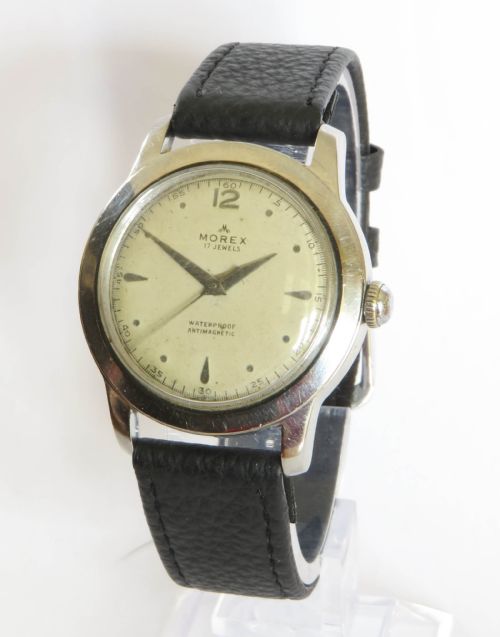
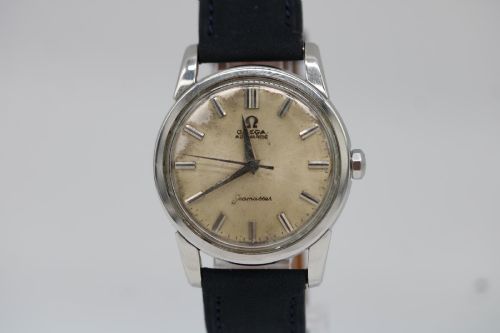
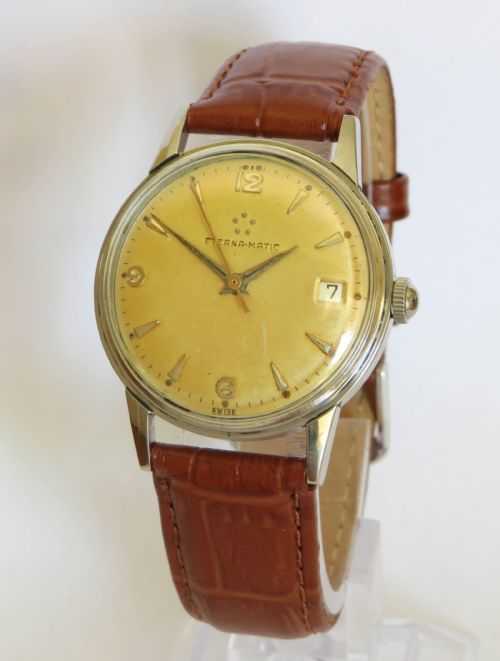
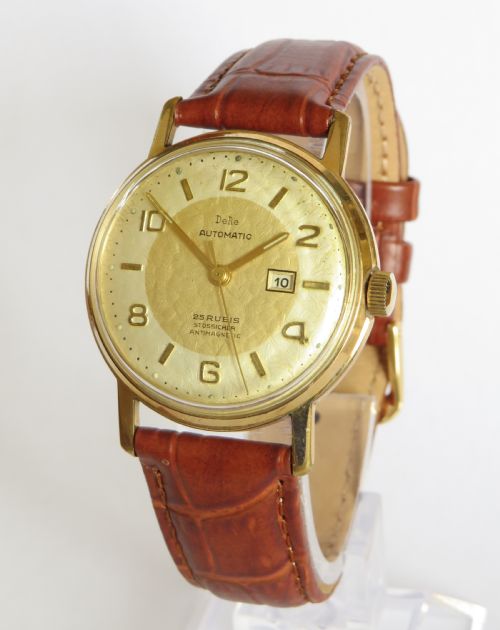
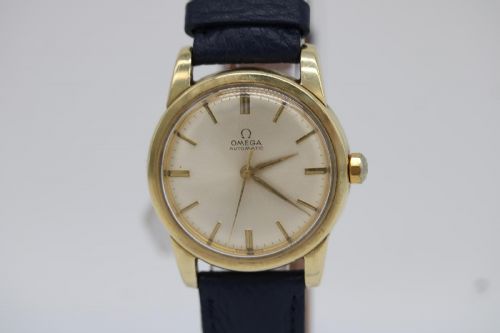
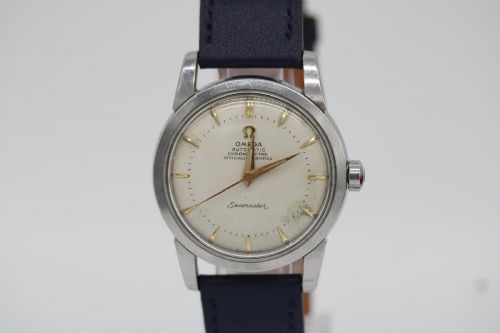
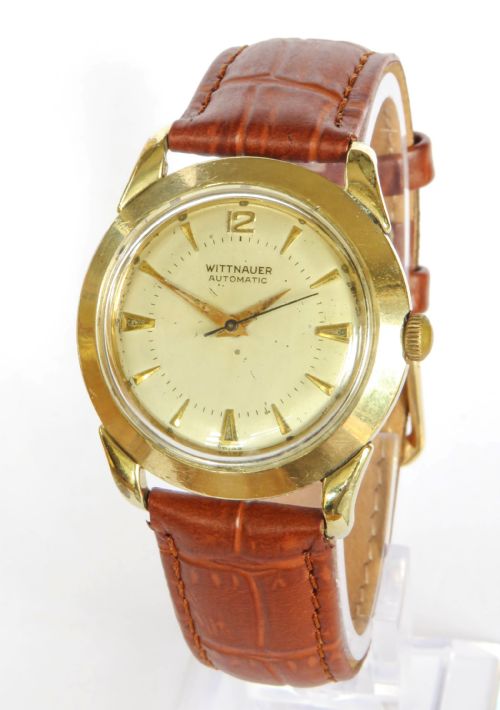
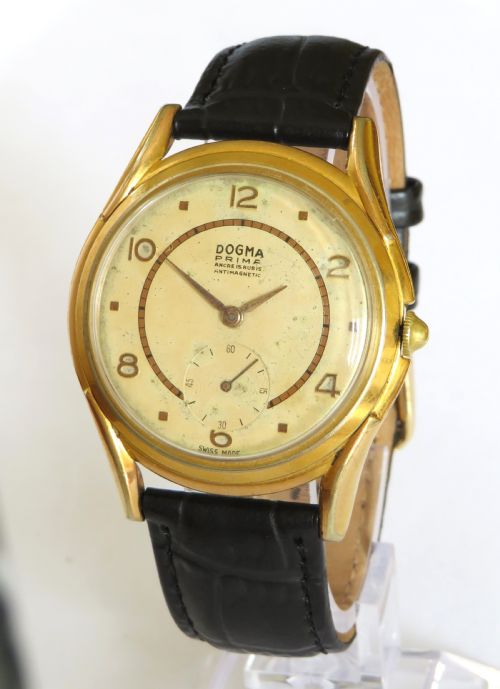
A 1950s swiss wrist watch represents a period of robust mechanical development in horology, encompassing everything from simple manual wind pieces to automatic movements. These accessories generally take the form of gents wristwatches originating from Swiss makers, often styled with mid-century modern aesthetics.
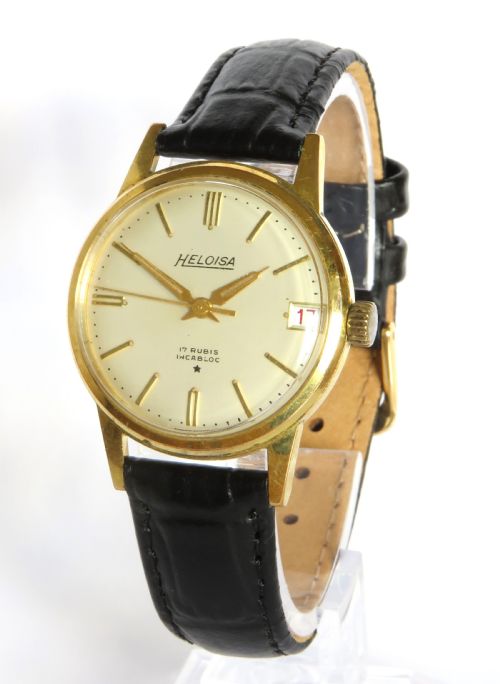
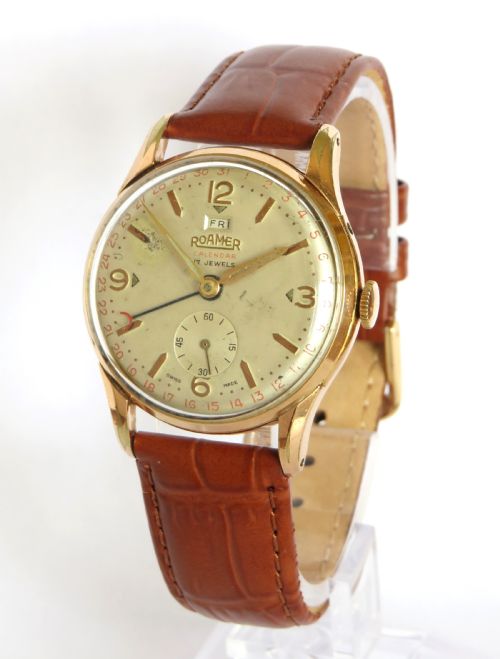
The selections available range from everyday dress pieces housed in steel or gold plate to specialised chronographs and calendar complications. Many examples survive alongside period boxes, reflecting the care taken by their original owners.
How they were made
Cases of a 1950s swiss wrist watch were constructed from metals such as stainless steel, chrome, gold plate, and occasionally solid gold or platinum. Dials were protected by glass or acrylic crystals, providing a clear view of the hands and markers beneath.
Movements relied on intricate mechanical gears and escapements, powered either by manual winding or bumper and rotor automatic winding systems. Straps were typically fashioned from leather to secure the watch comfortably to the wrist.
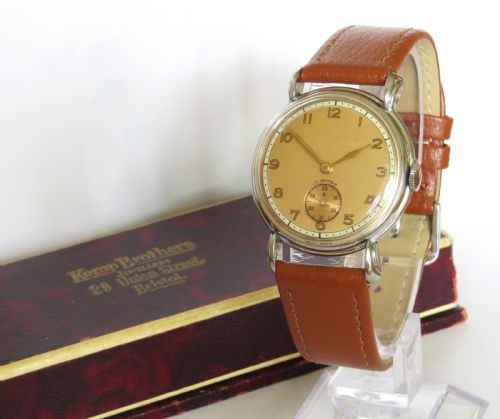
Some watches come preserved inside their original branded cardboard boxes, untouched by time.
What varies in quality
The distinction between standard models and superior examples often rests on the complexity and pedigree of the movement inside. In-house calibres from established houses command greater attention than standard ébauche movements.
Materials and casing also dictate the hierarchy, with solid gold cases and intricate complications such as triple calendars or chronographs sitting above basic chrome-plated steel equivalents.
Omega·Longines·Tudor·Rolex·Certina·Cyma·Rotary·Tissot·Eterna·Roamer
The 1950s Swiss Wrist Watch Glossary
- Automatic
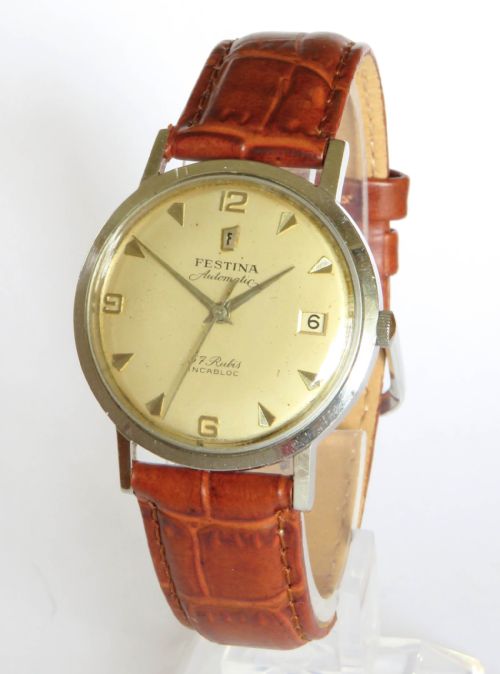
- A mechanical watch movement wound by the natural motion of the wearer's wrist via a weighted rotor. This self-winding mechanism removes the need for daily manual winding.
- Chronograph
- A watch equipped with a stopwatch function alongside the standard timekeeping display. These complications often feature auxiliary sub-dials for measuring elapsed minutes and hours.
- Calibre
- The specific designation given by a manufacturer to a particular watch movement design. Collectors use this term to identify the mechanical heart within the case.
- Acrylic
- A lightweight transparent plastic material utilised for watch crystals during the period. It offered shatter resistance and could be easily polished if scratched.
- Bumper automatic
- An early type of automatic movement where the rotor swings back and forth against spring-loaded buffers rather than spinning in a full circle. The wearer can feel the gentle thud of the weight against the springs.
1950s Swiss Wrist Watch: Frequently Asked Questions
How do I wind a manual watch?
Turn the crown clockwise between your thumb and forefinger until you feel gentle resistance. Stop immediately to avoid damaging the mainspring.
Most mechanical pieces require a daily wind to maintain accurate time throughout the day.
Are these watches waterproof?
Vintage pieces from this era generally lack modern rubber gaskets and waterproof sealing technology. Moisture can easily compromise the delicate steel gears and dials inside.
It is best to keep them entirely away from water, rain, and heavy humidity.
What is a bumper movement?
A bumper movement uses a semi-circular oscillating weight that swings back and forth rather than spinning 360 degrees. You can feel a gentle tap against the springs inside as you move your arm.
This design represents an early stepping stone in automatic watch development.
How do I read a calendar watch?
Calendar displays on these vintage pieces indicate the date through windows on the dial or via an extra pointer hand. Certain models also track the day of the week and the month.
Adjustments should be made carefully using recessed pushers or by advancing the hands past midnight.