


1950s Diamond Necklace
A 1950s diamond necklace delivers mid-century elegance through clustered gemstones and pearls secured by intricate gold clasps.
1950s Diamond Necklace
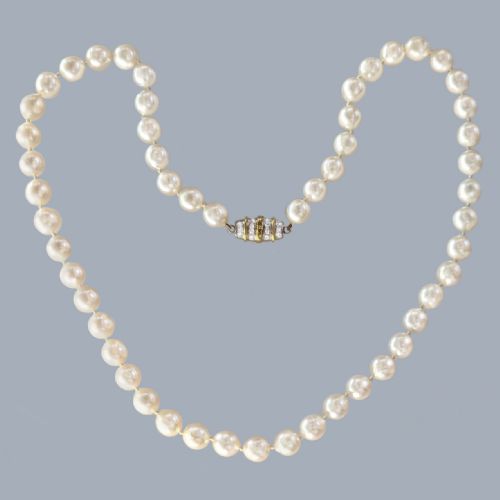
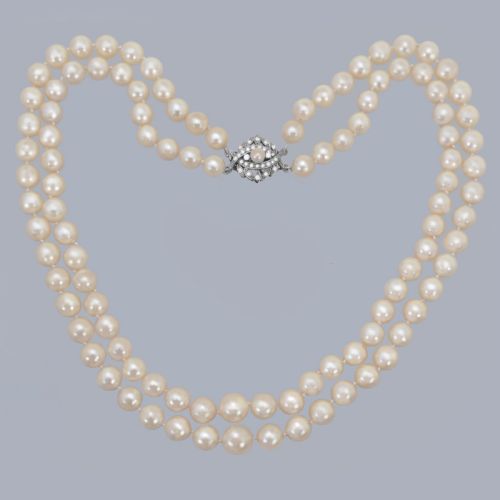
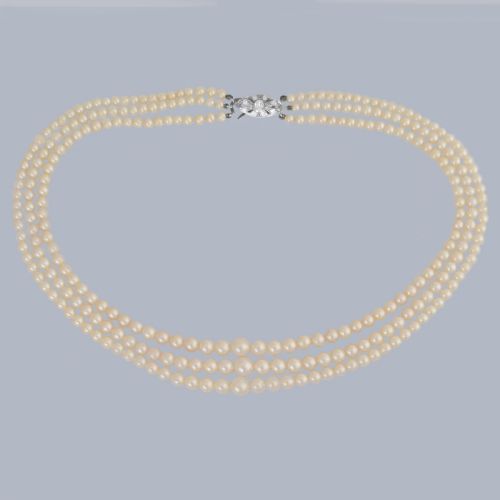
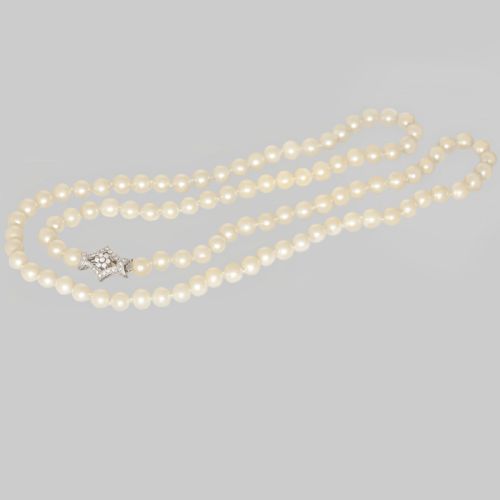
A 1950s diamond necklace typically combines cultured pearls with precious metal and diamond clasps, spanning single, double, triple, and multi-strand configurations. These mid-century pieces prioritise the combination of lustrous pearls with detailed metalwork, often featuring floral or foliate motifs.
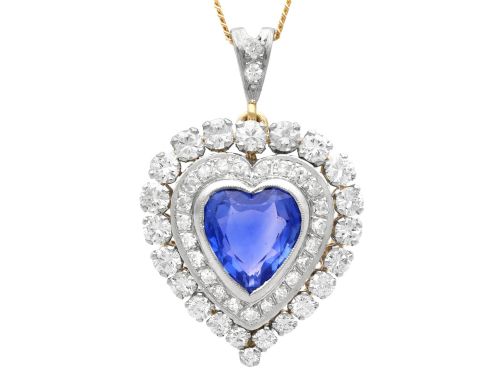
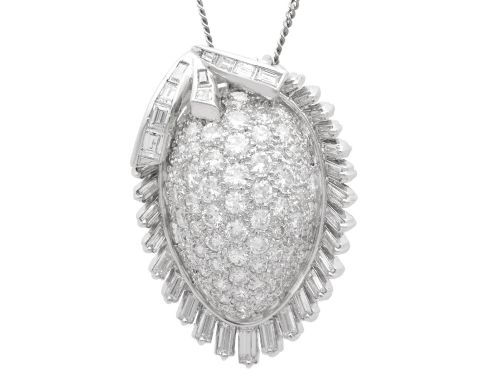
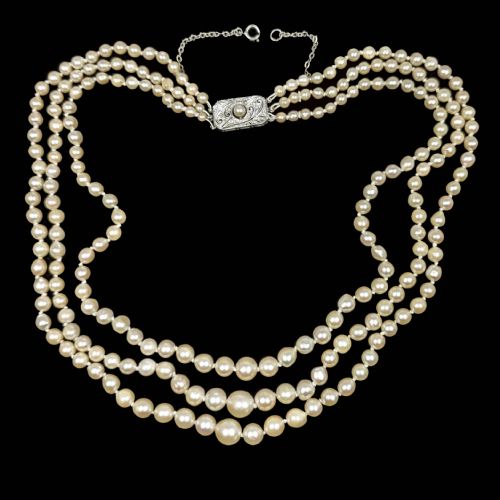
The most common variant encountered on this page is the multi-strand pearl necklace featuring a diamond-set clasp in either yellow or white gold. Alongside these strung pearls, mid-century pendants containing old cut diamonds and seed pearls also appear.
Originating from the 1950s, these necklaces reflect the distinct mid-century modern aesthetic of the era. Makers frequently utilised Birmingham hallmarking, and several pieces are accompanied by specialist reports such as AnchorCert documentation.
How they were made
Jewellers utilised 9ct gold, 18ct gold, and 18ct white gold to construct the decorative clasps and settings that anchor the pearl strands. Diamonds are paired with pearls, and occasionally accented with sapphires, emeralds, or amethysts.
Pearls are strung as single, double, triple, or six-strand arrangements, often requiring professional restrung maintenance to ensure structural integrity. Metalwork techniques involve setting old cut diamonds into floral, foliate, or geometric Art Deco inspired clasps.
Current listings feature pieces exclusively dated to the 1950s, utilising 9ct and 18ct gold paired with cultured pearls and diamonds.
What varies in quality
The sophistication of the clasp design and the choice of precious metal determine the upper tier of these pieces, moving from standard 9ct gold mounts to heavier 18ct white gold settings. The presence of certified stones and supplementary gemstones like sapphires, emeralds, or amethysts elevates the piece.
Strand count and pearl diameter dictate the visual presence of the necklace, with multi-strand examples and larger pearl sizes representing more substantial manufacture. The integration of old cut diamonds within intricate floral or foliate gold work separates standard production from finer examples.
The 1950s Diamond Necklace Glossary
- Cultured pearl
- Pearls created by the introduction of an irritant into an oyster or mollusc to stimulate pearl formation. They form the primary body of these mid-century necklaces.
- Old cut diamond
- A traditional diamond cutting style that precedes modern brilliant cuts, characterised by a small table and high crown. These stones appear frequently in mid-century clasps and pendants.
- AnchorCert
- An independent gemmological testing and certification service. Reports from this laboratory verify pearl and diamond specifications.
- Seed pearl
- Very small natural or cultured pearls used historically in delicate cluster settings. They accompany old cut diamonds in mid-century pendant designs.
- Birmingham hallmarking
- Official stamp marks applied by the Birmingham Assay Office to indicate metal purity and origin. Several pieces carry these specific English assay marks.
1950s Diamond Necklace: Frequently Asked Questions
How do I wear a multi-strand pearl necklace?
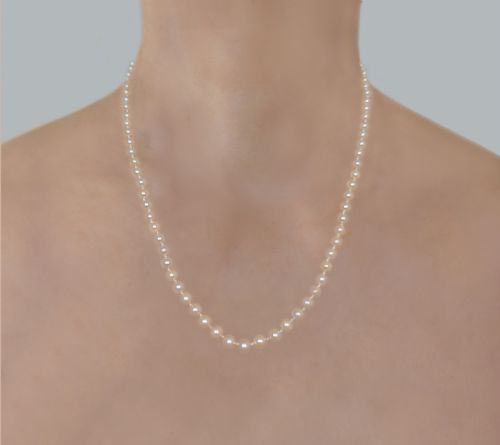
Multi-strand pearl necklaces sit close to the collarbone and pair well with open neckline garments that allow the clasp and strands to remain visible.
Positioning the clasp at the back maintains a traditional look, though mid-century clasps featuring diamonds and coloured stones are often rotated to the side as a feature.
What is an old cut diamond?
An old cut diamond is a vintage gemstone facet style hand-cut during earlier eras before modern symmetrical standards were established.
These diamonds display smaller tables and distinct cushion-like proportions that catch candlelight and ambient room lighting effectively.
Are these necklaces recently restrung?
Many vintage pearl necklaces undergo professional restrung maintenance to replace aged silk threads and ensure the safety of the piece during wear.
Checked strands prevent pearl loss and maintain the correct drape when worn around the neck.
How do I identify a 1950s clasp?
Clues include specific floral or foliate white gold and yellow gold motifs paired with Birmingham hallmarks or period-appropriate stone settings.
Mid-century clasps frequently incorporate structural box mechanisms hidden beneath the diamond and gemstone face.