




1930s Wooden Bed
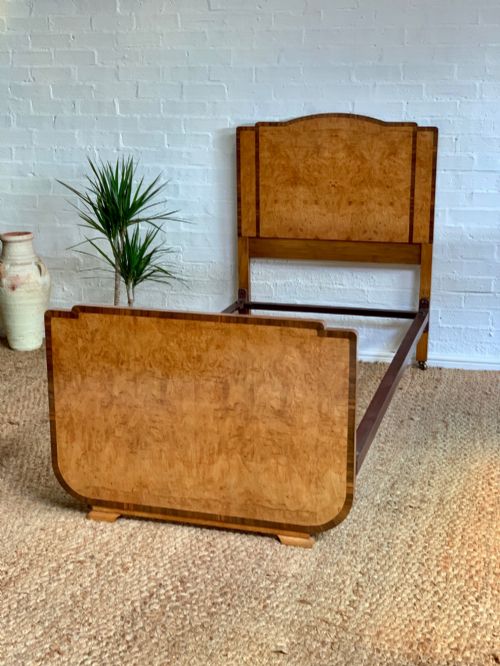
A 1930s wooden bed anchors a bedroom with bold grain and clean architectural lines that define the period.
1930s Wooden Bed
A 1930s wooden bed is typically encountered in single, double, or king-size formats, heavily influenced by the prevailing Art Deco style of the decade. These pieces showcase architectural forms, integrated cabinetry, and geometric shapes that reflect the design priorities of the period.
The materials span from rich dark walnut and burr walnut veneer to lighter tones such as satinwood, birds-eye maple, and fruitwood. Alongside these standard timbers, specific examples appear in sweet chestnut, limed oak, and occasional combinations with metal or iron components.
Most examples originate from the 1930 era, though occasional pieces align with broader stylistic movements like Arts and Crafts or earlier foundational designs. Buyers will find both freestanding frames and elaborate beds fitted with attached bedside tables or integral cabinets.
How they were made
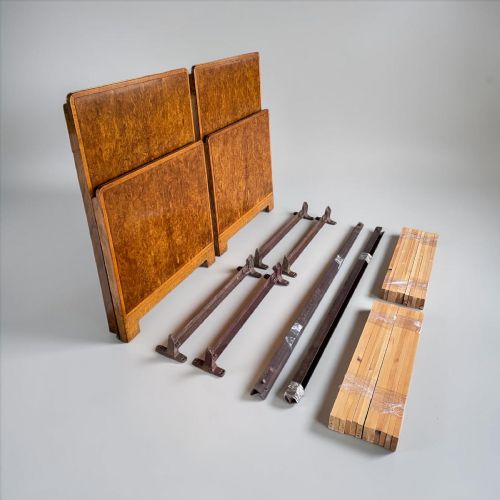
Makers utilised solid timbers alongside precise veneers to create striking surface patterns, particularly with burr walnut, figured walnut, and blonde birds-eye maple. These veneers were carefully laid to accentuate natural grain figures across large headboards and footboards.
Construction techniques combined traditional cabinet-making joints with the curved, sweeping lines demanded by Art Deco aesthetics. Selected examples incorporated functional innovations such as attached bedside tables and integral cabinets directly into the bed frame.
What varies in quality
Quality in these pieces is dictated by the selection and matching of wood veneers, where superior examples display symmetrical, highly figured grain patterns across the entire headboard. The complexity of the woodwork, particularly curved or sculptural forms, distinguishes standard production from more ambitious commissions.
The presence of integrated furniture, such as attached bedside tables or matching nightstands, elevates the sophistication of a piece. Maker attribution also plays a role, with documented workshops demonstrating finer joinery and more resolved proportions than anonymous commercial output.
Stanley Webb Davies·Oliver Morel·Waring and Gillow·Betty Joel
The 1930s Wooden Bed Glossary
- Art Deco
- A design style characterised by sleek geometric shapes, streamlined forms, and stylised ornamentation. It dominated decorative arts throughout the interwar period.
- Burr Walnut
- A specialised timber cut from the abnormal growths on walnut trees, yielding highly decorative and swirling grain patterns. It was favoured for high-end furniture surfaces.
- Veneer
- A thin slice of superior wood glued over a base timber to provide a decorative surface. Master cabinet makers used book-matching techniques to create symmetrical patterns.
- Satinwood
- A durable, yellowish wood prized for its lustrous sheen and smooth texture. It often featured in lighter-toned modernist bedroom suites.
- Bedstead
- A framework of a bed upon which mattresses and bedding are supported. The term frequently applies to antique wooden beds with prominent head and footboards.
1930s Wooden Bed: Frequently Asked Questions
Will a standard mattress fit a 1930s wooden bed?
Many antique beds do not conform to modern standard mattress sizes, particularly older French or bespoke dimensions.
Buyers often need to check exact internal measurements and may require a custom-made mattress for a proper fit.
How do I identify an Art Deco bed?
Art Deco beds are recognised by symmetrical geometric lines, stepped headboards, and the prominent use of figured veneers like walnut or maple.
They frequently feature curved silhouettes or built-in bedside tables rather than traditional carved ornamentation.
Are bedside tables always attached to these beds?
Attached bedside tables and integral cabinets appear frequently on specific modernist and Odeon-style bed frames from this period.
However, many standard single and double beds are freestanding without any fixed auxiliary furniture.