




1930s Walnut Drawers
These 1930s walnut drawers combine striking wood figures with practical storage, offering collectors an elegant anchor for period bedroom schemes.
1930s Walnut Drawers
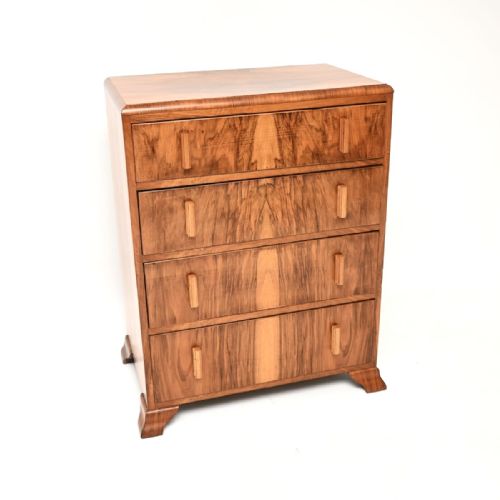
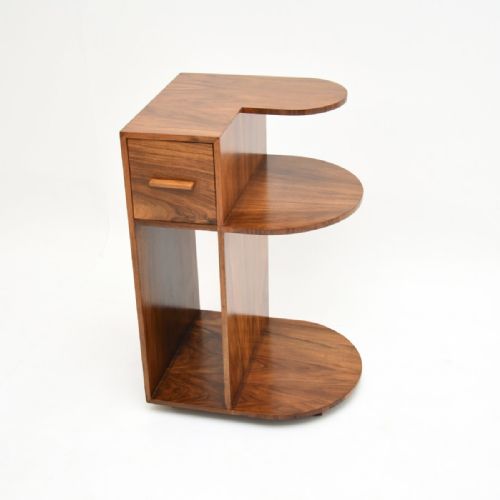
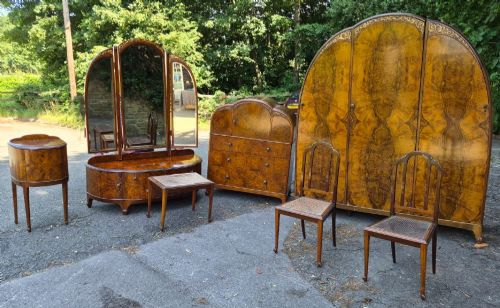
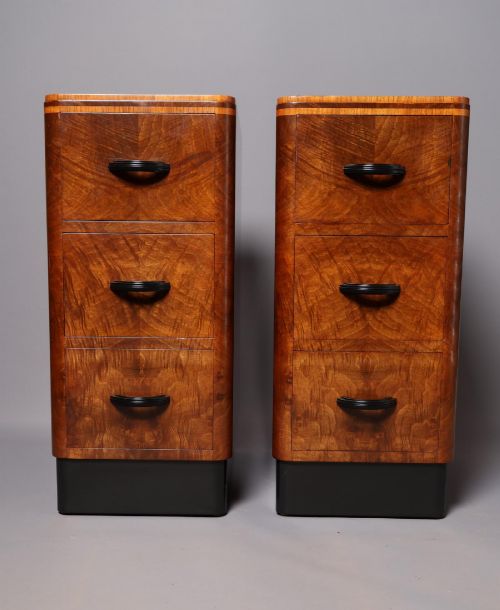
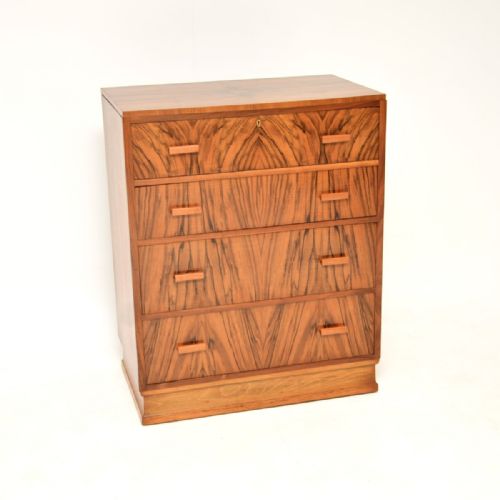
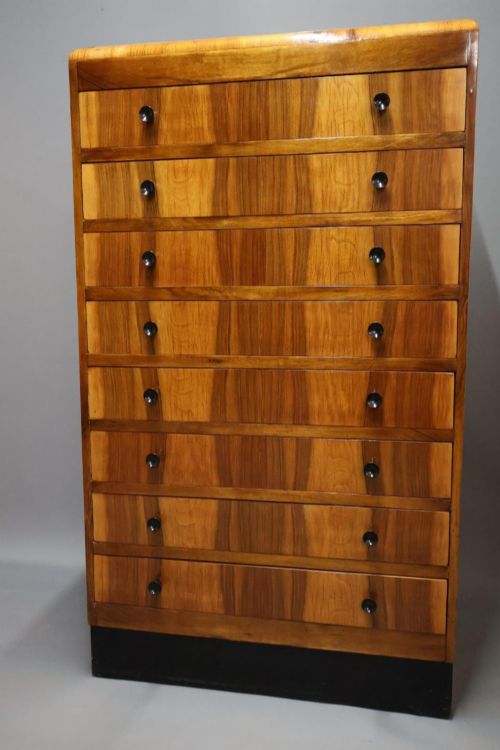
When you search for 1930s walnut drawers, you encounter a distinct group of storage furniture defined by the bold geometric lines and streamlined silhouettes of the Art Deco period. These pieces range from compact bedside tables and side tables to substantial tallboys, chests of drawers, and complete bedroom suites.
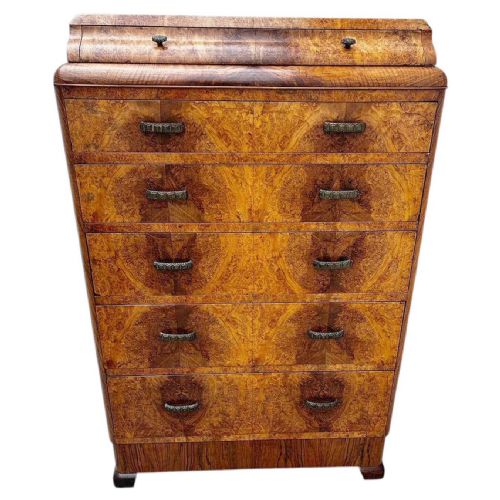
The version you are most likely to meet on this page is the chest of drawers or tallboy executed in figured walnut or burr walnut veneer, frequently paired with matching bedside cabinets. English and French workshops dominate these offerings, spanning the 1920s through to the 1940s.
Beyond standard chests, the selection includes specialised forms such as compactums and nightstands. These items reflect the domestic requirements of the era, prioritising fitted interior compartments alongside external drawer storage.
What varies in quality
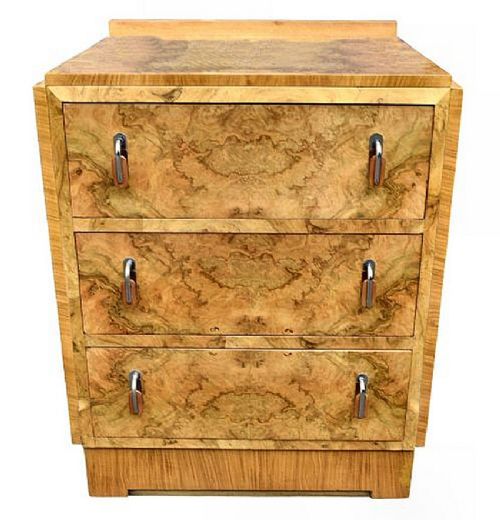
The distinction between standard commercial output and superior craftsmanship rests on the selection and matching of the veneer. Master cabinet makers arranged burr and figured walnut symmetrically across drawer banks to create harmonious patterns, whereas lesser examples display random or mismatched grain alignment.
Construction methods and hardware integration further separate the tiers. Superior items feature dovetail joinery in the drawer construction alongside substantial original brass, chrome, or bakelite handles, whereas lower quality counterparts rely on simpler fixings and basic timber carcases.
Object types span chests of drawers, bedside tables, tallboys, dining tables, and complete bedroom suites.
Frank Taylor & Co.·Maurice Adams·Betty Joel·The Bowman Brothers·Heal's
The 1930s Walnut Drawers Glossary
- Burr walnut
- A prized wood veneer harvested from the irregular growths on walnut trees, showing swirling, knotted grain patterns. It forms the primary decorative surface on many high-end Art Deco chests.
- Tallboy
- A tall chest of drawers, often combining a wardrobe section or upper cupboards with lower drawers. This form maximises vertical storage in smaller period bedrooms.
- Compactum
- A fitted wardrobe and drawer combination designed for efficient clothes storage. These multi-purpose units typify 1930s space-saving domestic design.
- Parquetry
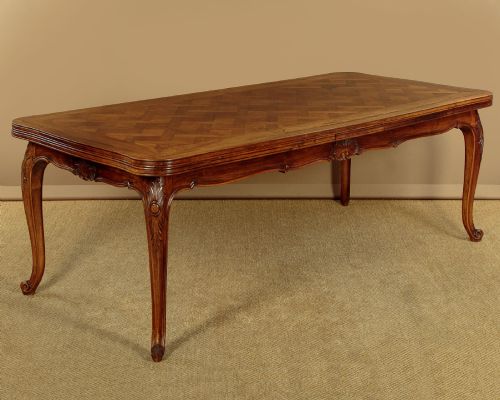
- A geometric mosaic of wood pieces used for decorative surface patterns. It appears on table tops and select furniture panels within this group.
- Serpentine
- A gently curved furniture front shaped in a concave-convex-concave wave. This subtle contouring softens the rigid geometry typical of the era.
1930s Walnut Drawers: Frequently Asked Questions
Are 1930s walnut drawers purely Art Deco?
While the vast majority of these pieces align with Art Deco design principles, the selection also encompasses French Provincial, Louis XV Revival, and French Chateau styles.
These traditional revivals sit alongside modernist interpretations, demonstrating how period cabinet makers blended historical silhouettes with contemporary surface treatments.
How do I care for walnut veneer?
Walnut veneer requires protection from direct sunlight and excessive moisture to prevent fading and lifting of the thin wooden surface. Regular dusting with a soft, dry cloth maintains the finish without chemical buildup.
Applying a traditional beeswax sparingly helps nourish the timber and preserves the natural lustre of the figured grain.
What is the difference between a tallboy and a chest of drawers?
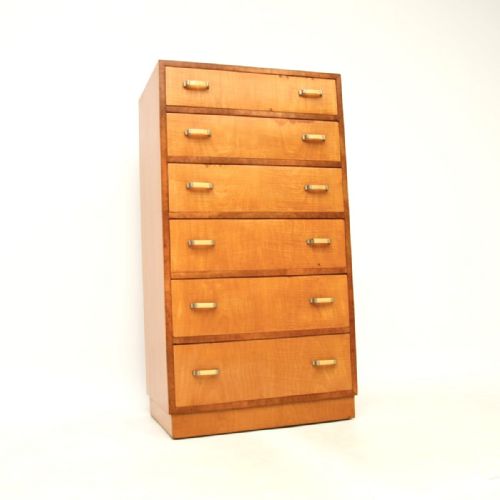
A chest of drawers is a low, horizontal unit dedicated entirely to drawer storage, standing at a height comfortable for placing decorative objects on top. A tallboy is built vertically, offering greater storage capacity within a narrower footprint.
Tallboys in this period frequently incorporate upper cabinet doors or varying drawer configurations to break up the vertical expanse.
Did bedside tables come in pairs?
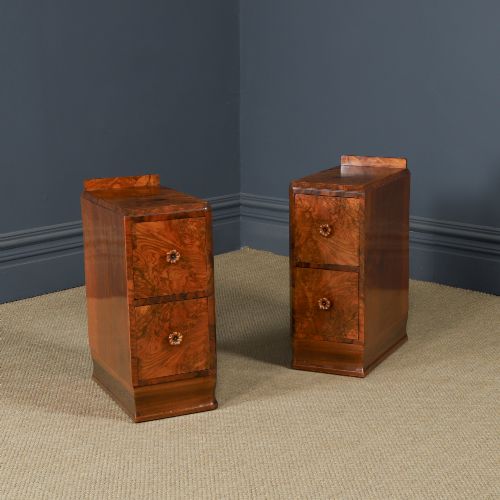
Many bedside tables and cabinets from this era were manufactured as matching pairs to flank a double bed. These mirrored sets share identical timber figures, handle configurations, and dimensions.
Single bedside cabinets also appear frequently, originating from smaller suites or individual room layouts.