



1930s Burr Walnut Tallboy
A 1930s burr walnut tallboy brings striking grain and vertical presence to a bedroom, offering substantial storage without dominating the room.
1930s Burr Walnut Tallboy
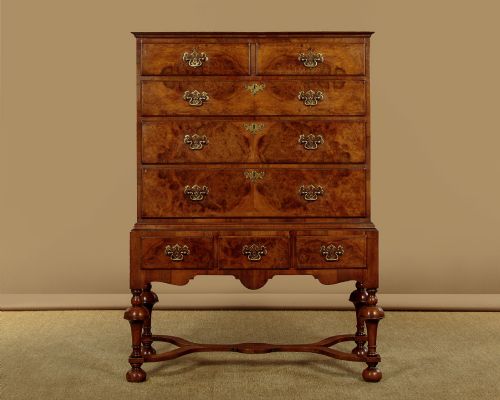
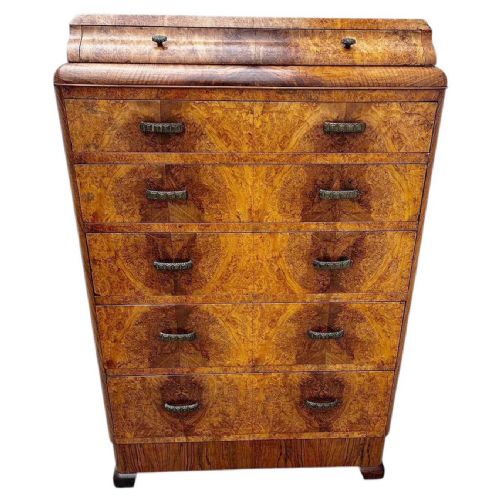
When you search for a 1930s burr walnut tallboy, you find substantial upright storage pieces defined by the distinctive patterns of burr timber. These items belong firmly to the Art Deco period, spanning the nineteen-thirties and extending into the nineteen-forties.
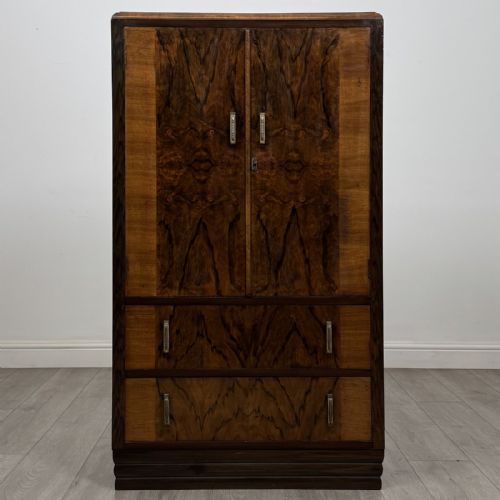
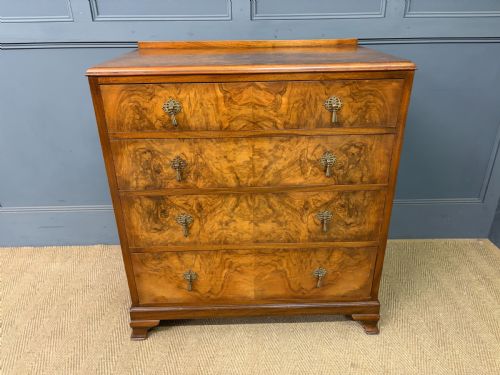
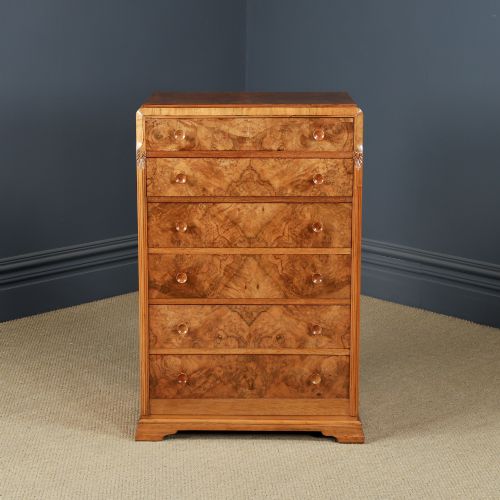
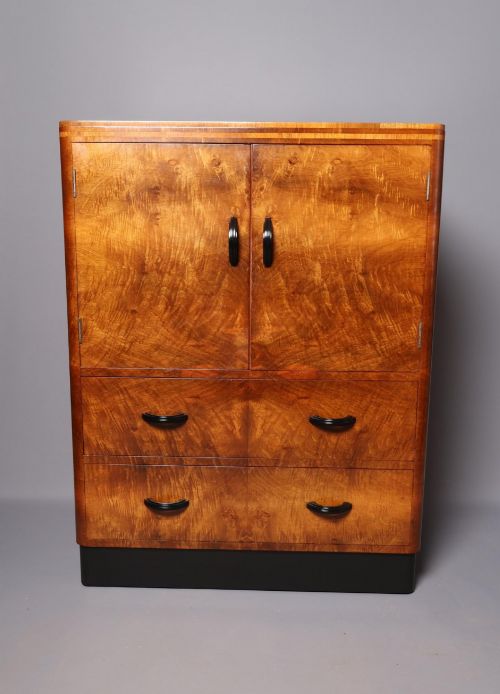
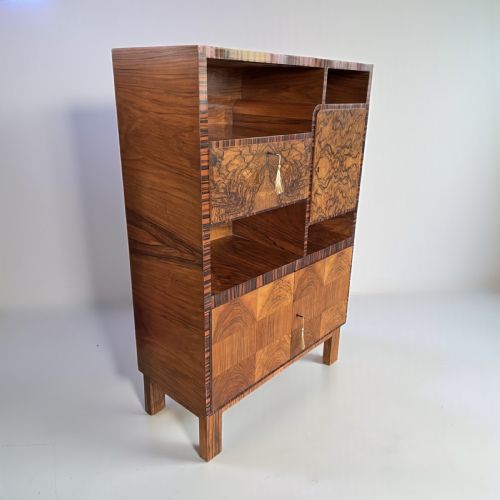
The versions met most frequently on this page take the form of tall chests of drawers, cabinets, and compactums. English pieces from this era demonstrate clean vertical lines combined with rich figuring across the drawer fronts.
How they were made
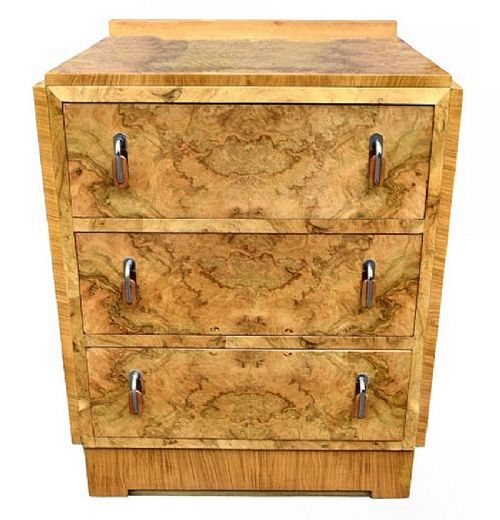
These pieces utilise walnut and burr walnut veneer applied over a solid carcase, creating symmetrical grain patterns across the front. Cabinet makers selected highly figured burr sections to draw the eye to the drawer fronts and doors.
Hardware details such as chrome, brass, and bakelite provide functional contrast to the warm timber tones. Construction methods of the nineteen-thirties rely on solid timber framing combined with expert veneering techniques.
1930s Burr Walnut Tallboy Retail Price Guide 2026
Typical asking prices for 1930s burr walnut tallboy among the pieces listed under this phrase on Sellingantiques today, from the lower quarter to the upper quarter. They describe what is for sale here now, not the wider market.
What varies in quality
Quality separates through the selection and matching of the burr walnut veneer across the elevation. Superior examples display carefully balanced grain patterns that flow naturally across multiple drawers or cabinet doors.
The refinement of the Art Deco proportions and the choice of original metal or bakelite hardware distinguish standard utility chests from finer cabinet work.
Waring & Gillow
The 1930s Burr Walnut Tallboy Glossary
- Burr walnut
- A prized timber harvested from the growth excrescences on walnut trees, yielding complex and swirling grain patterns. Cabinet makers prized this wood for decorative veneer work on prominent surfaces.
- Tallboy
- A traditional tall chest of drawers or wardrobe cabinet providing elevated storage capacity. In twentieth-century pieces, this form adopts streamlined Art Deco geometries.
- Art Deco
- A dominant design style of the nineteen-thirties characterised by sleek lines, geometric forms, and modern industrial materials. This aesthetic shapes the silhouette of nearly every piece listed here.
- Compactum
- A multi-functional wardrobe and cabinet combination designed to hold various garments within a single fitted interior. These pieces frequently incorporate internal shelving and smaller drawers.
- Veneer
- A thin layer of superior timber applied over a secondary wood base to provide a decorative exterior. This technique allowed makers to utilise expensive burr walnut efficiently.
1930s Burr Walnut Tallboy: Frequently Asked Questions
What is a tallboy?
A tallboy is an upright chest of drawers or storage cabinet designed to maximise vertical capacity while occupying a smaller floor footprint. These pieces offer deep drawers or internal compartments for clothing.
In nineteen-thirties design, the tallboy form sheds heavy Victorian ornamentation in favour of clean, streamlined vertical proportions.
How do I identify Art Deco furniture?
Art Deco furniture is recognised by geometric symmetry, clean vertical lines, and a lack of excessive carving. The emphasis rests on the natural beauty of the timber grain and the overall architectural silhouette.
Touches of chrome, brass, and bakelite frequently accent the wood to complete the modernist look.
Where should I place a tallboy?
A tallboy suits bedrooms or dressing rooms where floor space is limited but vertical storage is required. Its height allows it to hold significant garments or linen without crowding the room.
Keep the piece away from direct sunlight and strong heat sources to protect the delicate burr walnut veneer.
How do I care for burr walnut?
Maintain burr walnut surfaces by dusting gently with a soft, dry cloth and avoiding silicone-based polishes. Occasional application of quality beeswax helps preserve the moisture and natural lustre of the veneer.
Stable room humidity prevents the timber and veneer from drying out or splitting over time.