



1930s Walnut Bureau Desk
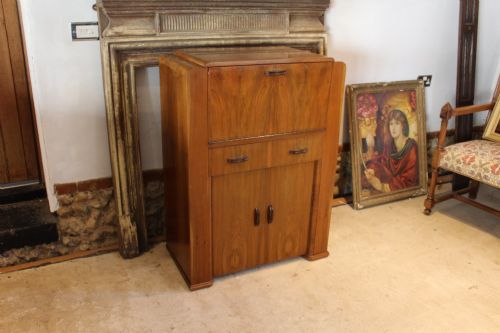
A 1930s walnut bureau desk brings streamlined geometric elegance and practical hidden storage to a room.
1930s Walnut Bureau Desk
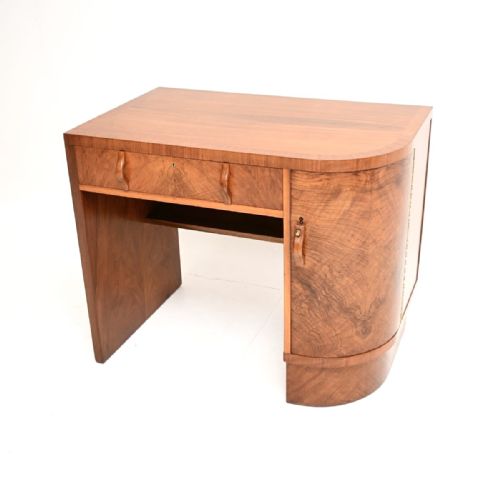
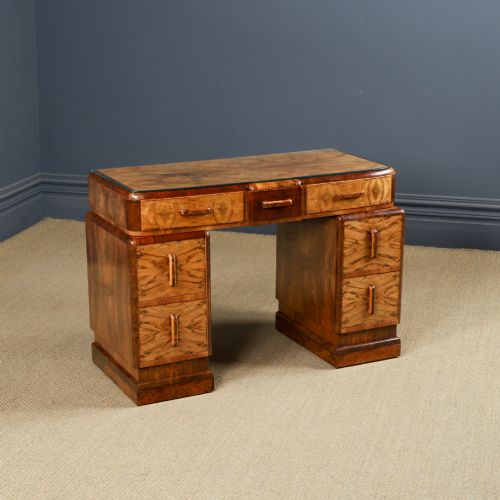
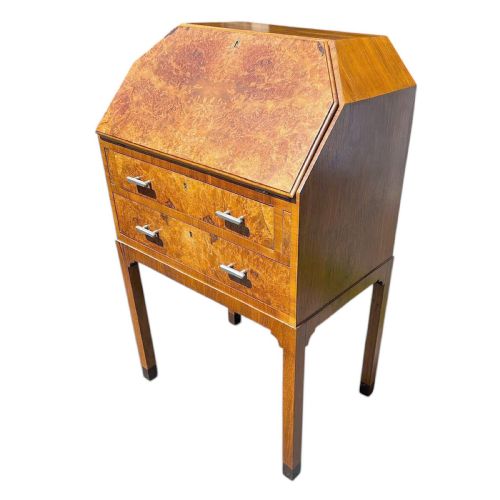
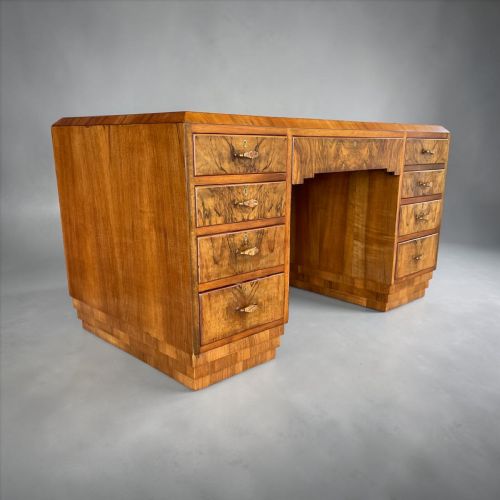
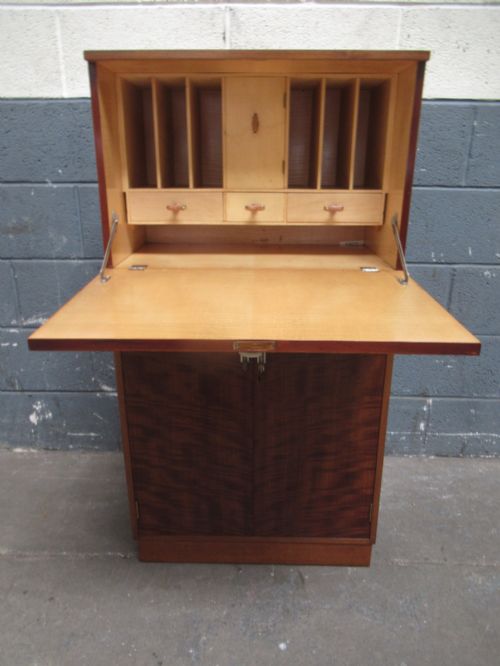
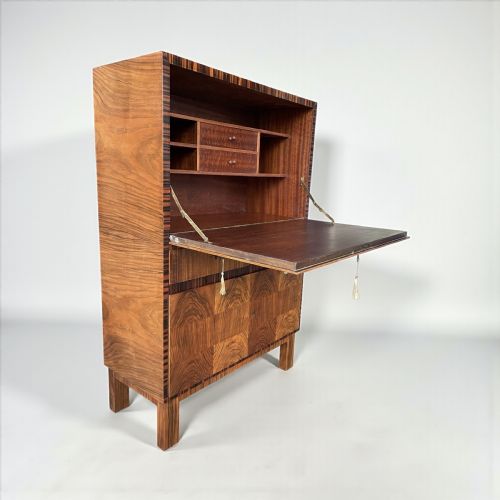
A 1930s walnut bureau desk combines a drop-front writing surface with concealed compartments and drawers below, firmly rooted in the Art Deco style. These pieces span English and French workshops from the 1920s and 1930s, offering compact upright profiles or wider pedestal formats.
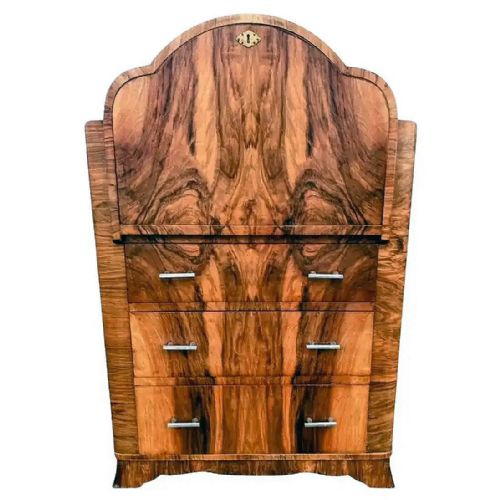
Buyers frequently encounter bureau bookcases and cloud-shaped writing cabinets alongside simpler writing desks. Figured timber and burr veneers define the aesthetic, presenting striking natural grain patterns across the fall fronts and drawer faces.
Materials and Construction
Cabinet makers applied thin layers of walnut and burr walnut veneer over solid wood carcases, using the grain to create symmetrical geometric patterns. Brass hardware and occasional glass elements complement the polished timber surfaces.
Construction relies on precise veneering techniques developed during the Art Deco period, ensuring smooth operation of drop-front hinges and internal pigeonholes.
Current listings feature pieces primarily from the 1930 period, executed in walnut, burr walnut, glass, and brass within the Art Deco style.
Judging Quality and Execution
Quality rests on the choice of veneer and how seamlessly the grain matches across the fall front and drawers. Richly figured burr walnut and inventive silhouettes, such as skyscraper or cloud-shaped profiles, distinguish superior examples from standard production.
The integration of fitted internal compartments and the crispness of the exterior geometry reveal the maker's skill and ambition.
F.H. Marshall & Co Glasgow·Étienne Kohlmann·Maurice Adams
The 1930s Walnut Bureau Desk Glossary
- Burr walnut
- A growth deformity in walnut trees that yields intricate, swirling grain patterns. Cabinet makers slice this wood into decorative veneers for high-status furniture.
- Bureau
- A writing desk featuring a sloping hinged lid that drops down to reveal a writing surface and small drawers. It provides a compact workspace that conceals paperwork when closed.
- Art Deco
- A design style dominant in the 1920s and 1930s characterised by sleek geometric shapes, streamlined forms, and modern materials. It rejects Victorian ornament in favour of clean architectural lines.
- Veneer
- A thin slice of ornamental wood applied over a secondary timber base. This technique allows makers to display striking grain patterns without using solid costly woods.
1930s Walnut Bureau Desk: Frequently Asked Questions
How do I use a bureau desk?
Lower the hinged front panel to create an instant writing surface while keeping stationery and papers organised inside the built-in compartments.
Close the fall front when finished to conceal your work and restore a neat cabinet appearance to the room.
Are these desks suitable for small spaces?
Many examples feature compact upright profiles and integrated bookcase sections that maximise vertical storage without occupying a large floor footprint.
Their enclosed design also hides clutter effectively, making them practical for modern home offices or living areas.
How do I identify Art Deco furniture?
Look for symmetrical geometric patterns, waterfall edges, and dramatic grain arrangements using figured walnut or burr veneers.
Details such as skyscraper pedestals, cloud-shaped outlines, and minimalist brass fittings point directly to the 1930s aesthetic.
How should I care for walnut veneer?
Keep the timber surfaces away from direct sunlight and excessive heat to prevent the polished finish from fading or the veneer from lifting.
Dust gently with a soft dry cloth and avoid harsh chemical cleaners that can damage the antique polish.