



1930s Walnut Bedroom Storage
These pieces of 1930s walnut bedroom storage bring practical luxury and striking Art Deco design to domestic spaces.
1930s Walnut Bedroom Storage
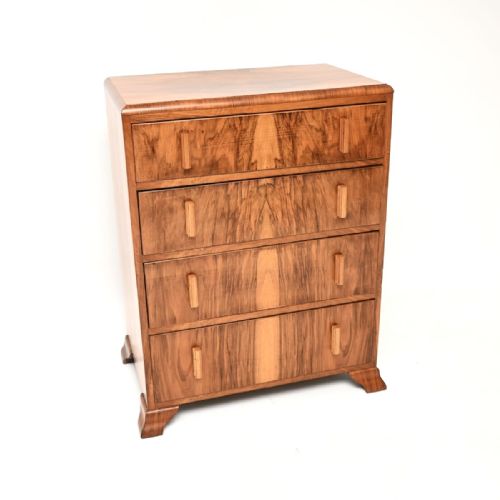
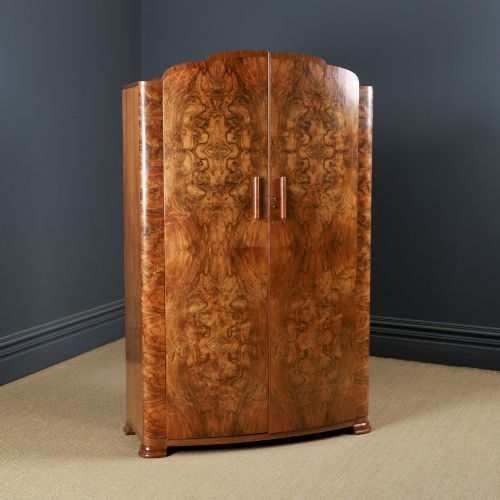
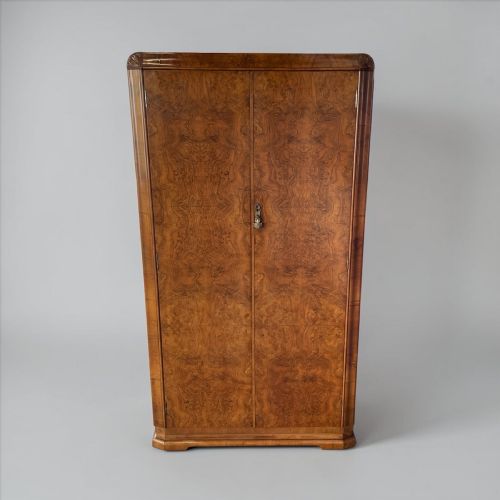
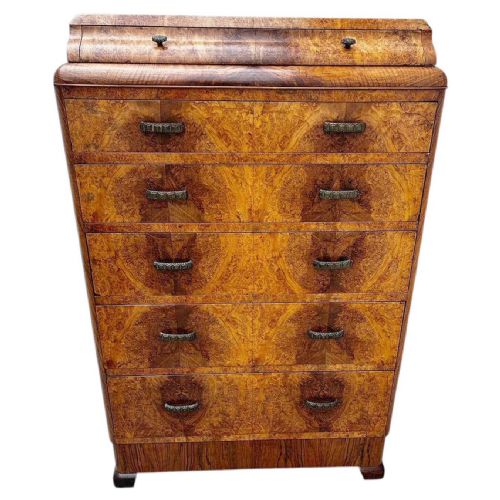
When searching for 1930s walnut bedroom storage, collectors encounter substantial furniture designed for clothing organisation, predominantly manifesting as wardrobes, chests of drawers, tallboys, compactums, and bedside cabinets. These pieces belong firmly to the Art Deco style, originating across the 1920s, 1930s, and 1940s.
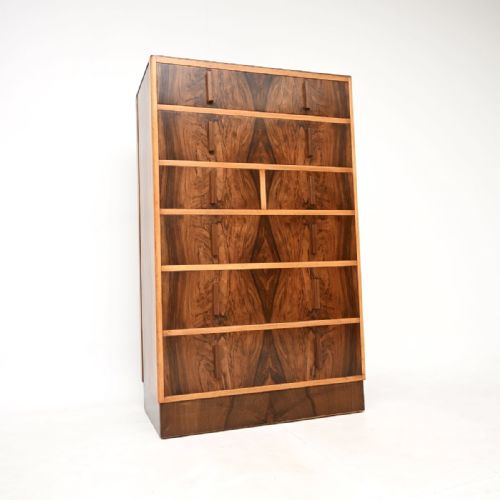
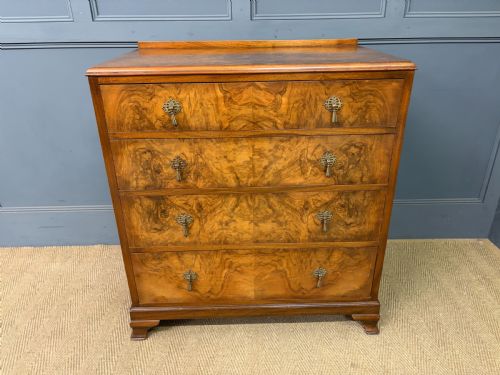
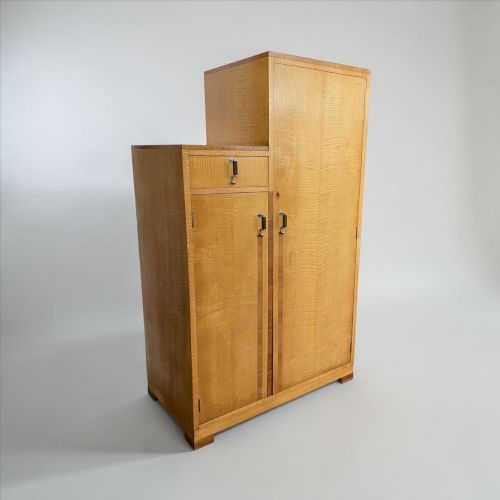
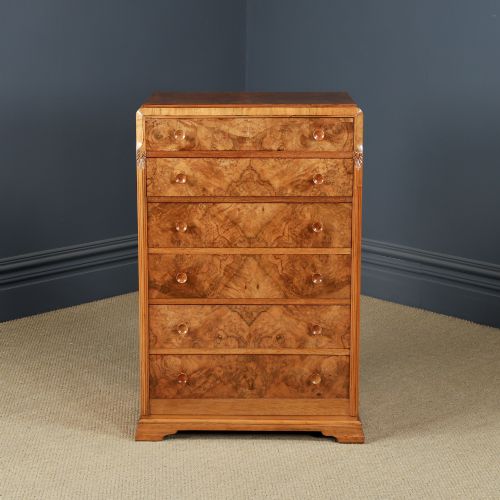
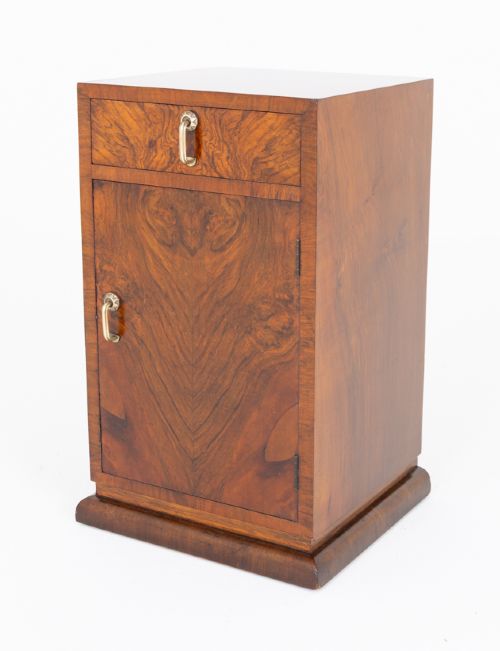
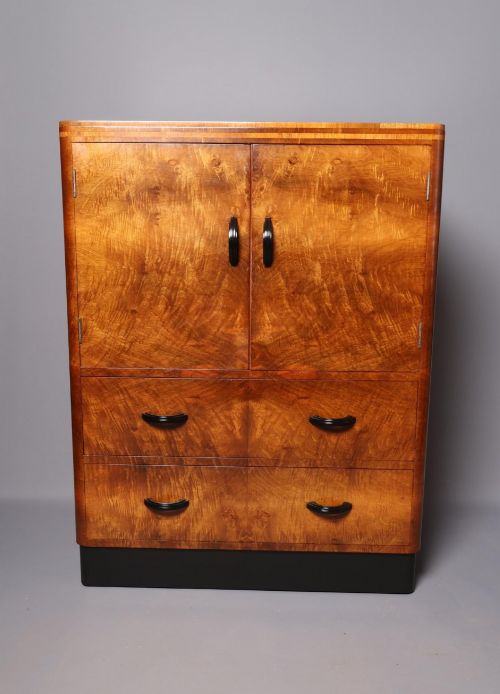
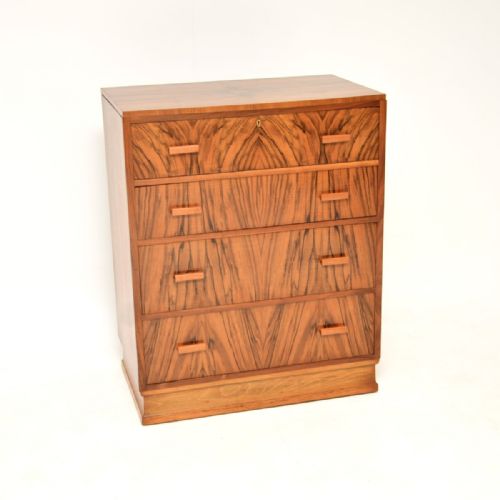
The version most commonly met on this page is the walnut chest of drawers or the compactum wardrobe, often finished with burr or figured veneers. English makers produced these items to combine functional capacity with decorative grain patterns.
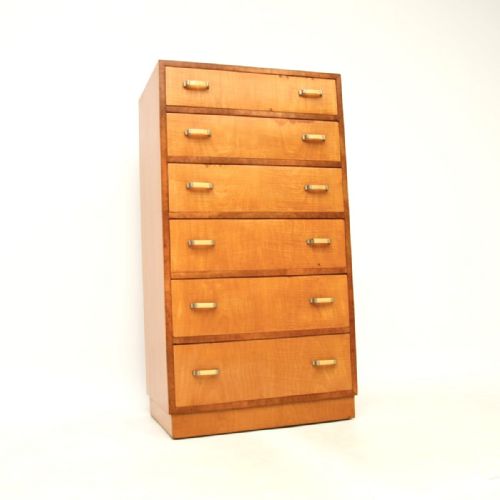
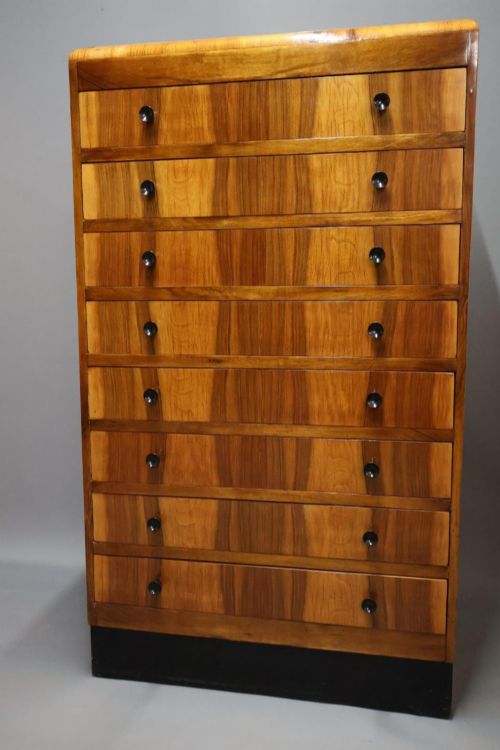
Tallboys and linen cupboards also appear regularly, offering vertical storage solutions that suit period and contemporary interiors alike.
Materials and construction methods
Craftsmen built these items using a solid carcase overlaid with walnut veneer, frequently selecting burr walnut, figured walnut, or bleached blonde walnut for the visible exterior surfaces to create dramatic grain movement. Satinwood, satin birch, and various metals appear alongside the primary wood.
Hardware details such as brass handles and Bakelite accents provide functional contrast to the polished timber finishes. Wardrobes and compactums often utilise internal shelving and hanging space behind matched veneer doors.
1930s Walnut Bedroom Storage Retail Price Guide 2026
Typical asking prices for 1930s walnut bedroom storage among the pieces listed under this phrase on Sellingantiques today, from the lower quarter to the upper quarter. They describe what is for sale here now, not the wider market.
The listings here demonstrate that walnut veneer was paired with accent materials like brass, chrome, and Bakelite during the Art Deco period.
Distinctions in quality
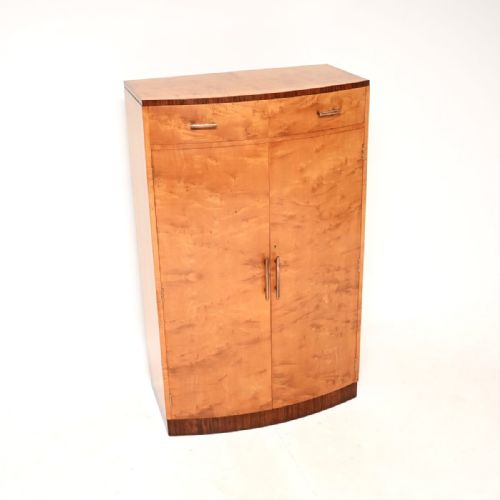
The primary differentiator lies in the selection and matching of the veneer, with book-matched burr walnut commanding attention for its symmetrical geometric patterns. Superior examples display seamless application across curved surfaces and bow fronts.
Construction integrity, from dovetailed drawer joints to the weight of the brass and chrome hardware, separates standard workshop production from notable pieces by makers such as Waring & Gillow or Heal's.
Waring & Gillow·Heal's
The 1930s Walnut Bedroom Storage Glossary
- Burr walnut
- A prized timber harvested from the irregular growths on walnut trees, yielding intricate, swirling grain patterns. It is sliced into thin veneers for decorative furniture fronts.
- Compactum
- A multi-functional wardrobe combining hanging space, drawers, and shelving within a single compact unit. These pieces maximise storage efficiency in domestic bedrooms.
- Tallboy
- A tall chest of drawers, often combining a set of drawers with a cupboard section above. This form provides substantial vertical storage while occupying a modest floor footprint.
- Bow front
- A convex, curved cabinet or drawer front that projects outward. This design requires advanced woodworking skill to veneer accurately.
- Book-matching
- A technique where adjacent veneer slices are opened like a page to mirror each other. This creates symmetrical, decorative patterns across large drawer fronts and wardrobe doors.
1930s Walnut Bedroom Storage: Frequently Asked Questions
What is a compactum wardrobe?
A compactum is a specialised wardrobe designed to hold a wide variety of clothing and linen in one unified piece of furniture. It typically combines hanging compartments with internal drawers and shelving.
These pieces emerged to provide comprehensive bedroom storage without requiring multiple separate items of furniture. They often feature fitted interiors behind twin or triple doors.
How do I identify Art Deco style?
Art Deco furniture relies on clean geometric lines, symmetrical wood veneers, and a harmonious balance of form and function. Pieces often incorporate stepped shapes or curved bow fronts.
The aesthetic values streamlined elegance over ornate carving, letting the natural figuring of walnut and other timbers provide the primary decoration.
Where were these pieces made?
The items listed here originate primarily from English workshops and manufacturers operating during the interwar period. Major retailers and cabinet makers produced matching bedroom suites for domestic homes.
Regional cabinet makers and larger firms both utilised exotic and domestic veneers to satisfy prevailing design tastes.
How do I care for walnut veneer?
Walnut furniture benefits from consistent indoor humidity and protection from direct sunlight, which can alter the colour of the timber over time. Regular dusting with a soft, dry cloth preserves the polished surface.
Avoid placing items near direct heat sources to prevent the veneer from drying or lifting from the underlying carcase.