


1930s Vintage Canvas Art
These 1930s vintage canvas art pieces bring the expressive brushwork and rich colour palettes of the early twentieth century directly into modern rooms.
1930s Vintage Canvas Art
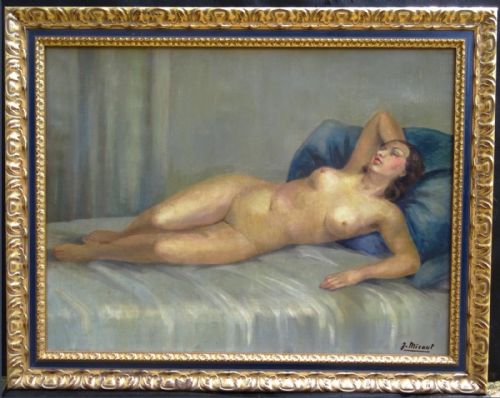
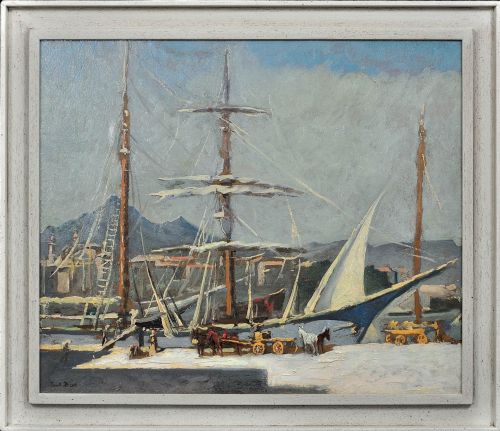
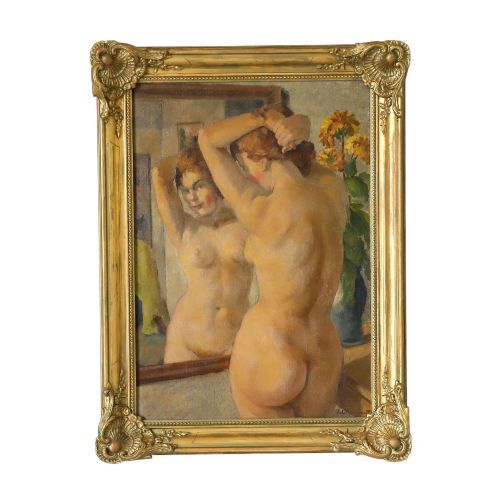
When buyers search for 1930s vintage canvas art, they encounter original oil paintings executed on woven fabric supports from the interwar period. The selection includes portraits, marine views, still lifes, and European landscapes spanning post-impressionist, art deco, and modernist styles.
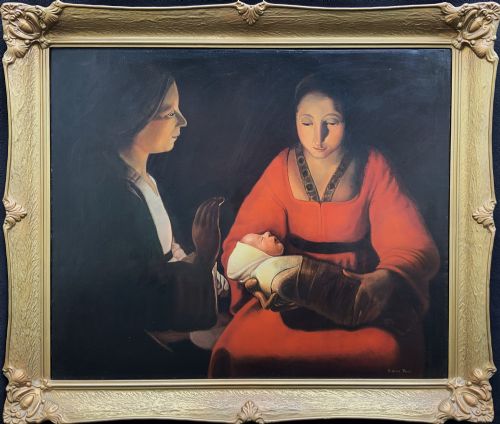
Most works date from the 1930s decade itself, though pieces stretch from the early decades of the twentieth century into the mid-century. Subjects range from French coastal scenes and British country landscapes to intimate interior studies and mythological figurative compositions.
Framed artwork appears frequently alongside unframed canvases, often housed within original wood or gilt frames that complement the painting style. Buyers will find works by named European and British painters as well as atmospheric anonymous compositions.
Materials and construction methods
Artists of this era applied oil paint directly onto stretched woven canvas supports, utilising traditional brush techniques alongside impasto application for textured surfaces. Pigments were mixed with oils to achieve deep tones and luminous light effects, particularly in marine and landscape scenes.
Supporting structures typically consist of wooden stretchers holding the canvas taut, frequently paired with decorative wood frames finished with gilt or paint. The interaction between oil paint and fabric creates a stable surface that retains its flexibility and visual depth over decades.
The inventory spans styles from post-impressionism and art deco to 20th century realism and Swedish modern.
Indicators of quality
Superior quality in these paintings rests upon confident brushwork, assured composition, and the artist's ability to capture light and atmosphere. Strong tonal control and balanced colour harmonies distinguish accomplished studio works from more conventional decorative output.
The preservation of the original paint layer and canvas tension also defines the upper tier of the range. Original framing that suits the period and palette of the artwork adds further to the integrity of the piece.
Paul Bret·Philippe de Rougemont·Margaret Maitland Howard·Elisabeth Bardon·Charles Walter Simpson·Henri Vincent-Anglade·Gustave Vidal·Gaetan Dumas·Georges Goursat·J Phipps·Philip Naviasky·Claude Jousset·Matthew Smith·Yo Mayer·Burr Singer·Harold Edward Conway
The 1930s Vintage Canvas Art Glossary
- Canvas
- A heavy woven fabric typically made from linen or cotton that serves as the primary support for oil paintings. It provides a textured foundation that responds well to layered brushwork.
- Impasto
- A technique where paint is laid onto a canvas in thick areas, making brush marks or palette knife strokes clearly visible. This method adds tactile three-dimensional depth to surfaces.
- Still Life
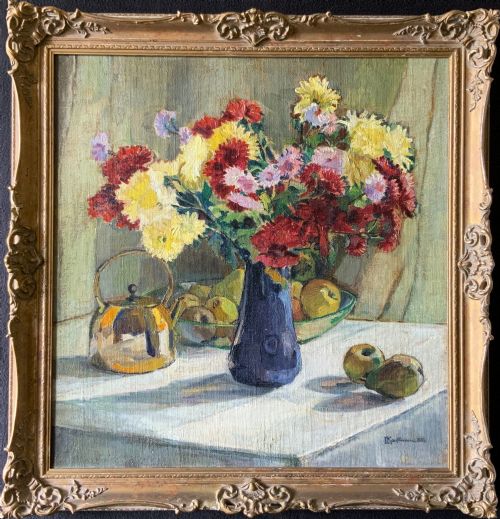
- A painting featuring inanimate subject matter, such as flowers, fruit, or household objects arranged on a table. These compositions allow artists to explore light, colour, and form in a controlled setting.
- Post-Impressionism
- An art movement extending the limits of impressionism while rejecting its limitations, focusing on symbolic content and vivid colours. Artists working in this style emphasise expressive brushwork and bold forms.
- Gilt
- A thin layer of gold leaf or gold-coloured pigment applied to wooden frames and decorative objects. It provides a reflective metallic finish that enhances the visual boundary of a painting.
1930s Vintage Canvas Art: Frequently Asked Questions
What subjects appear in 1930s vintage canvas art?
The selection encompasses marine views, rustic landscapes, floral still lifes, and figurative nude studies. Artists captured both urban scenes and quiet rural interiors.
Many works reflect continental travels, particularly through French coastal ports and Mediterranean settings. Others record domestic arrangements of flowers, fruit, and everyday objects.
How should I hang and display these oil paintings?
These paintings suit spaces with controlled ambient light, away from direct sunlight that can affect oil pigments over time. Matching the frame style to your interior helps integrate the piece.
Ensure the wall fixings support the weight of the wooden stretcher and frame securely. Keeping the room humidity stable protects both the canvas and any original wooden framing.
Are these artworks signed by the artists?
Many pieces feature artist signatures, while others remain attributed based on style, period documentation, or subject matter. Signed works often provide a direct link to established painters of the period.
Unsigned paintings still offer distinct aesthetic value through their technique and composition. Documentation within listings notes whether a signature or attribution is present.
How do I identify a 1930s painting style?
Works from this decade often blend modernist abstraction with traditional realism, encompassing movements like art deco and post-impressionism. Brushwork tends to be expressive and focused on light.
Palettes range from the warm tones of Mediterranean landscapes to the subdued hues of British realist studies. Comparing the handling of paint and subject matter helps place the work within the interwar period.