

1930s Tiered Side Table
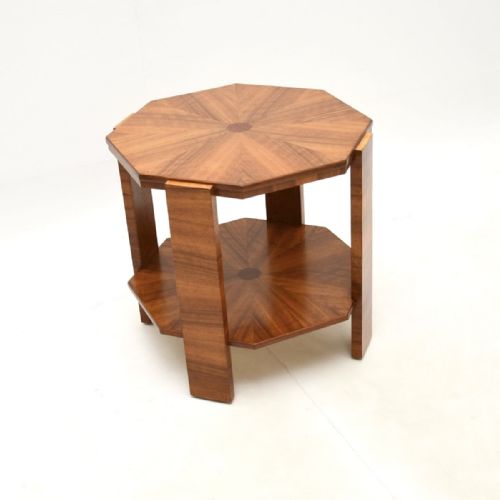
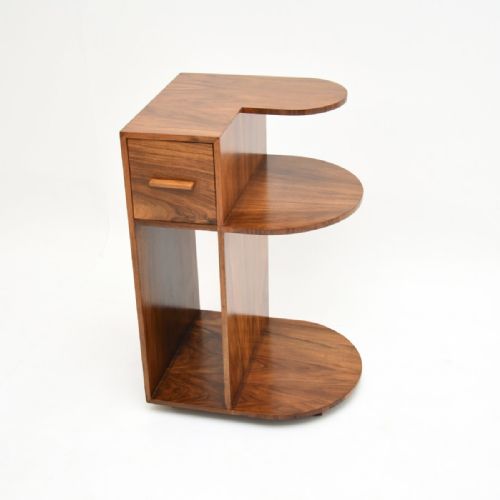
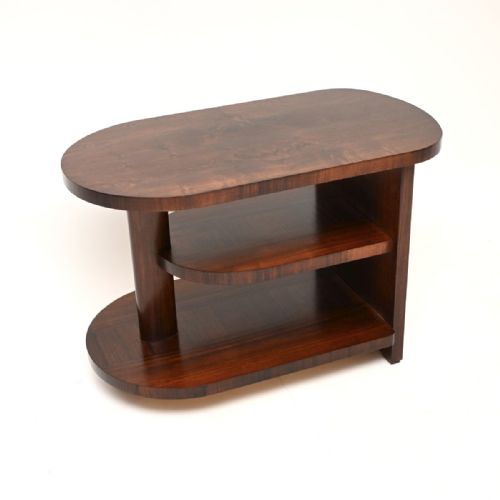
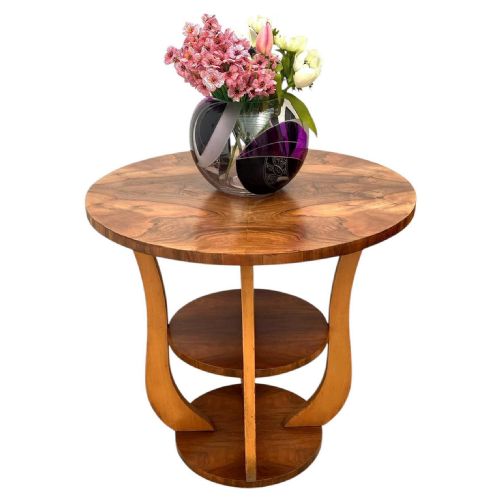
A 1930s tiered side table brings architectural lines and stacked utility to a room through distinctive period design.
1930s Tiered Side Table
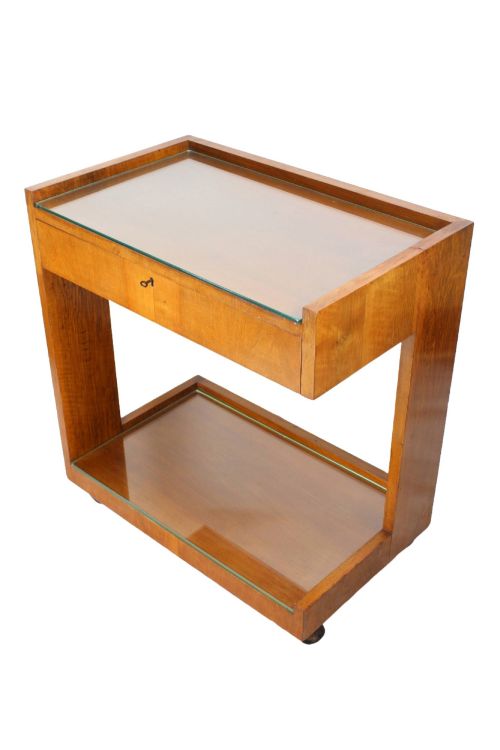
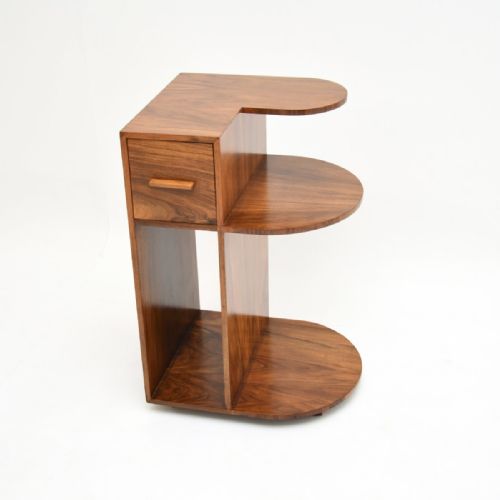
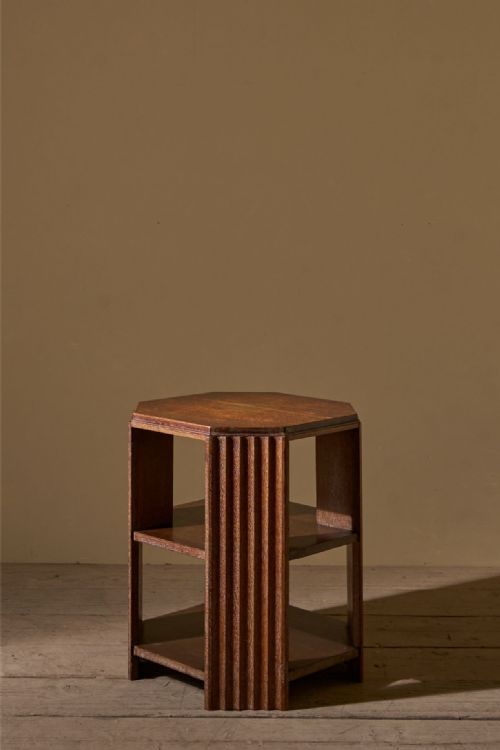
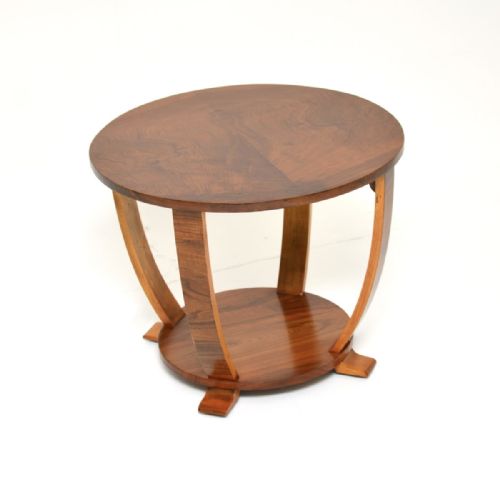
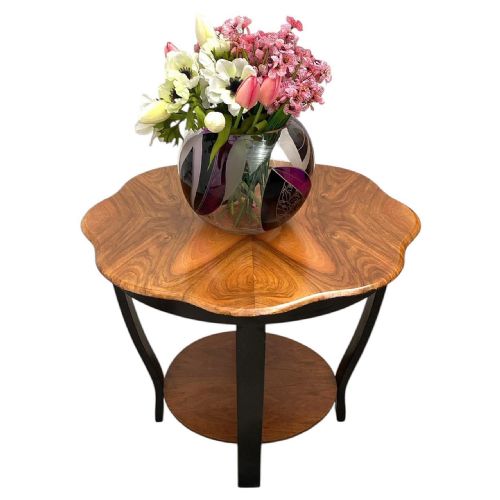
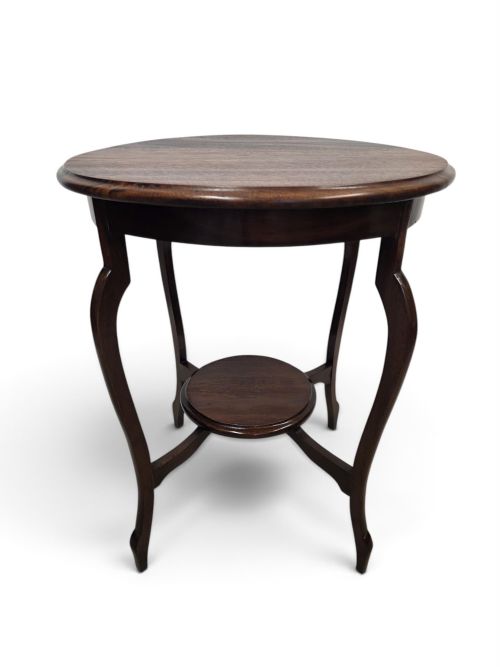
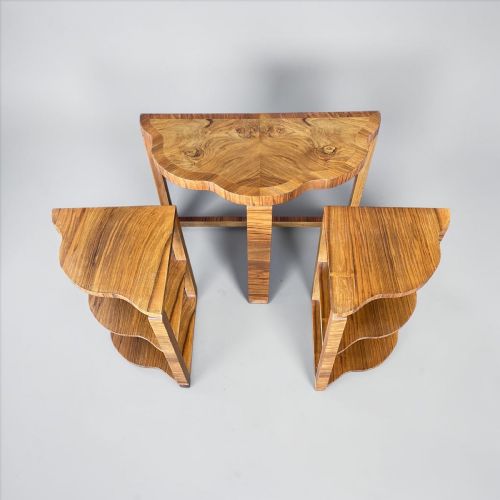
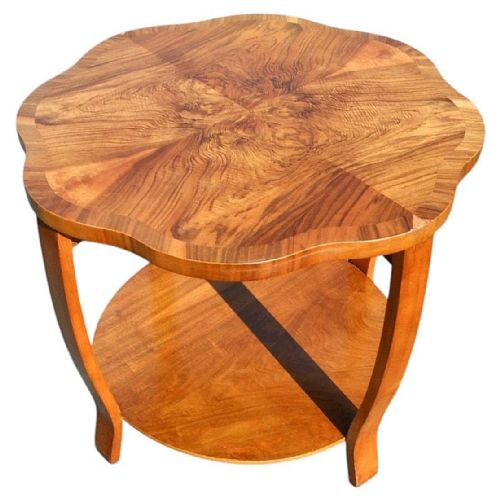
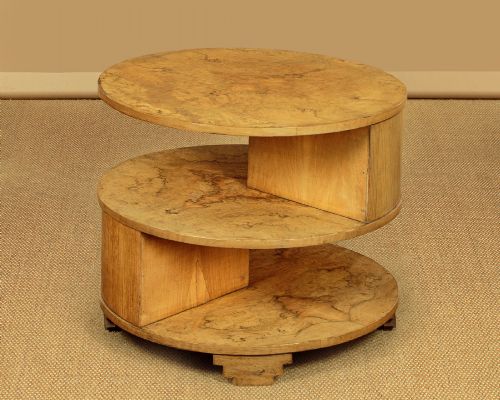
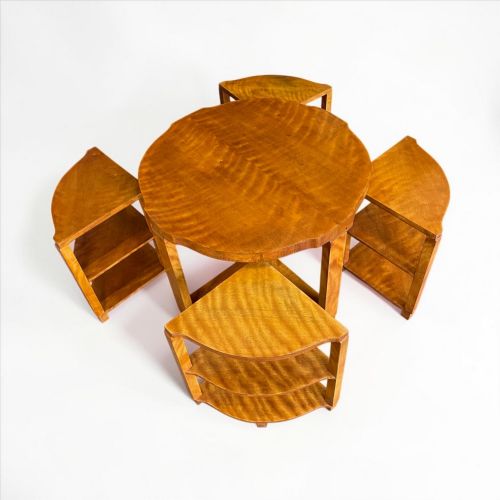
A 1930s tiered side table provides multiple surfaces arranged in steps or levels for display and daily use. These pieces often appear in forms such as occasional tables, coffee tables, and drinks trolleys.
The prevailing aesthetic on this page is strongly rooted in Art Deco design, frequently manifesting with geometric silhouettes. Alongside walnut and oak, various alternative woods and metals define the physical presence of these multi-level surfaces.
Originating predominantly from the 1930s period, with occasional pieces spanning the 1920s and 1940s, these tables combine compact footprints with vertical staging. Buyers encounter English and French interpretations alongside Scandinavian and Italian examples.
Materials and construction
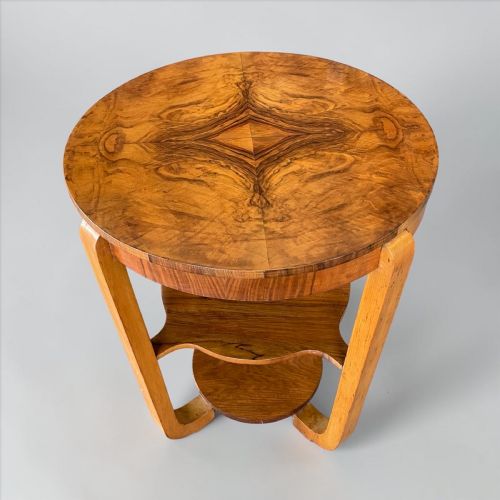
Makers utilised rich timbers such as walnut, burr walnut, oak, and maple, frequently applying highly figured veneers across the primary surfaces. These wood grains create bold visual patterns that define the top tier.
Secondary materials like chrome, brass, and ebonised wood introduce contrasting linear accents to the wooden tiers. Joinery and framing techniques support the stepped architecture without cluttering the profile.
Listings span three distinct decades, with the 1930s forming the core alongside select pieces from the 1920s and 1940s.
Assessing quality and finish
The distinction between tiers rests upon the choice of veneer and the rhythm of the grain. Highly figured walnut or exotic woods demonstrate a deliberate selection by the cabinetmaker.
Structural refinement shows in the integration of metal components like chrome or brass with the wooden tiers. Clean joins and balanced proportions separate standard production from elevated examples.
Gilbert Rohde·Hille
The 1930s Tiered Side Table Glossary
- Art Deco
- A design style characterised by sleek geometric shapes, stylised motifs, and modern materials popular during the interwar period.
- Veneer
- A thin layer of superior wood adhered to a base timber to display decorative grain patterns.
- Etagere
- A piece of furniture consisting of a set of open shelves for displaying small objects.
- Occasional table
- A small, versatile table designed for specific, intermittent use within a room.
- Moderne
- A late branch of Art Deco architecture and design that emphasises streamlined curves and horizontal lines.
1930s Tiered Side Table: Frequently Asked Questions
What is a 1930s tiered side table used for?
These tables provide multiple stacked surfaces for placing lamps, books, or drinks while taking up minimal floor space. The graduated levels create distinct zones for display and utility.
In living rooms or studies, they function as central accents beside seating or tucked into corners to break up horizontal lines.
How do I identify the Art Deco style?
Art Deco pieces display geometric forms, clean lines, and symmetrical arrangements that reflect interwar modernism. Designers favored streamlined silhouettes over ornate historical revivalism.
Contrasting materials, such as chrome accents paired with figured walnut veneers, further signal this distinctive era.
Are these tables usually made of solid wood?
Most examples utilise supportive base timbers covered with decorative wood veneers on the visible surfaces. This technique allowed cabinetmakers to showcase striking grain patterns like burr walnut or birds eye maple.
Solid oak and ebonised wood also appear frequently across the period listings, offering a different textural weight.