
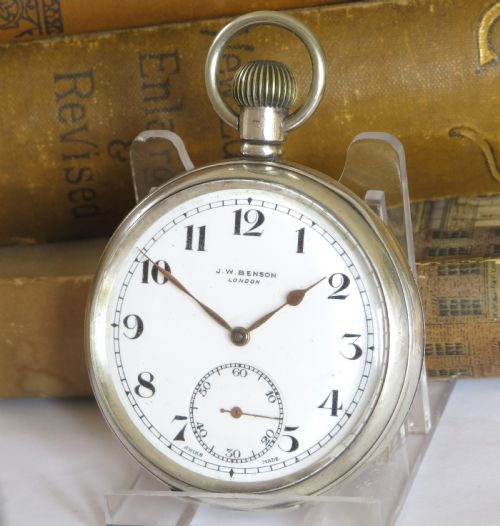
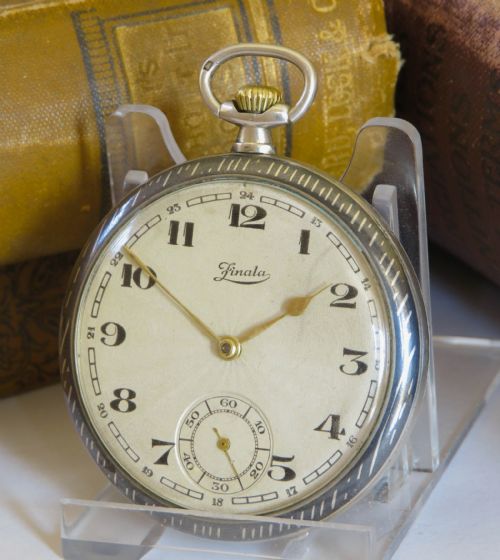
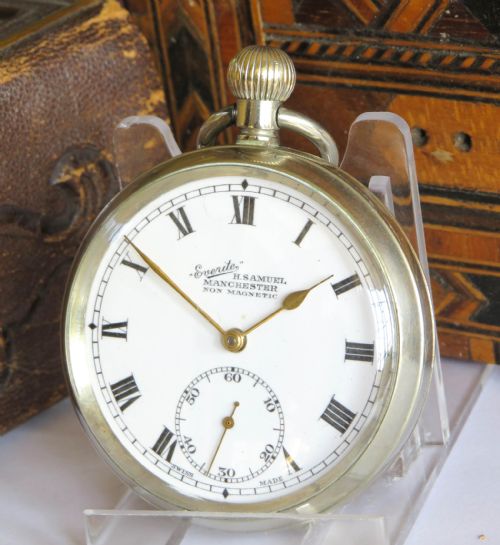
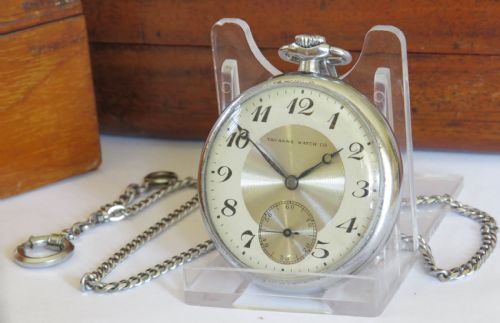
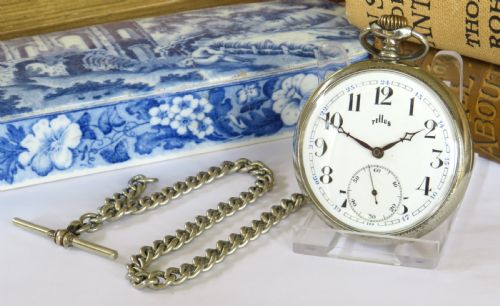
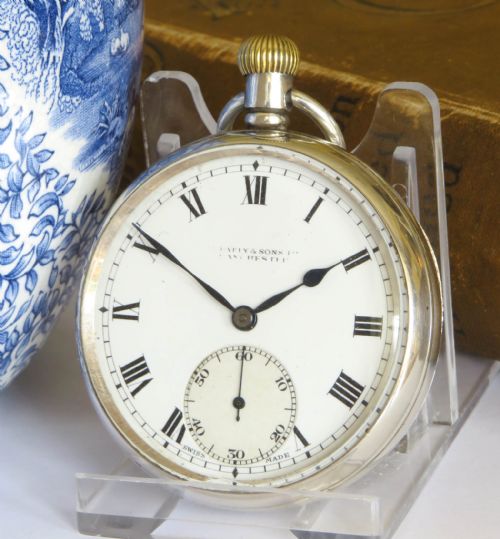
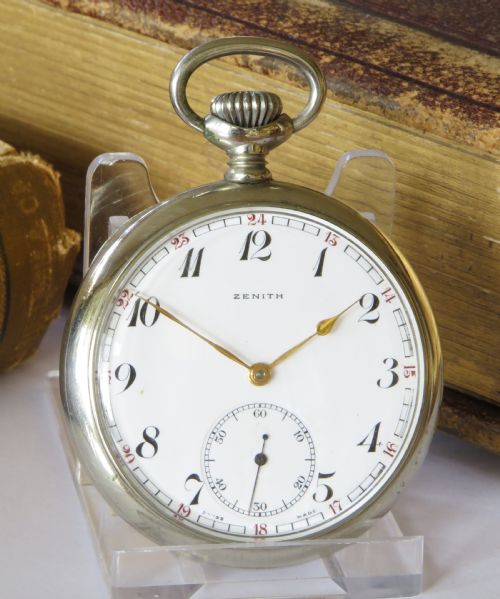
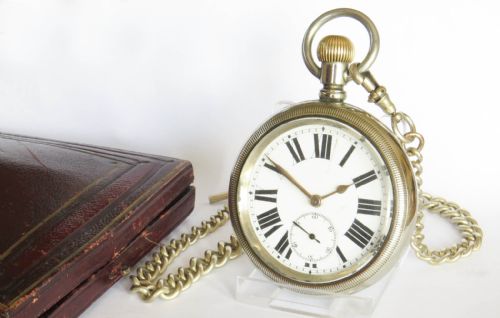
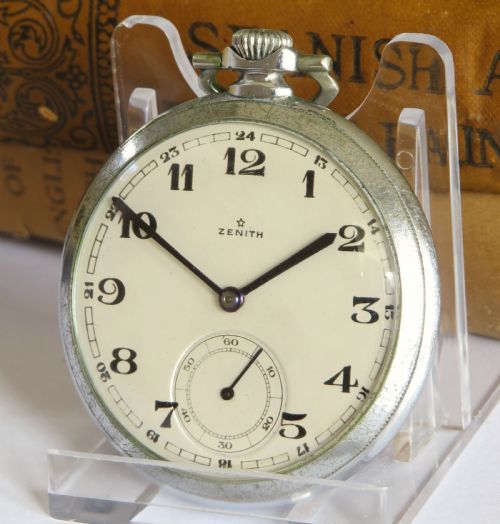


1930s Silver Pocket Watch
A 1930s silver pocket watch offers tactile horology from an era of clean lines, reliable mechanical movements and enduring metalwork.
1930s Silver Pocket Watch
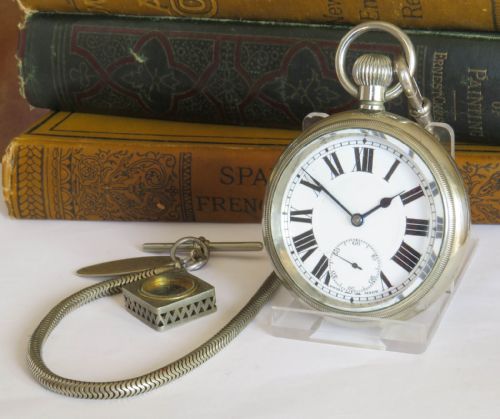
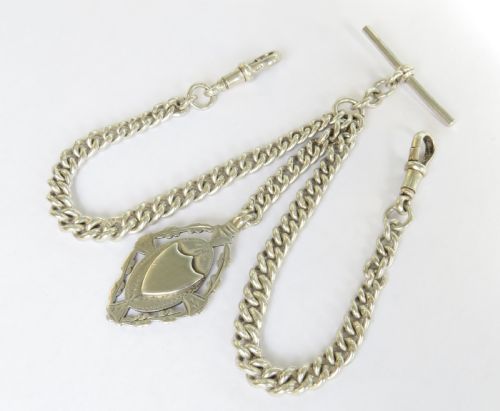
A 1930s silver pocket watch is a portable mechanical timepiece enclosed in a precious metal case, frequently encountered alongside matching silver watch chains, albert chains and fob medallions.
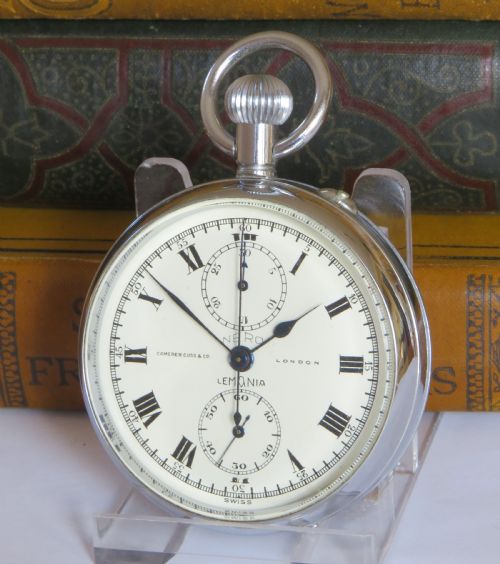
Most examples originate from Swiss horological centres or English workshops, reflecting both standard timekeepers and specialist chronographs issued for awards, military use or daily civilian carriage.
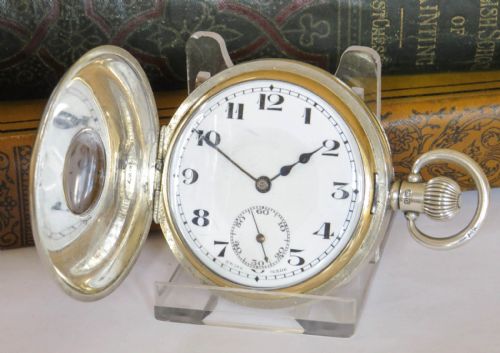
The prevalent forms range from open face designs to hunter and half hunter configurations, often displaying subtle Art Deco geometric touches on dials and cases.
Materials and Construction
Cases are formed predominantly from sterling silver, supported by internal brass and steel movement components protected by glass crystals and occasionally decorated with enamel or niello work.
Swiss and English workshops housed jewelled lever escapements inside these metal housings, pairing durable silver alloys with precise mechanical gearing designed for daily wear.
The archive records specialist timepieces including bravery award pieces, railway-associated watches, and dual-function compass fobs alongside standard timekeepers.
Factors of Distinction
The distinction between standard commercial production and superior quality rests on the precision and finishing of the internal movement, alongside the complexity of complications such as chronographs.
Case execution also marks out the hierarchy, where crisp hallmarks, intact enamel detailing and heavy gauge silver plating or solid sterling construction elevate an ordinary utility watch into a collectable piece of metalwork.
Cyma·Vertex·Omega·Tavannes·Zenith·Rotherham And Sons
The 1930s Silver Pocket Watch Glossary
- Hunter
- A pocket watch featuring a spring-loaded metal cover that protects the glass dial from scratches. This hinged lid requires a push-button release to reveal the time.
- Half Hunter
- A pocket watch with a case cover containing a glass or open aperture in the centre. This allows the wearer to read the hands without opening the full case.
- Albert chain
- A decorative chain attached to a pocket watch and secured through a buttonhole on a waistcoat. Named after Prince Albert, these chains often suspend fob medals or compasses.
- Niello
- A black metallic alloy used as an inlay on engraved metal surfaces. It creates stark visual contrast against polished silver cases.
- Chronograph
- A timepiece equipped with a stopwatch function alongside standard timekeeping. These complications indicate precise timing capabilities utilised for sports, aviation or industrial tasks.
1930s Silver Pocket Watch: Frequently Asked Questions
How do I wind a mechanical pocket watch?
Wind the crown at the top of the watch gently between your thumb and forefinger until you feel resistance. Stop immediately to avoid damaging the mainspring.
Most vintage pocket watches require winding once every twenty-four hours to maintain accurate timekeeping throughout the day.
What is the difference between an open face and a hunter watch?
An open face watch exposes the glass crystal directly, allowing quick reading of the time without opening a case. A hunter watch places a protective metal lid over the dial, shielding the glass from daily impact.
Collectors often choose open face designs for desk display and hunter cases for secure pocket carriage.
Can I wear a pocket watch without a waistcoat?
You can secure a pocket watch by threading the attached chain through a belt loop on trousers and slipping the watch into the pocket. Alternatively, a shorter length can attach securely to a jacket lapel buttonhole.
Both methods keep the timepiece stable while displaying the accompanying chain and fob.
How do I identify the silver purity on these watches?
Examine the inside of the case backs for hallmark stamps, which indicate standard sterling silver purity alongside the assay office and date letter. Swiss imports often carry distinct foreign silver marks alongside standard numerical grades.
These tiny stamped impressions provide verifiable evidence of the metal composition and manufacturing period.