



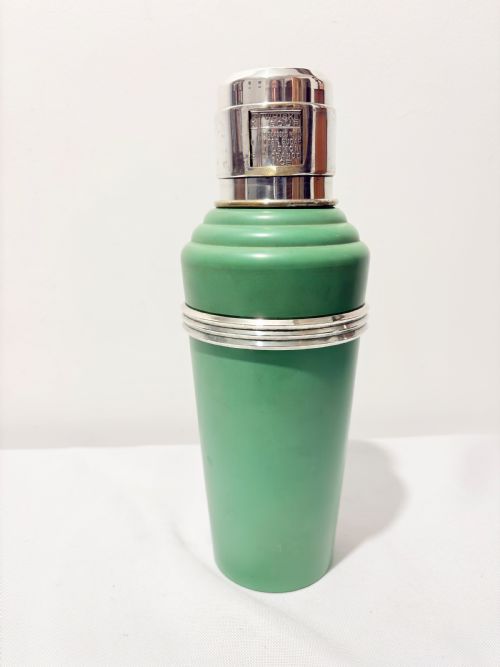


1930s Silver Cocktail Accessories
These 1930s silver cocktail accessories bring geometric line and polished surface to the home bar, offering function with distinct period style.
1930s Silver Cocktail Accessories
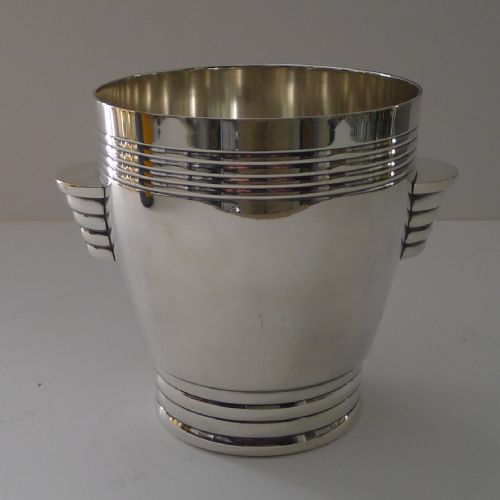
When you search for 1930s silver cocktail accessories, you encounter barware defined by the Art Deco style that dominated the period. The selection on this page centres heavily on cocktail shakers, accompanied by novelty cocktail sticks, trays, ice buckets, and lemon squeezers.
These items emerge primarily from the nineteen-thirties, with occasional pieces stretching into the nineteen-twenties and nineteen-forties. English, French, German, and Swiss makers produced these drinking vessels and implements to satisfy the rising popularity of home cocktail culture.
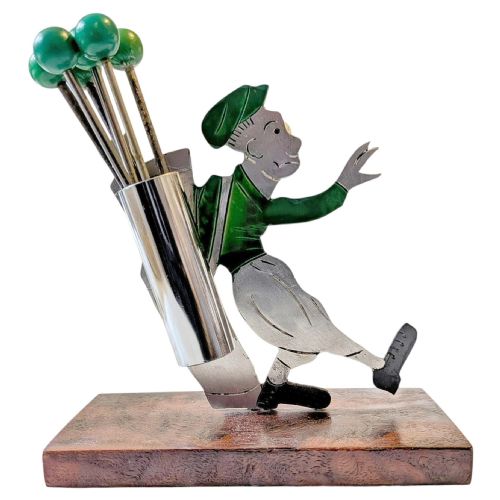
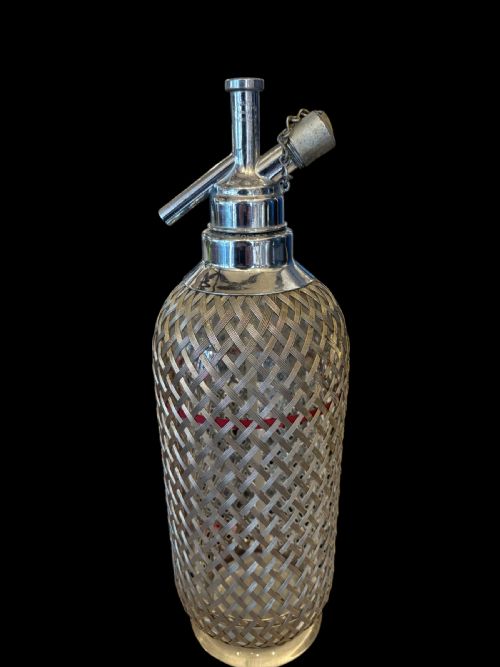
The most common form you will meet is the silver-plated cocktail shaker, often accompanied by fitted sets of cocktail sticks featuring novelty figures. Alongside shakers and picks, you find specialised items like soda syphons, spirit flasks, and bridge spoons designed for entertaining.
How they were made
Makers constructed these objects using a base metal or electroplated nickel silver, applying a silver-plated finish to achieve a bright reflective surface. Manufacturers combined this metalwork with contrasting materials such as cut glass, coloured enamel, and moulded Bakelite.
The aesthetic relies on strict geometric proportions characteristic of Art Deco design, frequently paired with playful novelty motifs like the comical golfer or cherry man. Artisans also utilised chrome and wood alongside traditional silver to create durable items for the bar.
Listings feature periods spanning the nineteen-twenties, nineteen-thirties, and nineteen-forties, anchored by the Art Deco style.
What varies in quality
Quality in these bar items depends upon the crispness of the Art Deco form and the reputation of the silversmith or manufacturer behind the piece. Recognised makers and distinct French or English designs elevate the standing of an accessory above standard commercial output.
The integration of secondary materials like vibrant enamel, coloured Bakelite, or heavy cut glass dictates the distinction between ordinary and exceptional pieces. Weight, balance, and the preservation of the original silver-plated or chrome surface further separate standard production from superior examples.
Sudre·Richard Comyns·Keith Murray·William Suckling·C S Green and Co·Asprey·Mappin and Webb·Carl Deffner
The 1930s Silver Cocktail Accessories Glossary
- Art Deco
- A design style spanning the interwar years characterised by stylised motifs, geometric shapes, and streamlined forms. This aesthetic influenced the architecture and domestic objects of the nineteen-thirties.
- Silver Plate
- A manufacturing process where a thin layer of silver is bonded to a base metal such as nickel silver or copper. This technique provided the appearance of solid silver at a lower production cost.
- Bakelite
- An early form of synthetic plastic utilised for handles, lids, and decorative details on barware. Its durability and rich colours suited the modern aesthetic of the era.
- Electroplated Nickel Silver
- A common base alloy composed of copper, nickel, and zinc, coated with silver through electrolysis. Many cocktail shakers and accessories on this page rely on this robust foundation.
- Soda Syphon
- A pressurised bottle used to dispense carbonated water for mixed drinks. These glass and metal vessels formed a standard part of the well-equipped bar.
1930s Silver Cocktail Accessories: Frequently Asked Questions
What defines a true nineteen-thirties shaker?
A true shaker from this decade typically exhibits geometric Art Deco lines, constructed from silver-plated metal combined with glass or Bakelite components.
Many examples feature specific maker marks from English silversmiths or continental European manufacturers dating between nineteen-thirty and nineteen-forty.
How were novelty cocktail picks used?
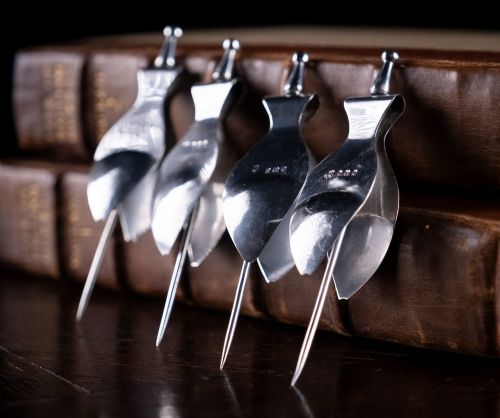
Novelty cocktail sticks served appetisers, olives, and garnishes from matching stands during social gatherings.
Hosts placed these small implements on the bar or table as both functional utensils and decorative conversation pieces.
Are these silver accessories suitable for daily use?
These vintage items can serve drinks and display in modern settings, provided you handle silver-plated surfaces and glass with care.
Hand washing preserves the historic plating and prevents damage to fragile elements like enamel and early plastics.
How do I identify English versus continental pieces?
English pieces often bear traditional hallmarks or maker stamps indicating cities like London alongside the silversmith's punch.
Continental items from France, Germany, or Switzerland generally rely on alternative maker marks, distinct stylistic flourishes, and differing gauge standards.