






Silver Cocktail Bar Accessories
Silver cocktail bar accessories bring the kinetic glamour of the lounge into the present, offering both functional utility and striking mid-century design.
Silver Cocktail Bar Accessories
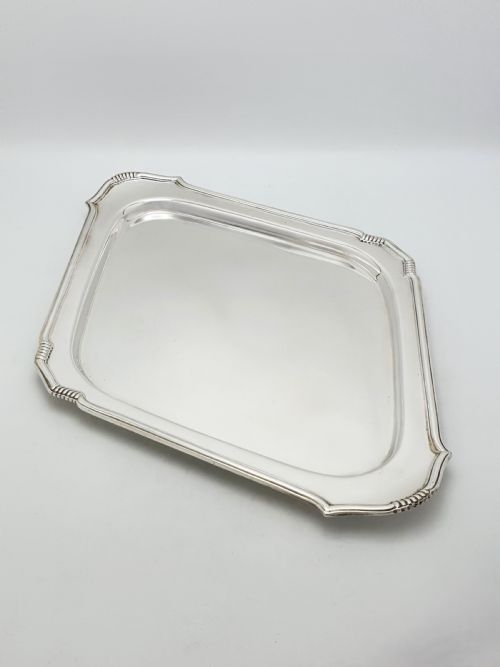
When collectors search for silver cocktail bar accessories, they encounter a range of items spanning the Edwardian era through to the mid-century modern period. These objects comprise cocktail shakers, trays, lemon squeezers, ice buckets, spirit flasks, and sets of cocktail sticks.
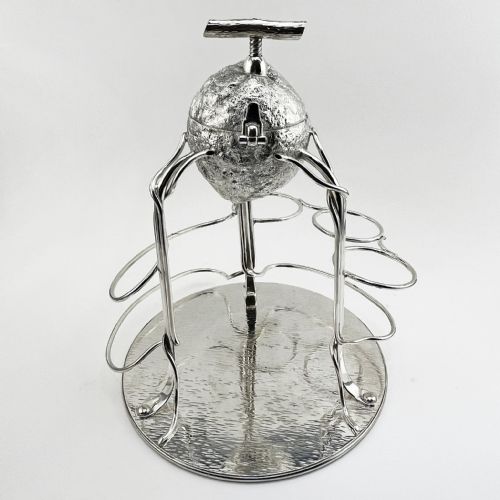
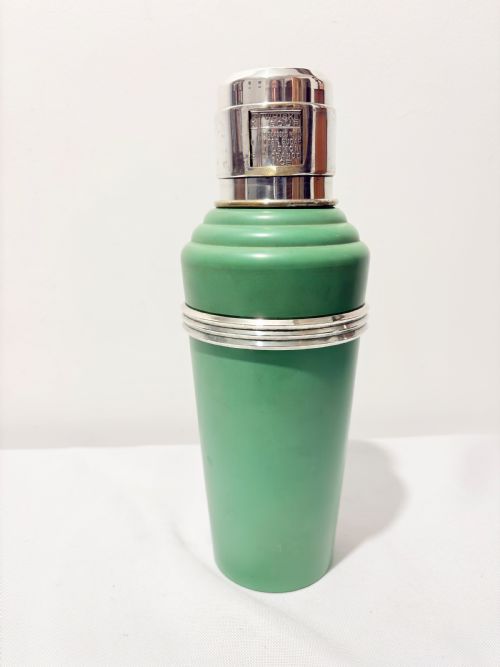
The version most commonly met on this page is the silver plated Art Deco cocktail shaker, often featuring integrated mechanisms such as built-in lemon squeezers or rotating recipe bands. These pieces originate from British, French, Italian, German, and American workshops active in the 1920s and 1930s.
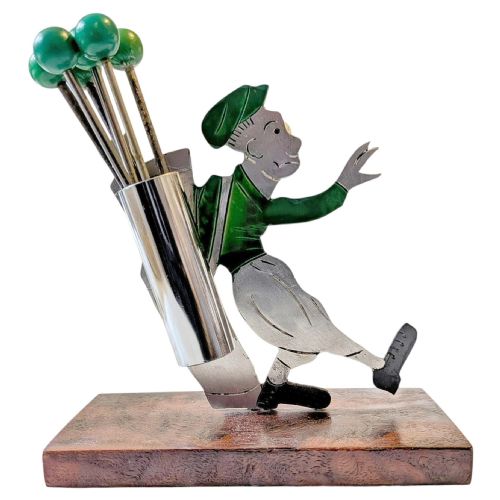
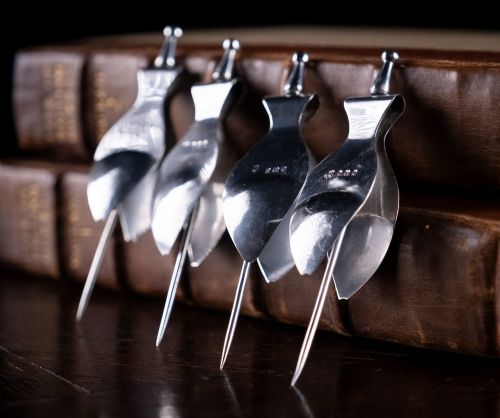
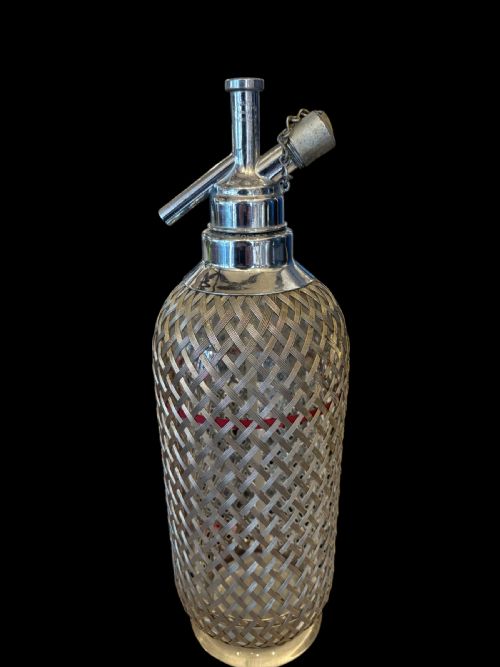
Beyond shakers, the selections include matching bar sets and individual tools like tongs and sticks, showcasing materials including chrome, glass, enamel, and Bakelite alongside silver plate and sterling silver.
How they were made
Makers utilised a base of metal, commonly electroplated nickel silver or standard metal, applying a layer of silver plate to achieve a reflective finish. Sterling silver pieces were also produced directly from solid metal.
Combinations of glass, cut glass, and contrasting elements like green Bakelite or colourful enamel were incorporated into shakers, trays, and cocktail sticks to add texture and visual interest. Integral moving parts, such as citrus squeezers and recipe drums, required precision engineering during manufacturing.
Listings feature items from the Edwardian period through the 1920s, 1930s, 1940s, 1950s, and 1960s.
What varies in quality
Quality in these items is determined by the weight of the metal and the integrity of the plating, as well as the distinction of the design house behind the piece. Items bearing marks from notable makers demonstrate superior craftsmanship in their hinges, seals, and moving assemblies.
A higher standard of manufacture shows in the crispness of chased or engraved details, such as recipe text or decorative motifs, and the successful integration of non-metal components like Bakelite handles or glass bodies.
Sudre·Richard Comyns·Hukin & Heath·Keith Murray·J. B. Chatterley & Sons·James Dixon & Sons·Asprey·Lino Sabattini For Christofle·William Suckling·Angelletti·C S Green & Co·Gaskell & Chambers·Carl Deffner·Harrods·Tuttle·Lutz & Weiss·PHV
The Silver Cocktail Bar Accessories Glossary
- Silver Plate
- A base metal object coated with a thin layer of silver. This technique allowed manufacturers to produce durable, high-shine barware at a lower cost than solid sterling silver.
- Bakelite
- An early form of synthetic plastic utilised for handles, knobs, and decorative accents on mid-century barware. Its rich colours provide a strong visual contrast to silver surfaces.
- Electroplated Nickel Silver
- A copper, nickel, and zinc alloy that serves as the foundation for silver plating. It provides a strong and rigid base for items like shakers and trays.
- Recipe Shaker
- A cocktail shaker featuring a movable band or engraved text on the body that reveals drink proportions when rotated. These practical containers served as portable guides for bartenders.
Silver Cocktail Bar Accessories: Frequently Asked Questions
How do I use a vintage cocktail shaker?
Vintage shakers with removable caps and built-in strainers function much like modern equivalents for mixing drinks with ice. Care must be taken with older silver plated interiors and moving recipe bands during washing.
Many examples feature integrated lemon squeezers or rolling mechanism bands, which require gentle handling to preserve the original metal finish.
What is the difference between silver plate and sterling silver?
Sterling silver contains a high purity standard of silver throughout the entire object, whereas silver plate applies a thin exterior coating over a base metal like nickel silver.
Pieces made from solid sterling silver carry specific hallmarking stamps denoting their metal purity and origin city, unlike plated items which typically bear maker marks or plating indicators.
How should I clean silver barware?
Gentle washing with warm water and mild soap preserves the silver plating and any delicate enamel or Bakelite components. A soft cloth prevents scratching the reflective surface.
Harsh chemical dips should be avoided, particularly on items with coloured enamel details or integrated moving parts that could trap moisture.
How do I identify Art Deco barware?
Art Deco pieces typically display geometric forms, clean lines, and stylised motifs such as diamond shapes or symmetrical engraving. Materials like chrome, glass, and Bakelite frequently accompany the silver.
Makers from this period often incorporated functional novelties, including figural cocktail sticks and rotating recipe cylinders, into their designs.