

1930s Seating Pair
These matching 1930s seating pair options bring interwar form and practical comfort directly to your room.
1930s Seating Pair
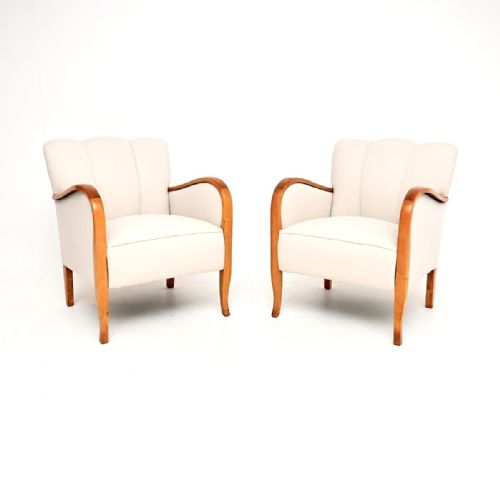
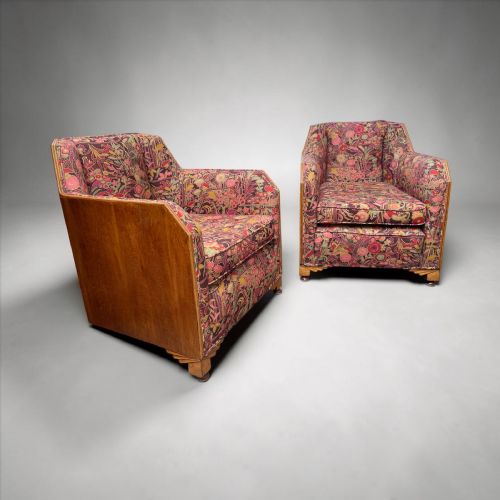
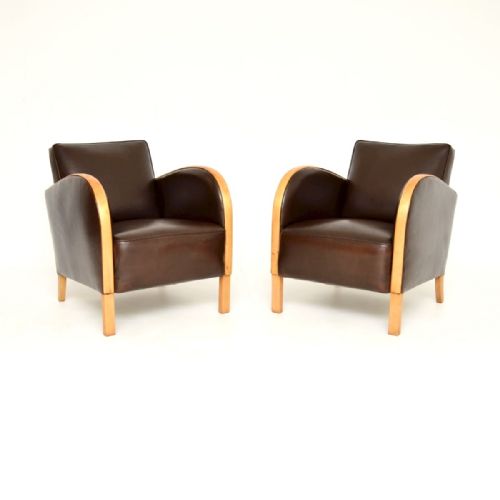
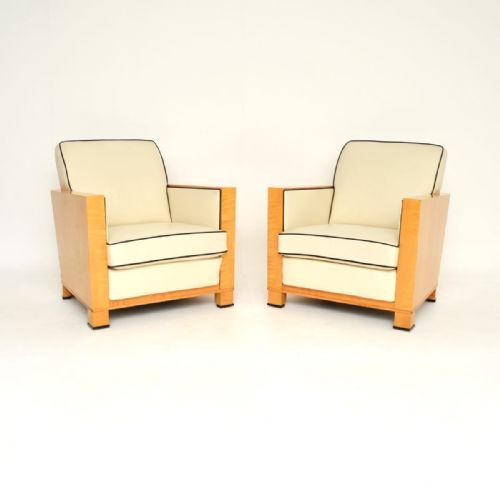
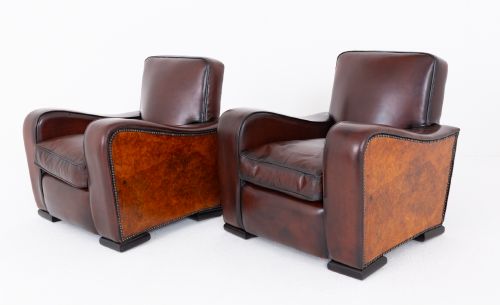
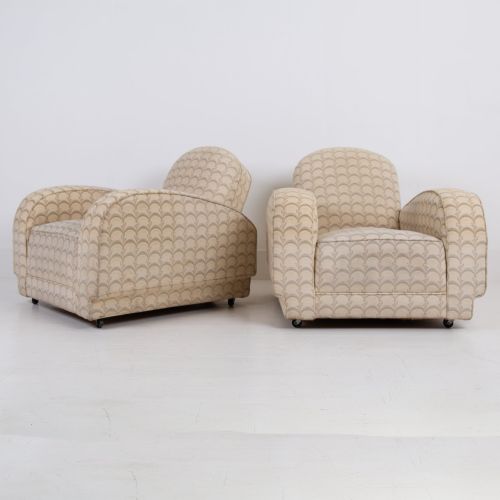
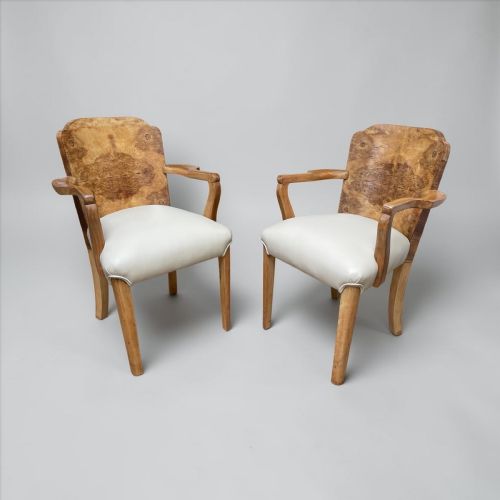
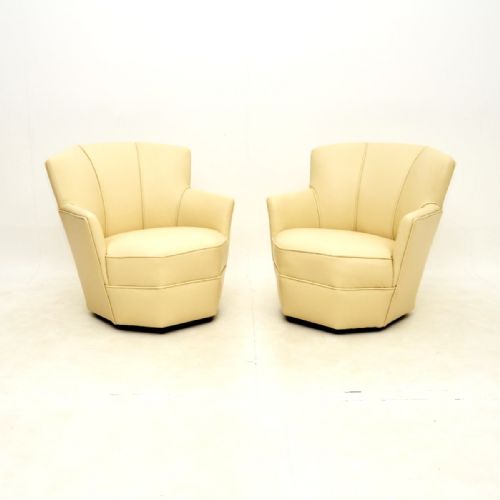
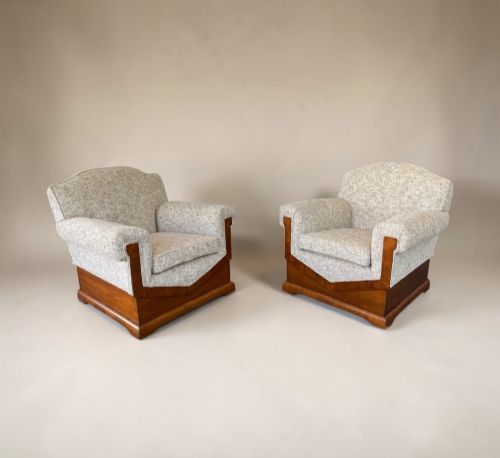
A 1930s seating pair gives you matching twin chairs or suites originating from the interwar period, most frequently encountered as Art Deco armchairs or club chairs. The selection ranges from Swedish birch designs to French leather club chairs and oak tub armchairs.
Buyers look for these matching sets to anchor a room with period symmetry and distinctive interwar geometry. Alongside standard armchairs, the choices extend to occasional chairs, side chairs, lounge suites, and garden seating.
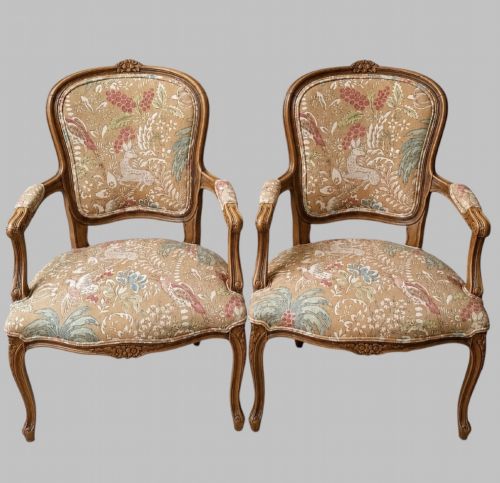
The aesthetic vocabulary spans streamlined Swedish Art Deco, bold French club chairs, and occasional revivals including Neo-Rococo, Victorian, and George I styles. This variety allows a 1930s seating pair to fit both period-specific interiors and eclectic modern spaces.
Materials and construction methods
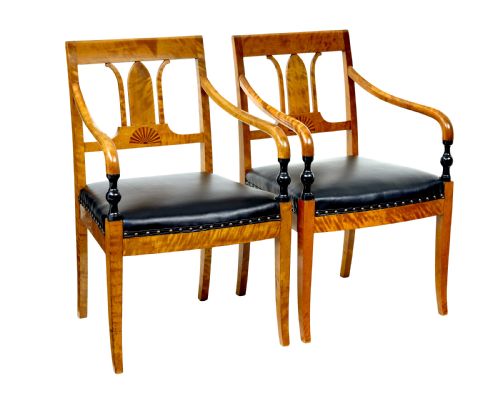
Makers of the period relied on robust hardwoods like oak, walnut, and general timber frameworks to support deep upholstery. Exotic veneers such as satin birch, elm, and burr birch frequently wrap the exterior surfaces to provide striking grain patterns.
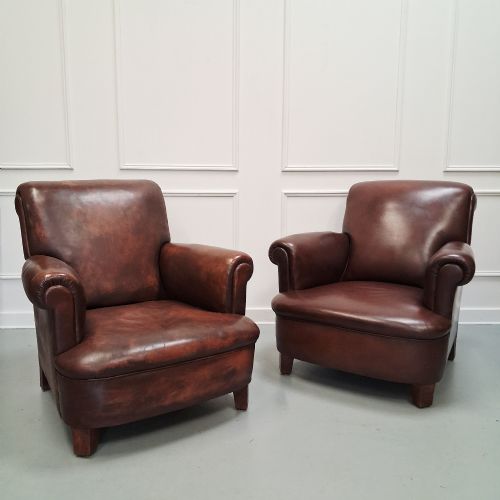
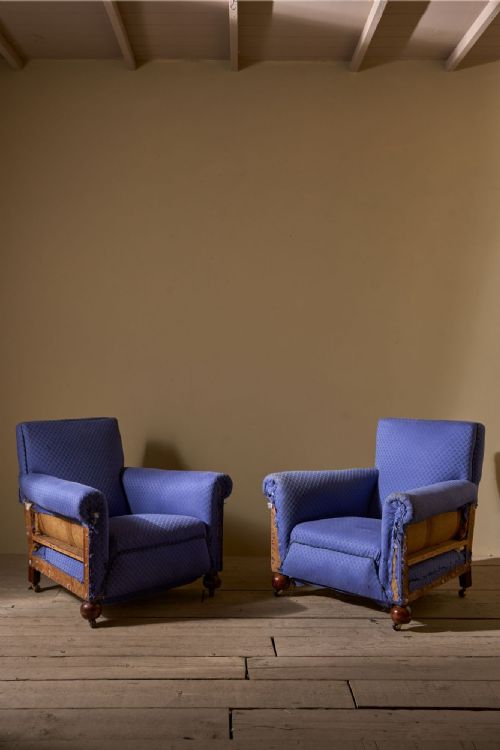
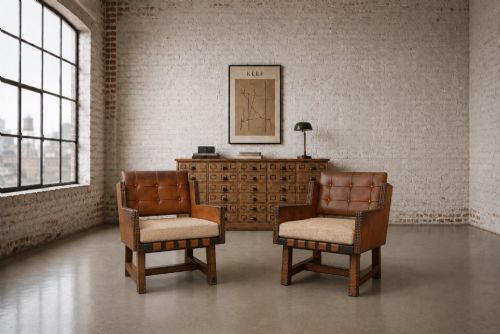
Leather remains a primary covering material, appearing in smooth finishes or button-back configurations on club and lounge chairs. Alternatively, woven fabric and textile upholstery complete many of the side and occasional chair variants.
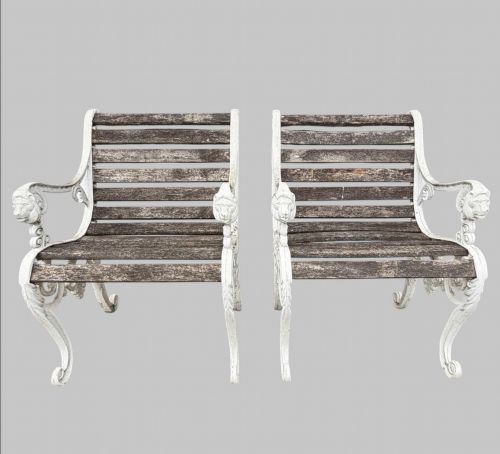
Cast iron garden armchairs complete with fierce lion masks stand ready to supervise the lawn.
Assessing quality and craftsmanship
Quality separates through the selection of timber veneers and the handling of the underlying frame structure. Dense hardwoods and carefully matched burr or satin birch veneers denote higher tier cabinet work.
The treatment of the leather and upholstery dictates the finish, with supple cigar brown or green leather sitting above standard grades. Integrated details like lion masks on cast iron garden frames or distinct cloud shapes indicate specialised studio production.
Hille·Harry and Lou Epstein·Dicon Nance
The 1930s Seating Pair Glossary
- Art Deco
- A design style characterised by sleek geometric shapes, streamlined forms, and modern industrial materials popular during the interwar period. It dominates the aesthetic of most chairs from this decade.
- Club Chair
- A deep, heavy armchair upholstered in leather, designed for relaxed lounging. These seats often feature rounded backs and generous armrests.
- Satin Birch
- A pale, lustrous timber used widely in Swedish furniture manufacture for its fine grain and reflective surface quality. Cabinet makers prize it for high-end decorative veneers.
- Tub Armchair
- A curved seating form where the back and arms merge into a single continuous enclosure. This style provides a cocooning seat, frequently rendered in oak.
- Interwar Period
- The historical timeframe between the First and Second World Wars that generated distinct design movements. Furniture from this era balances traditional craftsmanship with modern geometric lines.
1930s Seating Pair: Frequently Asked Questions
How do I identify genuine 1930s club chairs?
Authentic pieces display period construction methods, traditional upholstery stuffing, and material patination consistent with interwar manufacturing.
Look for typical Art Deco silhouettes, heavy timber frames, and hand-worked leather showing natural wear.
Are Swedish Art Deco chairs different from French ones?
Swedish pieces often employ bright satin birch and elm veneers with clean, light geometric lines. French examples lean towards heavy leather club chairs and voluminous forms.
Both originate from the same decade but serve different visual weights in a room.
How should I care for vintage leather armchairs?
Maintain the leather with appropriate conditioners to prevent cracking while preserving the natural grain and colour. Avoid placing the chairs in direct sunlight or near heat sources.
Regular dusting and gentle cleaning keep the surface supple over decades of use.
Can I mix these chairs with modern interiors?
The strong geometric forms of Art Deco and interwar seating pair well with contemporary minimalist spaces. Their sculptural silhouettes function as focal points in modern rooms.
Matching pairs provide balance and symmetry against neutral backgrounds.