



1930s Satinwood Cabinet
A 1930s satinwood cabinet brings striking grain and period proportion to a room, offering warm tones and refined storage.
1930s Satinwood Cabinet
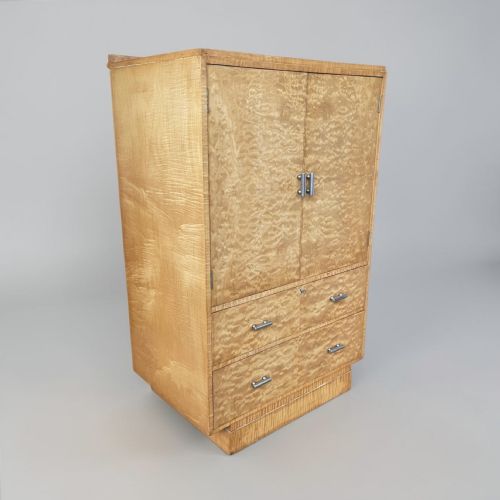
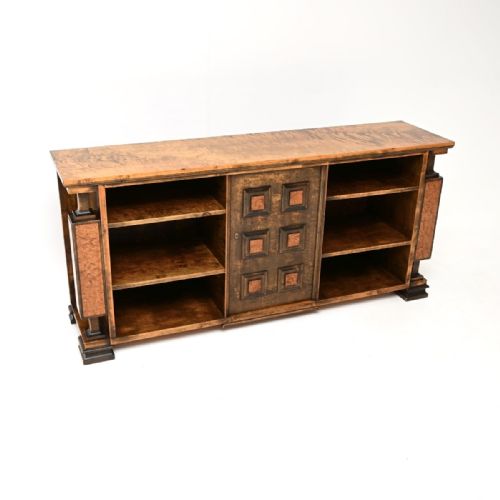
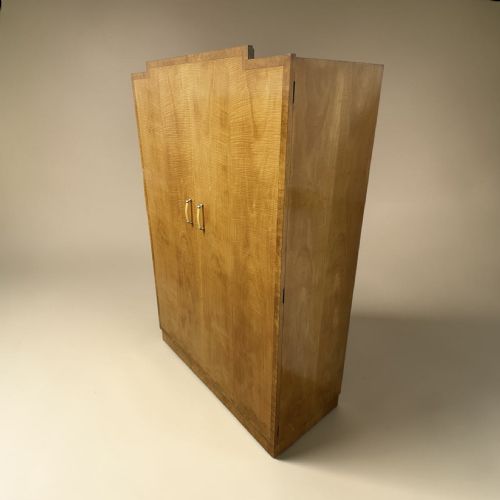
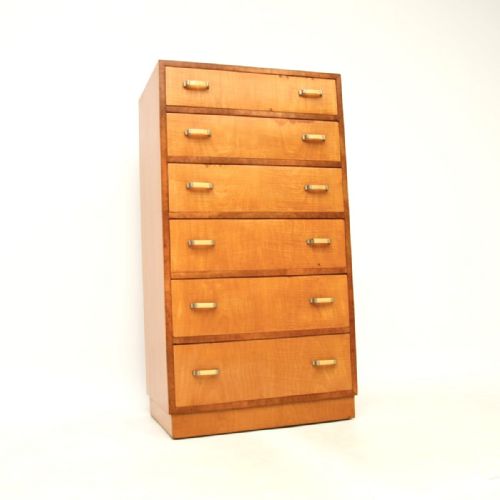
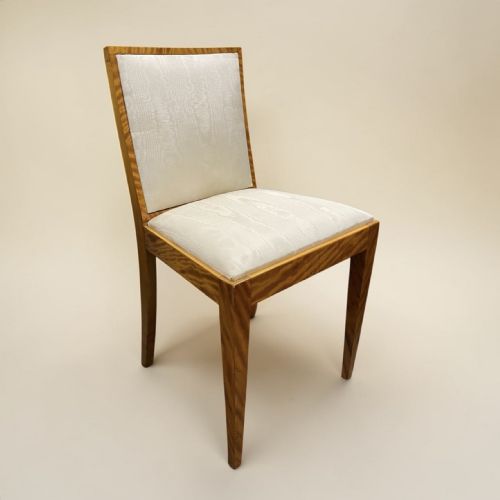
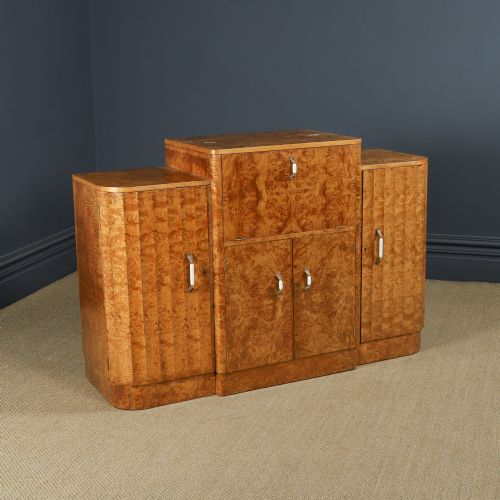
A 1930s satinwood cabinet encompasses a range of Art Deco forms designed for bedroom and living spaces, drawing on periods from the 1920s and 1930s. Buyers encountering this search phrase find various bedside tables, bedside cabinets, tallboy cabinets, bookcases, wardrobes, chests of drawers, bedroom chairs, and cocktail cabinets.
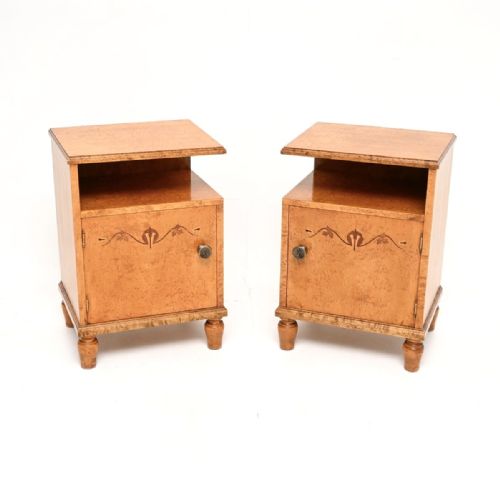
The version most commonly met on this page is the bedside chest or bedside cabinet, often presented as a pair. These pieces frequently combine satinwood with contrasting timbers and practical hardware.
Originating predominantly from English and Swedish workshops, these items reflect the distinct aesthetic priorities of the interwar period. The combination of satinwood with walnut and birch veneer defines the visual character of the category.
Materials and construction
Makers utilised satinwood alongside walnut, birch veneer, and birds eye maple veneer to create rich, figured surfaces across cabinet doors and drawer fronts. These timbers were selected for their grain patterns, which were arranged to form geometric compositions characteristic of the style.
Brass, metal, and bakelite elements provided functional contrast for handles, escutcheons, and structural details. Cabinet construction relied on standard interwar cabinet-making techniques to stabilise large veneer surfaces.
Listings feature items from the 1920s and 1930s incorporating satinwood, walnut, brass, bakelite, and birch veneer.
Distinguishing quality
The distinction between standard production and finer work rests on the selection and matching of wood veneers across the carcass. Superior examples demonstrate thoughtful grain continuity and balanced timber pairing, particularly where satinwood meets walnut.
Design attribution also separates the range, with documented pieces by known makers commanding greater interest. The integration of specialised hardware, such as electrical fittings in cocktail cabinets, further marks out ambitious execution.
Bath Cabinet Makers·Harry & Lou Epstein·Betty Joel·Heal's
The 1930s Satinwood Cabinet Glossary
- Satinwood
- A pale, lustrous timber with a fine grain and natural sheen. It provides a bright surface frequently contrasted with darker woods.
- Veneer
- A thin layer of figured wood applied over a secondary timber base. This technique allowed makers to display dramatic grain patterns.
- Art Deco
- A design style dominant in the interwar period featuring geometric forms and streamlined silhouettes. It governs the architectural lines of these cabinets.
- Tallboy
- A case piece combining a chest of drawers with a cupboard section above. It offers vertical storage capacity for bedroom use.
1930s Satinwood Cabinet: Frequently Asked Questions
What is a 1930s satinwood cabinet?
A 1930s satinwood cabinet is a storage piece from the Art Deco era utilising pale satinwood veneers, often paired with walnut or birch.
These items range from bedside tables and tallboys to specialised cocktail cabinets and wardrobes.
Where were these cabinets made?
The pieces originate primarily from English and Swedish workshops active during the interwar period.
Maker attributions include notable firms and designers of the 1920s and 1930s.
How do I style a satinwood cabinet?
The light, figured grain of satinwood works well against neutral walls and alongside dark walnut or mahogany furniture.
Pairing them with period lighting highlights the contrasting timbers and metal or bakelite details.
Are these cabinets part of matching bedroom suites?
Many listings appear as pairs, particularly bedside chests and cabinets designed to flank a bed.
Larger items like wardrobes and tallboys were often produced as components of larger bedroom suites.
What materials accompany satinwood?
Cabinets frequently combine satinwood with walnut, birds eye maple veneer, and satin birch.
Hardware elements incorporate brass, metal, and bakelite to complete the interwar aesthetic.