


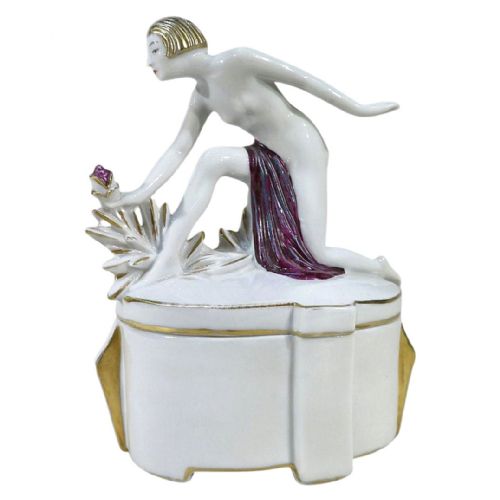


1930s Porcelain Trinket Box
A 1930s porcelain trinket box brings the unmistakable geometry and character of the Art Deco period straight to a dressing table.
1930s Porcelain Trinket Box
When searching for a 1930s porcelain trinket box, collectors typically encounter figural powder bowls, vanity jars, and bonbonnières from the Art Deco period. These pieces frequently take the form of half doll flapper girls, bathing belles, pierrots, and jesters.
Originating largely from France, Germany, and Austria, these ceramic and porcelain items served practical functions on dressing tables for holding powders, perfumes, and small trinkets. The listings show a strong presence of French and German workshops from around 1930.
Alongside the figural half doll covers, plain or novelty porcelain bowls appear frequently. Each piece reflects the characteristic design language of the era, combining utilitarian storage with decorative figural sculpture.
How they were made
Makers utilised porcelain and earthenware as the primary ceramic bodies for these pieces, shaping them into bowls, jars, and figural covers. The material was then finished with glaze to provide a smooth, protective surface.
Listings for this phrase exclusively feature items from the 1930 period, constructed from porcelain, earthenware, and glazed ceramic.
What varies in quality
The precision and detail of the hand-painted enamel work dictate much of the visual standard across these porcelain items. Finely rendered facial expressions and crisp gilt highlights separate standard production pieces from finer studio output.
The complexity of the modelling, particularly in figural half doll covers depicting flapper girls or bathing belles, marks the difference in execution. Superior pieces demonstrate careful attention to sculptural form alongside the ceramic glaze.
Limoges
The 1930s Porcelain Trinket Box Glossary
- Art Deco
- A design style of the 1930s characterised by stylised geometric forms and modern motifs. It heavily influenced the shaping of powder boxes and vanity sets.
- Half doll
- A ceramic upper torso with no legs, typically mounted to the fabric skirt of a boudoir doll or serving as the lid of a powder jar. They often depict flapper girls or pierrots.
- Bonbonniere
- A small decorative box or jar originally intended for holding sweets or bonbons. In the 1930s, porcelain versions frequently sat upon dressing tables.
- Gilt
- A thin layer of gold applied to the surface of porcelain or ceramic. It provides metallic detailing on hats, dresses, and rims.
- Glaze
- A glassy coating fused to ceramic surfaces through firing. It waterproofs the earthenware or porcelain and adds gloss.
1930s Porcelain Trinket Box: Frequently Asked Questions
What were 1930s porcelain trinket boxes used for?
These items served primarily on dressing tables to hold loose face powder, perfumes, and small personal trinkets. Many functioned as removable lids for powder bowls.
Their dual role as decorative sculptures and storage containers made them staples of 1930s dressing room vanity sets.
How do I identify an Art Deco powder box?
Look for characteristic figural subjects such as flapper girls, bathing belles, and pierrots modelled in porcelain or ceramic. The styling typically reflects the geometric and modernist tastes of the 1930s.
Origin markings from European countries like France, Germany, and Austria often accompany these pieces.
Where were these porcelain boxes made?
The evidence points to production hubs in France, Germany, and Austria during the 1930s. Specific regional manufacturers, such as Limoges in France, contributed notable porcelain and ceramic pieces.
These varied European workshops produced distinct figural and novelty designs for the dressing table market.
How should I clean a glazed porcelain trinket box?
Dust the glazed porcelain gently with a dry, soft cloth to remove surface particles. Avoid abrasive materials that might scratch the enamel or gold leaf.
Take care around painted details and gilt highlights, as harsh cleaning agents can damage the original 1930s decoration.