
1930s Platinum Jewellery
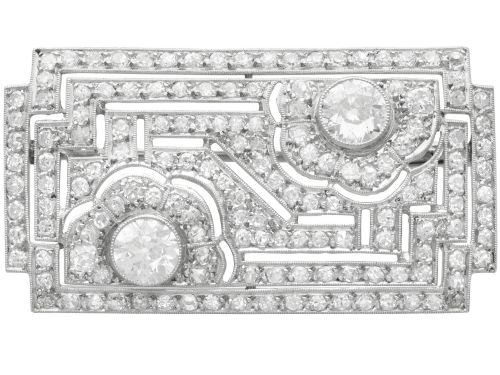
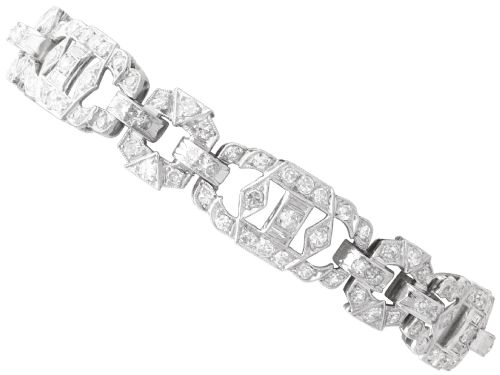
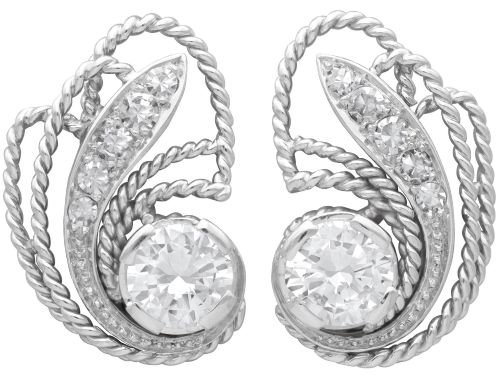
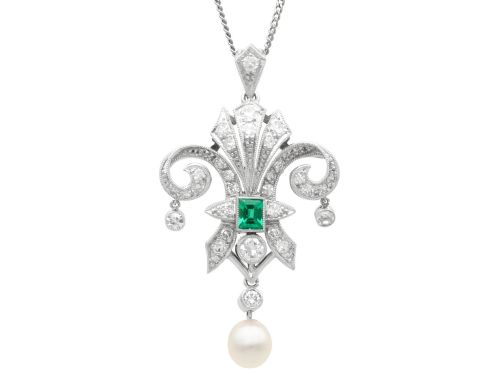
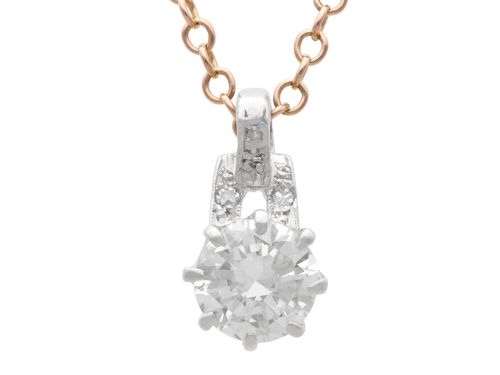
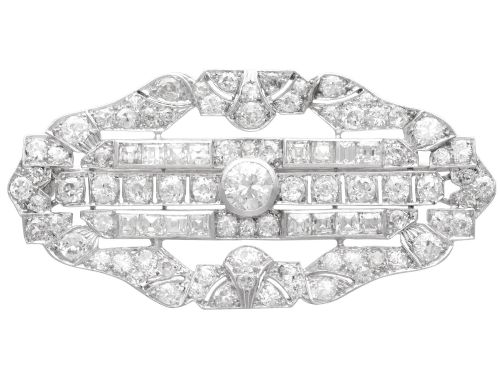
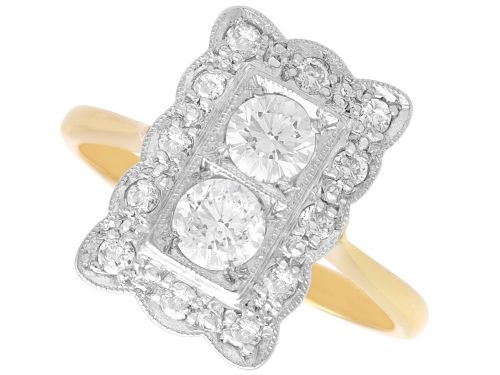
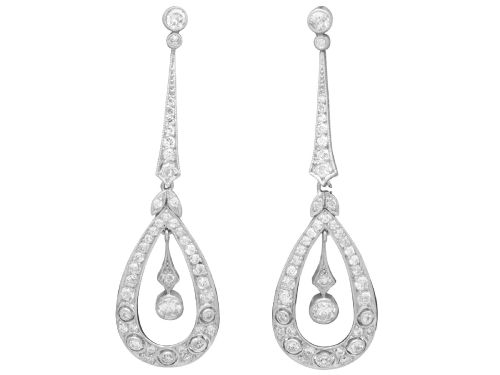
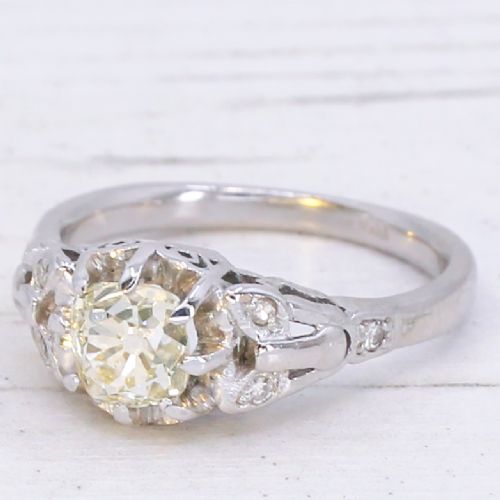
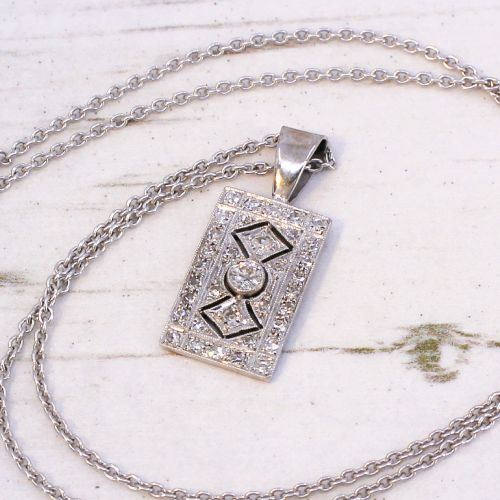
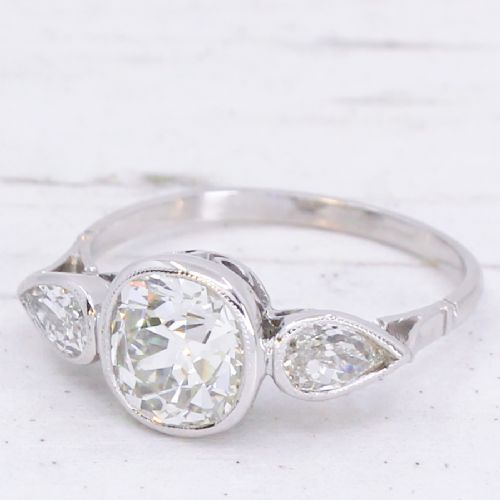
These pieces of 1930s platinum jewellery capture the crisp geometry and enduring brilliance of the Art Deco era.
1930s Platinum Jewellery
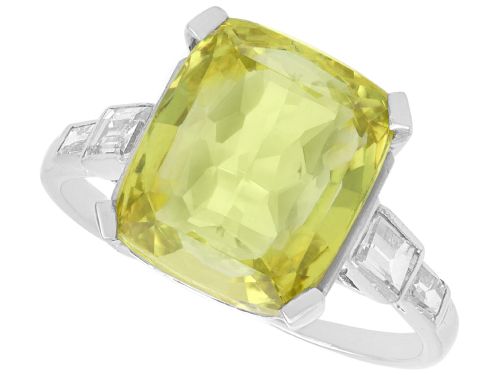
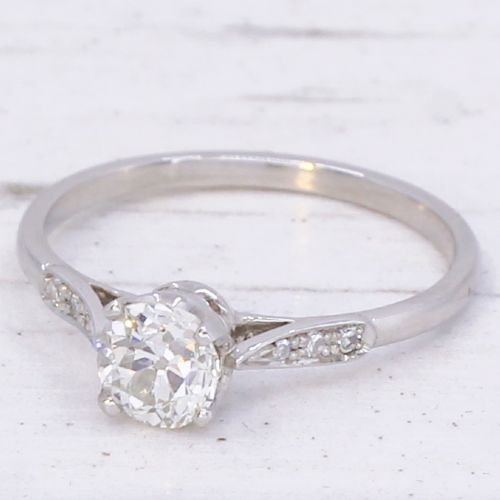
When searching for 1930s platinum jewellery, buyers encounter rings, brooches, drop earrings, pendants, and cocktail watches shaped by the prevailing Art Deco design ethos. Engagement rings, dress rings, and solitaire pieces dominate the available forms, often paired with diamond, sapphire, ruby, or emerald stones.
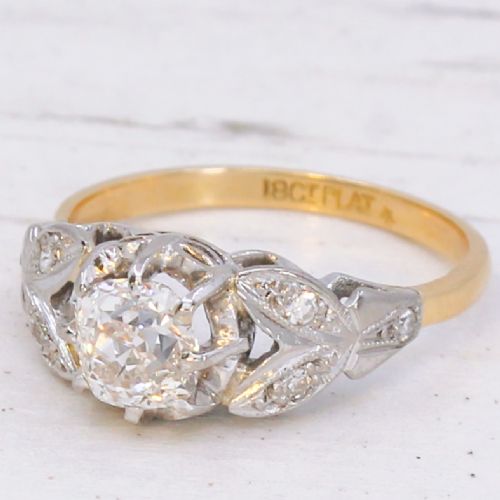
The aesthetic leans heavily into linear symmetry, architectural mounts, and geometric clusters. Platinum serves as the primary white metal framework, frequently complemented by accents of 18ct white gold, yellow gold, or traditional gold mountings.
Most items date from the interwar period, spanning the late 1920s through to the 1940s, reflecting the transition of high-society ornamentation towards sleek, streamlined elegance.
How they were made
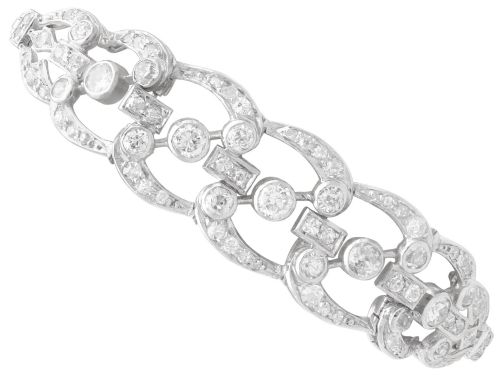
Makers utilised dense platinum to construct slender, secure settings that held large gemstones with minimal visible metal. This allowed lapidaries to employ old European cuts, old cushion cuts, and old pear cuts for diamonds, letting the stones capture light from multiple angles.
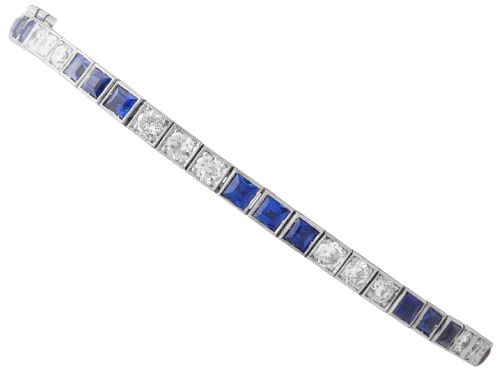
Coloured gemstones such as unheated Burmese rubies, sapphires, emeralds, and blue zircons were meticulously calibré-cut or set en cabochon within multi-stone clusters and brooches. Jewellers combined platinum with 18ct yellow or white gold to provide structural contrast and varied tone across shoulders and galleries.
Listings feature items spanning the Art Deco period from 1920 to 1940, predominantly incorporating platinum, diamond, sapphire, and 18ct gold.
What varies in quality
The standard of 1930s platinum jewellery hinges on the precision of the metalwork and the provenance of the central stones. Master jewellers achieved knife-edge prongs and intricate openwork galleries that remain rigid and secure after decades of wear.
Stone selection creates the primary distinction between pieces, where unheated origin gems and well-matched old cut diamonds elevate the overall composition. The integration of secondary diamond shoulders and full eternity pavé work distinguishes standard production items from high-end cocktail pieces.
The 1930s Platinum Jewellery Glossary
- Art Deco
- A design movement prevalent in the 1920s and 1930s characterised by geometric shapes, stylised motifs, and streamlined forms. It replaced the flowing curves of the Edwardian and Art Nouveau periods.
- Old European Cut
- An early round diamond cut featuring a small table, heavy crown, and a large culet facet. This cut produces distinctive broad flash patterns under candlelight.
- Toi et Moi
- A ring style featuring two main gemstones sitting side by side or closely entwined, symbolising two souls meeting. French for 'you and me'.
- Platinum
- A dense, ductile, and malleable white metal prized for its strength and resistance to tarnish. It permits delicate wirework and claw settings that hold precious stones securely.
- Eternity Ring
- A band set continuously with gemstones symbolising endless love. These rings feature stones channel-set or flush-set completely around the circumference of the metal hoop.
1930s Platinum Jewellery: Frequently Asked Questions
How do I care for 1930s platinum jewellery?
Platinum develops a soft surface patina over decades of wear, which many collectors prefer to leave undisturbed. Clean the metal and stones gently using warm soapy water and a soft brush.
Store pieces individually in lined boxes to prevent the hard platinum from scratching softer metals or chipping vulnerable gemstones.
Can I wear a 1930s engagement ring daily?
These rings were built for daily wear using robust platinum frames that securely anchor old cut diamonds and coloured stones. Regular checks by a professional jeweller ensure the claws remain tight and protective.
Take care to remove cocktail rings and diamond set bands during heavy manual labour to protect delicate millegrain edges.
What defines Art Deco jewellery?
Art Deco jewellery relies on strong vertical lines, symmetry, and architectural motifs inspired by modern machinery and ancient civilisations. It contrasts sharply with earlier organic floral styles.
Master artisans combined platinum with contrasting calibre cut gemstones to create striking visual depth.
How do I identify platinum from white gold?
Platinum possesses a naturally bright white lustre that does not fade or require rhodium plating. It feels noticeably heavier than white gold of the same dimensions due to its high density.
Hallmarks and metal tests often confirm the specific alloy standard used during manufacture.