


1930s Original Drawing
These 1930s original drawing examples capture period draughtsmanship directly from the hand of the artist, offering authentic wall art for collectors.
1930s Original Drawing
When you search for a 1930s original drawing, you encounter unique works on paper spanning portraits, landscapes, and expressionist scenes. These pieces capture the artistic idioms of the interwar period through direct draughtsmanship.
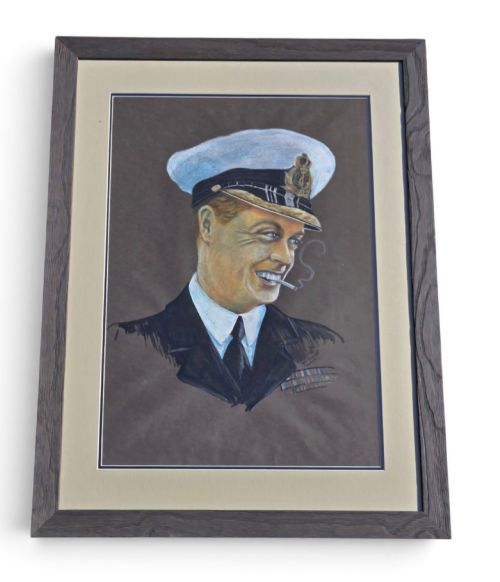
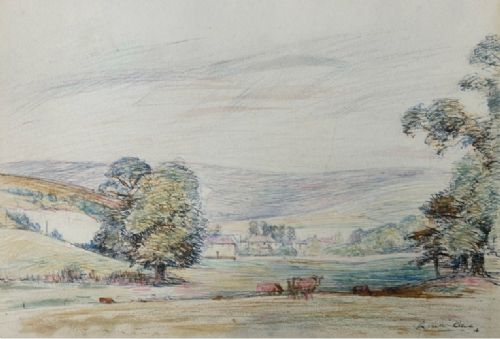
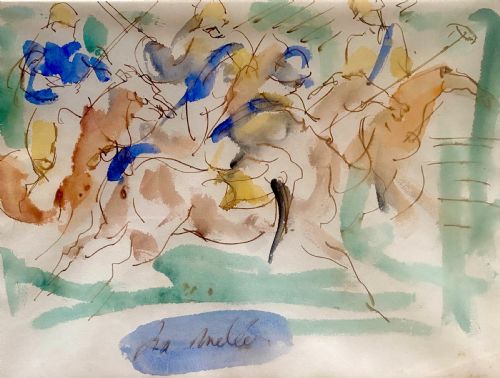
The most common formats on this page include framed drawings, watercolour paintings, and wall art. Subjects range from English pastoral landscapes and equestrian polo matches to French Art Deco figures and royal portraits.
Materials and techniques
Artists of this era worked primarily on paper supports, employing mediums such as graphite, coloured ink, pastel, chalk, and watercolour. Many works combine ink lines with washes of watercolour to build form and atmosphere.
Finished pieces are typically housed behind glass within wood frames, preserving the delicate pastel pigments and ink lines from atmospheric degradation.
Geographic origins span British, French, and Spanish artistic traditions from the 1930s decade.
Indicators of quality
Quality rests in the sureness of the line and the fidelity of the medium, distinguishing confident draughtsmanship from hesitant execution. A master hand reveals itself in economy of stroke and expressive vitality.
The sophistication of the composition and the historical resonance of the subject matter elevate certain works above standard decorative examples from the same decade.
Herskind·Russell Sidney Reeves·Lucien Gibert·Andrè Maurice·Henry Bird·Fred Lawson
The 1930s Original Drawing Glossary
- Art Deco
- A design style prevalent in the 1930s characterised by sleek lines, stylised forms, and modern elegance. It heavily influences French and Spanish figurative works of the period.
- Watercolour
- A paint consisting of pigment suspended in a water-based solution, applied to paper in transparent washes. It allows for luminous effects in landscape and portrait studies.
- Pastel
- A dry medium composed of powdered pigment and a binder, shaped into sticks. It produces velvety surfaces rich in colour.
- Framed Drawing
- An original work on paper protected beneath glass within a wooden moulding. This presentation safeguards fragile mediums from dust and handling.
1930s Original Drawing: Frequently Asked Questions
What defines a 1930s original drawing?
A 1930s original drawing is a unique work executed by hand on paper during the 1930s decade, utilising mediums such as ink, graphite, pastel, or watercolour.
Unlike printed reproductions, each drawing bears the direct touch, brushstrokes, or pencil marks of the artist.
How should I frame works on paper?
Works on paper require framing behind glass with acid-free mounts to prevent direct contact between the drawing and the glazing.
Keep these pieces away from direct sunlight to protect vulnerable pigments like pastel and watercolour from fading.
What subjects appear in these drawings?
Subjects range widely from English pastoral landscapes and farm scenes to French Art Deco portraits and equestrian polo matches.
Figurative studies often capture expressive character types and dancers reflecting the cultural life of Paris and Britain.