
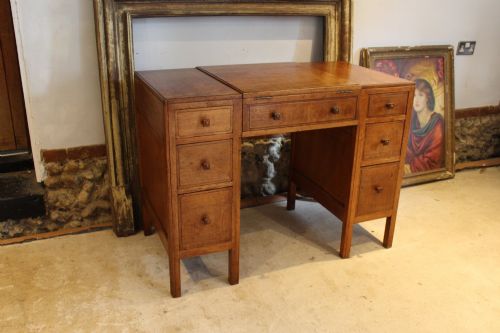
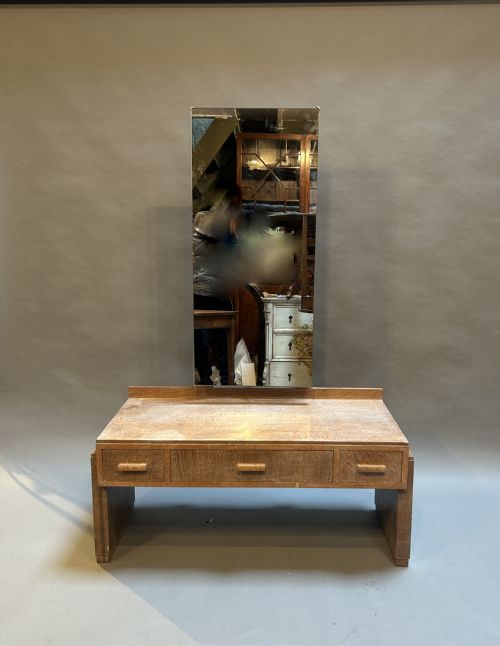


1930s Oak Vanity
These pieces of 1930s oak vanity bring genuine character to a bedroom through practical storage and clean period design.
1930s Oak Vanity
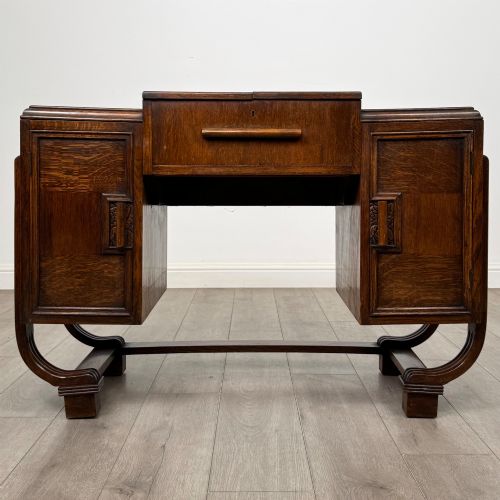
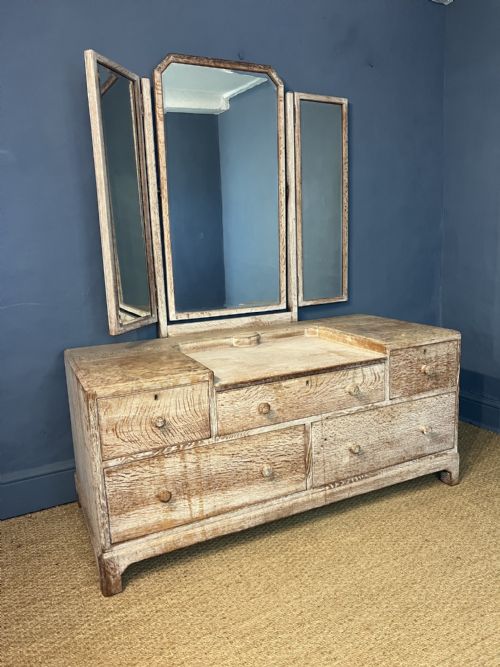
A 1930s oak vanity usually takes the form of a dressing table or dressing chest, often accompanied by a matching stool, chair or mirror. These items emerged during periods spanning the 1920s, Edwardian era and the 1930s, reflecting changing domestic habits and bedroom design.
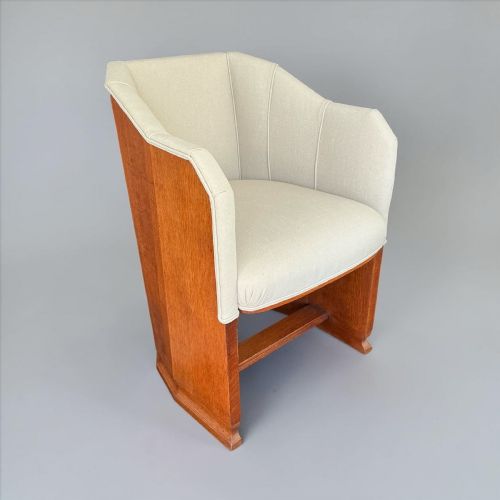
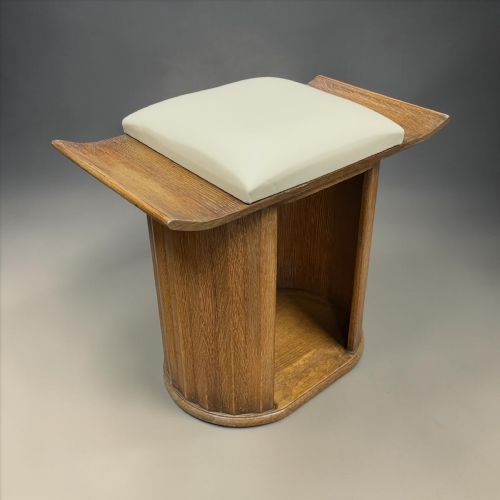
The selections available here range from twin pedestal dressing chests to drum-shaped storage stools and wall mirrors. Alongside vanity pieces, related bedroom furniture such as desks and armchairs appear, showing the stylistic crossover of the era.
Art Deco and Arts and Crafts influences dominate the aesthetic, with occasional Cotswold School interpretations adding regional craftsmanship to the mix. Buyers looking for a complete ensemble can find bedroom suites that unite these various forms under a single design ethos.
How they were made
Construction relies heavily on oak and limed oak, occasionally paired with walnut for contrast or detail. Cabinet makers utilised these sturdy timbers to build durable bedroom furniture that could withstand daily use while displaying natural grain patterns.
Surface decoration often incorporates marquetry inlay to create geometric Art Deco motifs, complemented by glass, metal and leather elements. Fabric and woven fabric appear frequently on the upholstery of the associated stools and armchairs.
Joinery techniques reflect traditional cabinet making combined with modern industrial influences of the early twentieth century. This balance ensured that pieces like dressing chests and desks maintained structural integrity alongside their decorative appeal.
Drum-shaped storage stools let you stash your clutter inside a neat geometric cylinder while you sit to brush your hair.
What varies in quality
Quality in these pieces rests upon the integrity of the timber selection and the precision of the cabinet work. Pieces featuring limed oak or thoughtful marquetry demonstrate a higher level of artisanal ambition than plain commercial alternatives.
Attribution to known makers or specific stylistic schools elevates the standing of a vanity or dressing chest. Pieces connected to prominent workshops or designers display finer proportional balance and more considered detailing in handles, mirrors and associated seating.
Heals·Harry & Lou Epstein·Gaylayde·B Cohen & Sons·B. North & Son
The 1930s Oak Vanity Glossary
- Limed oak
- A finish applied to timber using a white or pale paste to highlight the open grain. This technique gained popularity during the interwar period for modern light-toned interiors.
- Marquetry
- The art of applying small pieces of veneer to a structure to form decorative patterns or pictures. It appears frequently on the surfaces of Art Deco bedroom furniture.
- Dressing chest
- A piece of furniture combining drawers with a mirror and surface space for grooming. These items served as the primary vanity unit in bedrooms before fitted wardrobes became standard.
- Cotswold School
- An Arts and Crafts design movement centred in Gloucestershire that emphasised honest construction and traditional hand-working methods. Pieces from this tradition show visible dovetailing and solid timber construction.
- Pedestal
- A structural support column beneath a dressing table or desk, often fitted with banks of small drawers. Twin pedestal designs offer symmetrical storage flanking a central kneehole.
1930s Oak Vanity: Frequently Asked Questions
How do I care for limed oak furniture?
Limed oak requires gentle dusting with a dry or slightly damp lint-free cloth to prevent dirt from settling into the pale grain lines. Avoid harsh chemical cleaners or silicone polishes that can discolour the finish.
Keep the timber away from direct heat sources and strong sunlight to prevent the oak from drying out or warping over time. An occasional application of appropriate furniture wax helps protect the surface.
How can I tell Arts and Crafts oak from Art Deco oak?
Arts and Crafts oak furniture emphasises visible hand-craftsmanship, exposed joinery and solid construction with minimal surface veneer. The forms tend to be robust, traditional and grounded in historical vernacular design.
Art Deco oak embraces sleek geometric lines, stylized marquetry patterns and often incorporates limed finishes or contrasting walnut details. The design looks forward to industrial modernity rather than historical tradition.
Are original matching stools hard to find?
Finding a dressing table accompanied by its original matching stool or chair requires patience because seating suffered heavier wear than static cabinet furniture. Many surviving pieces became separated from their original suites over the decades.
When a vanity retains its matching upholstered stool, particularly with period fabric or leather, it represents a complete design statement. Even so, standalone stools from the same decade can complement a dressing chest effectively.