


1930s Oak Dressing Table
These 1930s oak dressing tables combine robust timber construction with modernist geometric lines, offering practical bedroom storage alongside distinct period charm.
1930s Oak Dressing Table
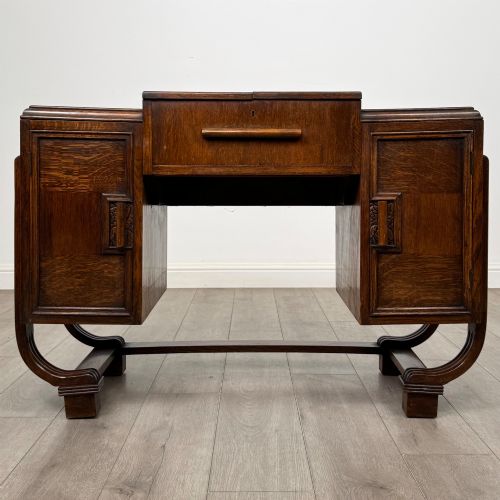
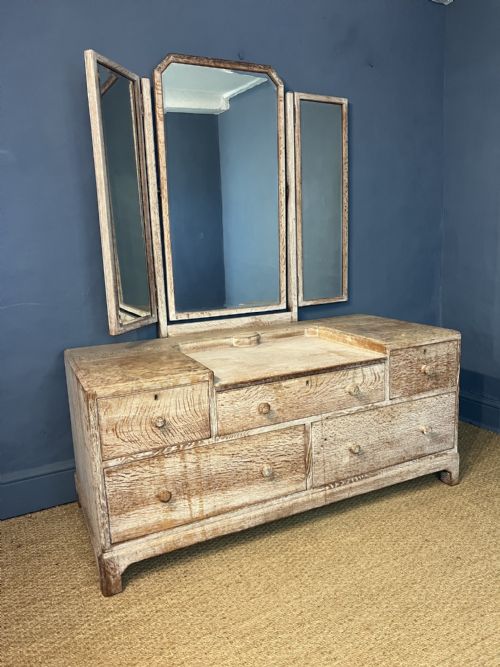
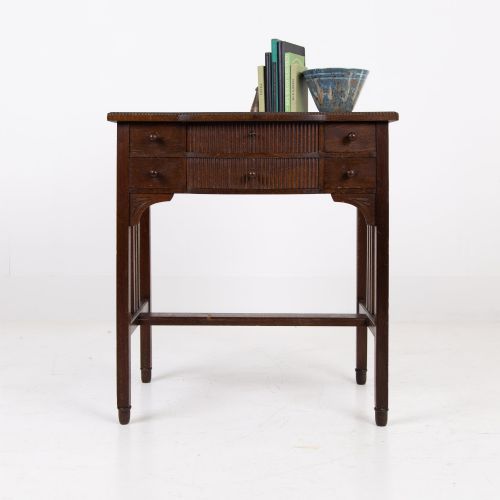
A 1930s oak dressing table brings together the utility of a bedroom chest and the dedicated space of a mirror vanity, often appearing alongside matching stools or chairs. The examples found here span the Art Deco and Arts and Crafts movements, running from straightforward twentieth-century designs to specific Cotswold School interpretations.
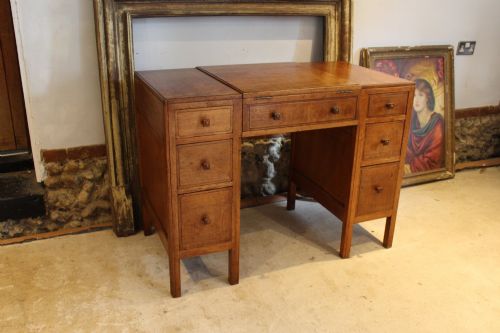
While the search points squarely to the 1930s, the pieces crossing this path reach into the Edwardian era and the 1920s, showing how earlier joinery methods bled into later modernist forms. Buyers frequently encounter twin pedestal layouts, dressing chests with integrated mirrors, and unconventional configurations that reject standard symmetry.
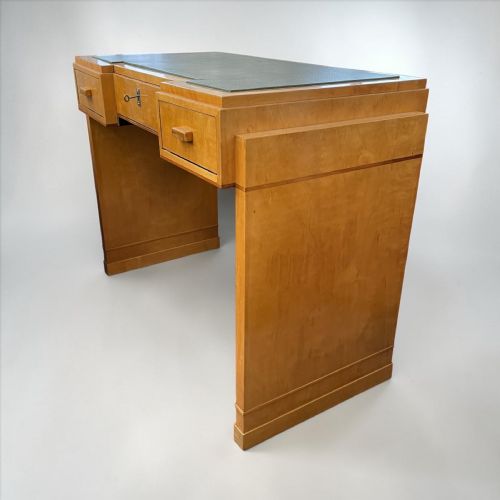
Makers and designers of the period utilised oak as a primary carcase material, sometimes limed or paired with walnut, birch, glass, and leather details to catch the eye. The resulting furniture acts as a functional anchor for a bedroom while carrying the unmistakable stylistic ambition of the interwar years.
Materials and construction
Solid oak and limed oak dominate the construction of these pieces, providing a heavy, durable framework designed to withstand decades of daily use. Workshops applied contrasting veneers like walnut and marquetry patterns to drawer fronts, introducing geometric motifs without compromising the structural integrity of the timber.
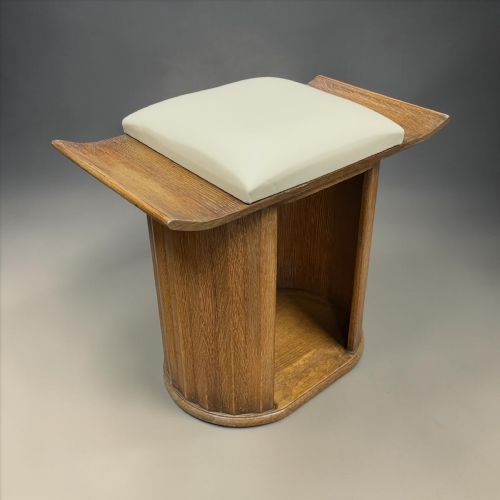
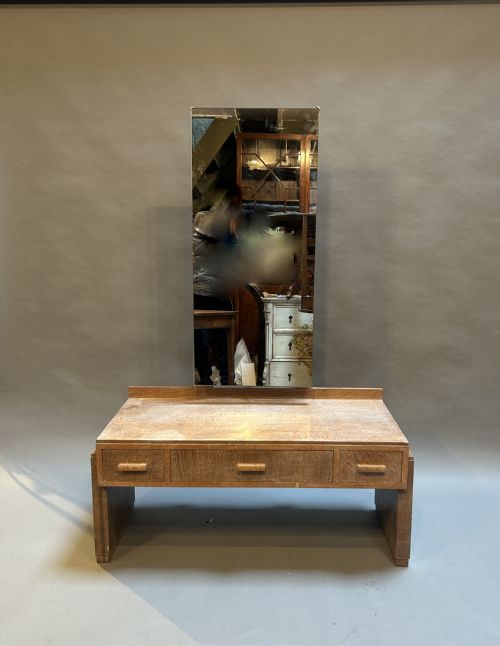
Hardware and secondary elements incorporate metal, glass, and leather inserts on writing surfaces or stool tops, anchoring the design firmly in the Art Deco and modernist vernacular. Mirrors form an integral part of the assembly, secured by wooden framing or freestanding brackets that mirror the angular lines of the base.
Some dressing chests sport such unusual configurations that getting ready in the morning feels less like a routine and more like solving a modernist puzzle.
Assessing quality in interwar furniture
Quality reveals itself in the handling of the oak and the precision of the joinery, particularly where decorative marquetry or unusual configurations are involved. Pieces bearing attribution to established workshops or specific modernist schools display a tighter control over proportions and material pairing.
The degree of preservation in the original glass mirrors, leather panels, and matching stools dictates how intact a suite remains today. Finer examples maintain their original finish and structural harmony without relying on later modifications to the woodwork or hardware.
Heals·Heal And Sons·Gaylayde·B Cohen And Sons
The 1930s Oak Dressing Table Glossary
- Art Deco
- A design style characterised by sleek geometric shapes, stylised motifs, and modern industrial materials that gained prominence during the 1920s and 1930s. It represents a departure from heavily ornamented Victorian styles.
- Arts and Crafts
- A movement advocating traditional craftsmanship using simple forms and medieval, folk, or romantic styles of decoration. It places heavy emphasis on the natural grain and integrity of the timber.
- Limed oak
- Timber treated with a specialised finish that leaves a whitish pigment in the open pores of the oak. This technique highlights the wood grain while lightening the overall tone of the piece.
- Twin pedestal
- A furniture layout featuring two separate banks of drawers or columns supporting a central desktop or mirror surface. This configuration provides balanced storage and a substantial visual presence.
- Marquetry
- The art and craft of applying pieces of veneer to a structure to form decorative designs and patterns. Skilled artisans use contrasting woods to create intricate pictorial or geometric compositions.
1930s Oak Dressing Table: Frequently Asked Questions
What defines a 1930s oak dressing table?
These tables are defined by their use of solid or limed oak, geometric Art Deco styling, and practical configurations featuring integrated mirrors and storage.
They bridge the gap between traditional craftsmanship and early modernist design, often appearing as part of matching bedroom suites with dedicated stools.
How do I spot an Arts and Crafts influence?
An Arts and Crafts influence shows up in the exposed joinery, honest use of solid oak, and a focus on the natural grain rather than applied surface decoration.
These pieces tend to feel heavier and more architectural than their sleeker Art Deco counterparts.
Are matching stools common with these tables?
Matching stools occasionally accompany the dressing chests on this page, sharing the same oak construction and upholstery details like leather.
Finding a complete set with its original stool is a distinct bonus for collectors seeking an unseparated bedroom grouping.
Did designers use materials other than oak?
While oak remains the primary timber, makers frequently incorporated walnut, birch, glass, and leather to create visual contrast.
These secondary materials were chosen to highlight specific geometric sections or provide functional work surfaces.