

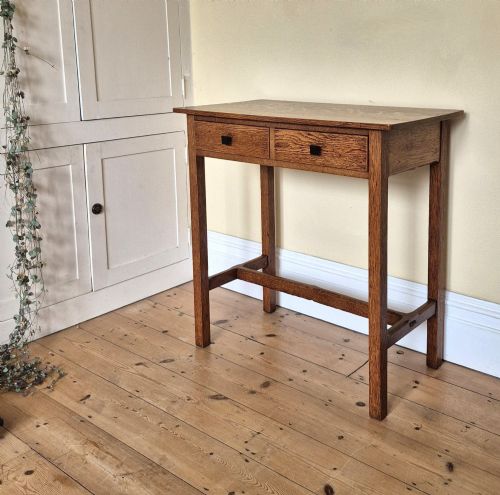

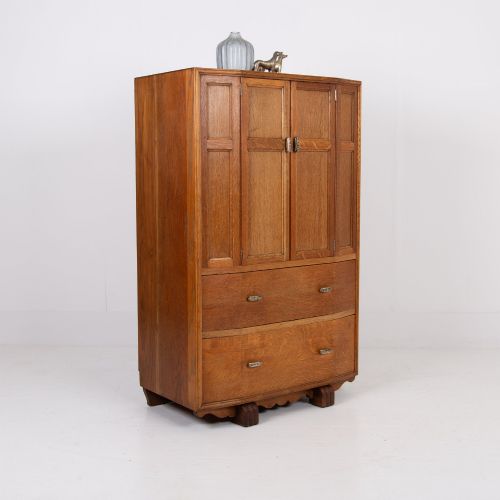


1930s Oak Drawers
These 1930s oak drawers offer practical storage grounded in sturdy timber and clean twentieth-century design.
1930s Oak Drawers
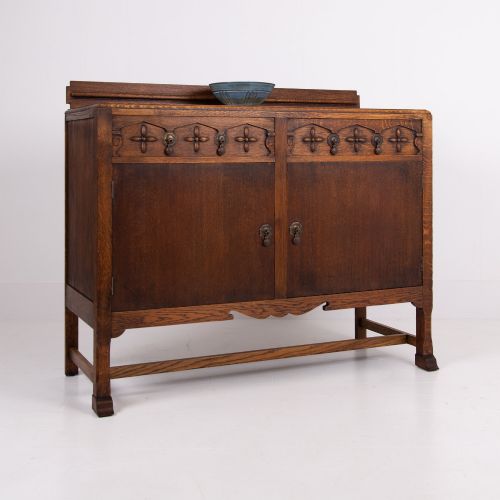
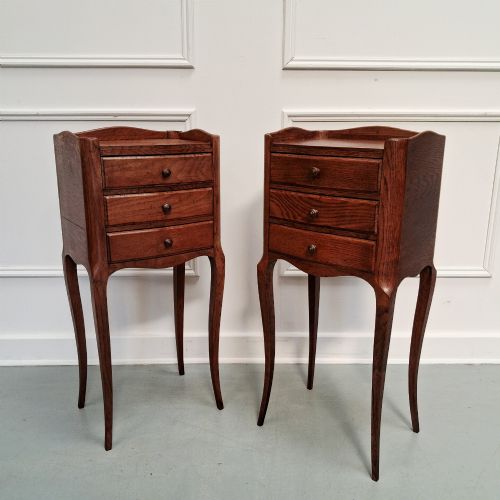
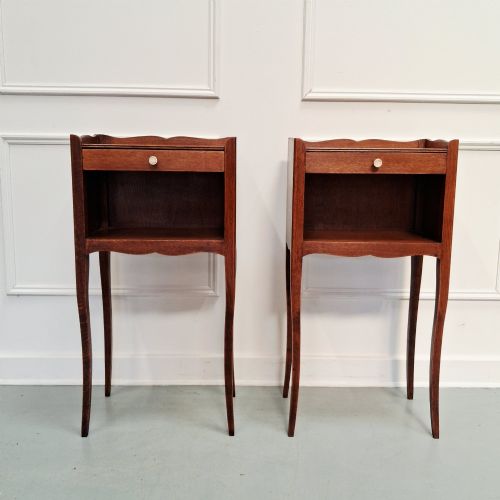
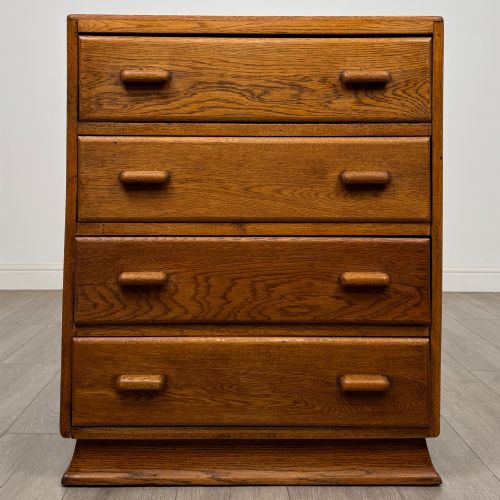
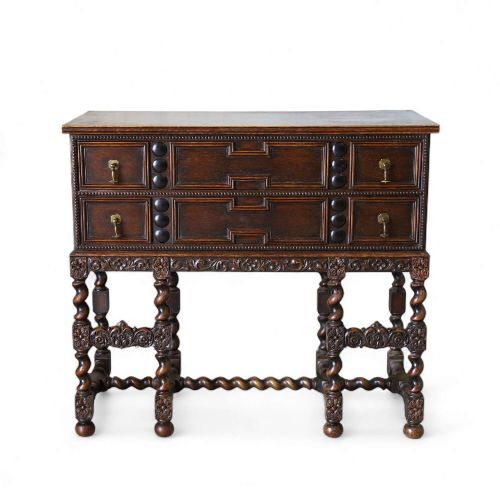
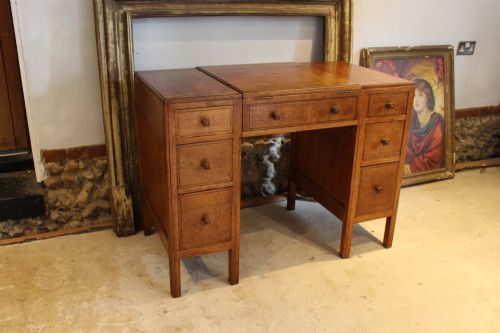
When searching for 1930s oak drawers, buyers encounter a robust mix of chests, bedside cabinets, and dressing tables spanning the Edwardian period through to the 1930s. The selection on this page leans heavily toward French and English pieces, incorporating styles from Art Deco to Arts and Crafts and Carolean Revival.
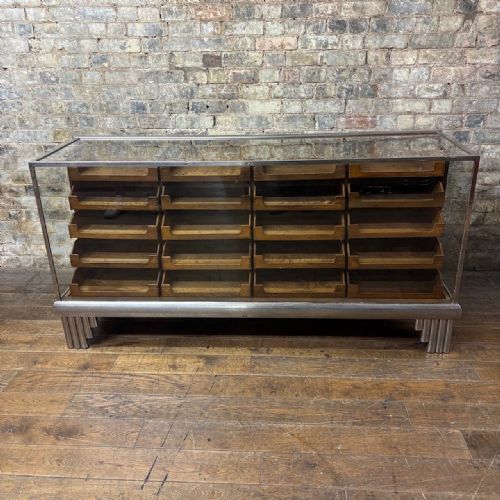
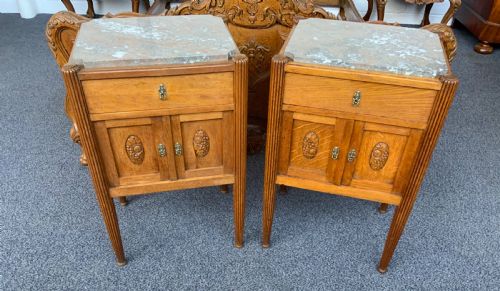
Forms vary widely from tall chests and haberdashery counters to tambour front office filing cabinets and Anglo-Indian carved chests. Bedside tables and cabinets on stand appear frequently, often showcasing the straightforward utility and linear forms typical of the era.
Makers and designers of the period experimented with limed finishes, modernist proportions, and traditional carving. Buyers find both simple domestic furniture and specialised commercial pieces sharing the same durable timber.
What varies in quality
Quality in these pieces is dictated by the ambition of the design and the integrity of the materials. Pieces attributed to notable makers or featuring specialised configurations, such as tambour fronts and detailed marquetry, represent a higher tier of craftsmanship.
The refinement of the timber preparation and the subtlety of stylistic details, whether restrained Art Deco lines or deep Carolean Revival carving, separate standard utility furniture from finer workshops.
1930s Oak Drawers Retail Price Guide 2026
Typical asking prices for 1930s oak drawers among the pieces listed under this phrase on Sellingantiques today, from the lower quarter to the upper quarter. They describe what is for sale here now, not the wider market.
A weather instrument in an oak case sits quietly among the drawers, proving that interwar makers put their favourite timber around almost anything.
Dudley & Co·Hubert Simpson of Kendal·Heal & Sons·Gaylayde·B Cohen & Sons·Short & Mason
The 1930s Oak Drawers Glossary
- Limed oak
- A wood finish treatment that leaves a white or pale pigment in the grain of the oak. This technique gained popularity during the interwar period to give furniture a modern, lighter appearance.
- Tambour
- A flexible shutter made of narrow slats of wood glued to canvas, allowing doors to slide around a curve. It is commonly found on office filing cabinets and desks from this era.
- Marquetry
- The art of applying pieces of veneer to a structure to form decorative patterns. It adds surface texture and visual complexity to bedroom suites and cabinet fronts.
- Barley-twist
- A turned furniture support resembling a twisted rope. This traditional motif appears on revival pieces influenced by earlier centuries.
1930s Oak Drawers: Frequently Asked Questions
What styles define 1930s oak drawers?
The selection encompasses several distinct movements, most notably Art Deco, Arts and Crafts, and various revivals including Carolean and Dutch Renaissance. Makers also produced modernist interpretations alongside more traditional vernacular forms.
Alongside European designs, pieces show influences from Anglo-Indian carving traditions, creating a diverse range of aesthetic approaches applied to the same durable timber.
How do I identify a 1930s oak piece?
Look for characteristic construction methods, hardware materials like chrome and brass, and finishes such as limed oak. Drawer configurations, handles, and maker labels often provide clues to the exact period.
Proportions tend to range from the functional linearity of Art Deco to heavier revival styles featuring barley-twist supports or detailed hand carving.
Where were these pieces used originally?
These items served various domestic and commercial functions, ranging from bedroom suites and bedside tables to office desks and haberdashery counters. Haberdashery and tambour units were designed for retail and administrative efficiency.
Domestic items like dressing chests and sideboards furnished interwar homes, balancing decorative presence with everyday utility.
How do I care for oak furniture?
Maintain the wood by keeping it away from direct heat sources and drastic humidity changes that can affect the timber and veneers. Regular dusting and occasional application of appropriate wax help preserve the finish.
Original hardware, such as glass, brass, or chrome handles, should be cleaned gently without abrasive substances to protect the metal and surrounding wood.