









1930s Makeup Table
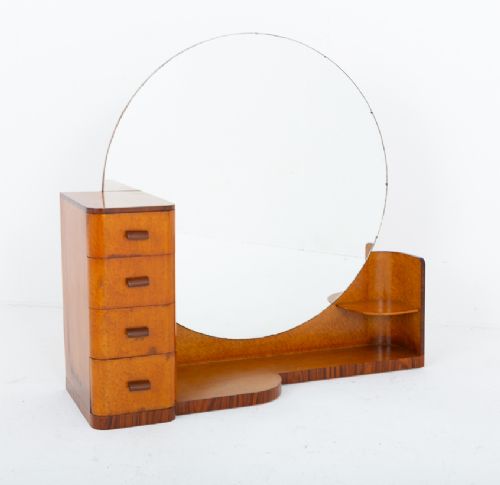
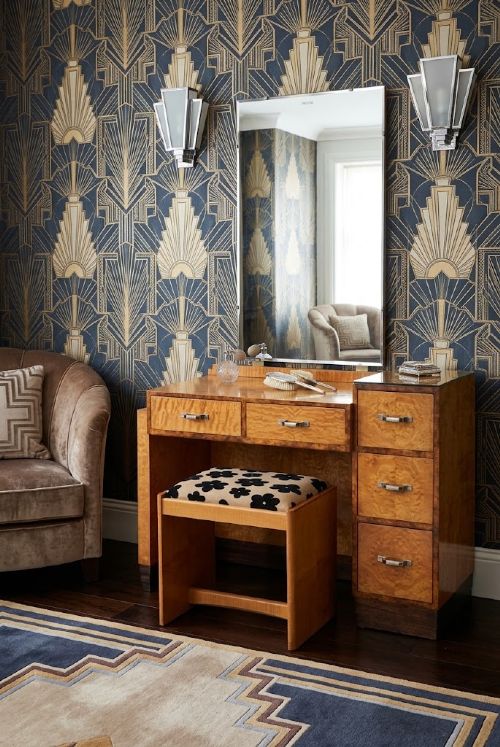
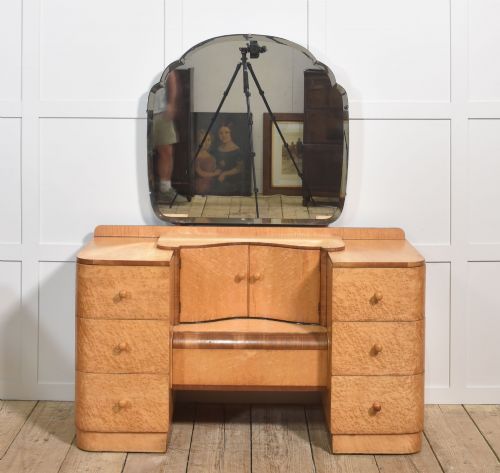
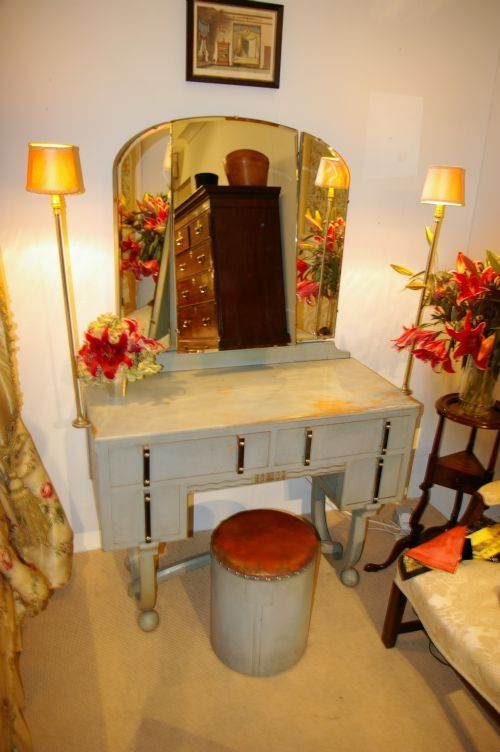
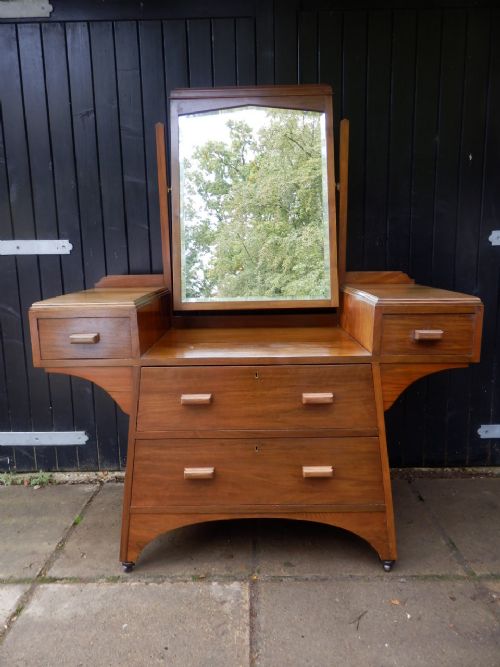
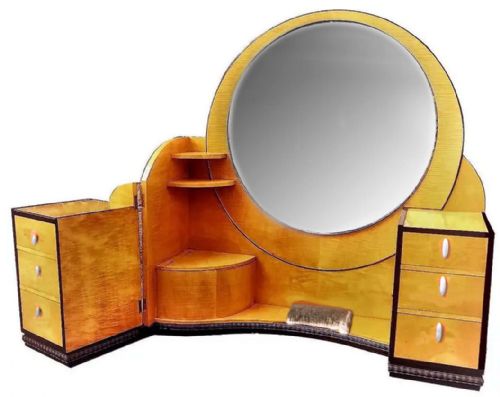
These pieces for a 1930s makeup table bring unmistakable period glamour to a dressing room through striking wood veneers and geometric forms.
1930s Makeup Table
When you search for a 1930s makeup table, you encounter dressing tables, vanity mirrors, and stools designed for personal grooming. The pieces on this page stem predominantly from the 1930 period with some examples from 1920.
The dominant style is Art Deco, though you also meet Rococo Revival elements and occasional ornate designs. Forms range from pedestal dressing chests to matching chairs and easel vanity mirrors.
Makers and workshops of the era utilised distinct geometric lines and fitted mirrors to create functional furniture for the bedroom and dressing room.
How they were made
Cabinet makers constructed these dressing tables using wood carcasses finished with figured and burr walnut, pale mahogany, maple, birds eye maple, sycamore, and oak veneers. These figured timbers provided the striking grain patterns prized during the period.
Many designs incorporate glass, mirror glass, brass details, and metal fittings to complement the polished wooden surfaces. Artisans paired the main furniture with upholstered stools featuring decorative fabric top covers.
1930s Makeup Table Retail Price Guide 2026
Typical asking prices for 1930s makeup table among the pieces listed under this phrase on Sellingantiques today, from the lower quarter to the upper quarter. They describe what is for sale here now, not the wider market.
Listings feature pieces spanning the 1920 and 1930 periods, executed in walnut, maple, oak, glass, and brass.
What varies in quality
The sophistication of the timber selection distinguishes standard dressing tables from exceptional examples, particularly the choice of figured walnut, birds eye maple, or burr walnut veneers. Master workshops employed book-matching grain patterns across drawers and panels to create symmetrical visual harmony.
Attribution to notable designers and unified suites elevate a piece above standard production. The complexity of the pedestal configuration, the integration of original tilting or easel mirrors, and the survival of matching stools determine the standing of individual pieces.
Maurice Adams·Harry and Lou Epstein·Betty Joel·Rowley Gallery
The 1930s Makeup Table Glossary
- Art Deco
- A design style characterised by sleek geometric shapes, streamlined forms, and stylized ornamentation that dominated the interwar period. It influenced furniture design through bold silhouettes and polished surfaces.
- Burr Walnut
- A specialised wood veneer taken from the warted growths on walnut trees, showing intricate swirling patterns. Cabinet makers valued this timber for its decorative impact on drawer fronts and table tops.
- Birds Eye Maple
- A figured maple timber featuring tiny swirls in the grain that resemble small bird eyes. It provides a pale, distinctive surface finish found on select tables.
- Pedestal Dressing Chest
- A dressing table design featuring banks of drawers on one or both sides supporting the main desk surface. This layout maximises storage while framing the seated user.
- Easel Mirror
- A standalone or attached dressing mirror supported by a hinged leg at the rear. This allows the user to adjust the angle of the glass during grooming.
1930s Makeup Table: Frequently Asked Questions
What styles define a 1930s makeup table?
The pieces on this page are predominantly Art Deco, showcasing the clean lines and geometric forms typical of the era. You also encounter occasional Rococo Revival details and ornate mirror frames.
These varied styles reflect the shifting tastes of interwar interior design, moving away from heavy Victorian furniture towards streamlined modernity.
Which woods were used for these dressing tables?
Cabinet makers utilised a range of timbers including walnut, burr walnut, pale mahogany, maple, birds eye maple, sycamore, and oak. Veneers played a central role in achieving decorative grain patterns across the surfaces.
Metal and brass hardware frequently complemented these wooden frames, alongside glass and mirror glass components.
Do these tables come with mirrors and stools?
Many dressing tables on this page include fitted or matching mirrors, ranging from large pedestal frames to smaller easel vanity mirrors. Some listings also provide matching stools with fabric top covers.
Checking individual descriptions clarifies whether a mirror or chair remains paired with the main chest.
How do I care for wood veneered furniture?
Keep these polished wood surfaces away from direct sunlight and excessive moisture to protect the delicate walnut, maple, or mahogany veneers. Regular dusting with a soft, dry cloth preserves the finish.
Avoid placing hot or wet items directly onto the wooden top to prevent marking the historical polish.