
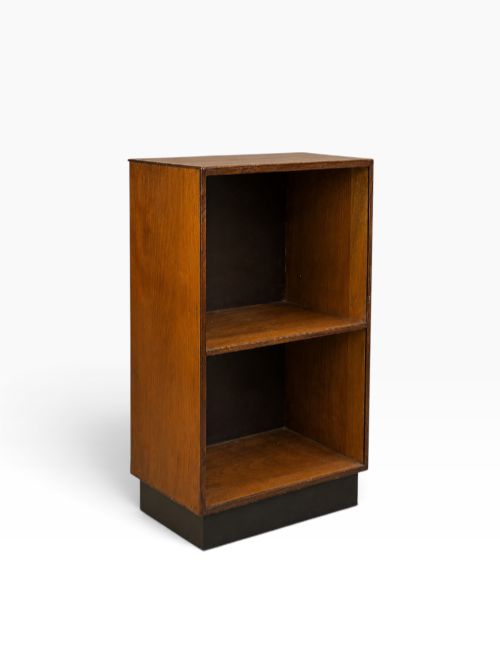
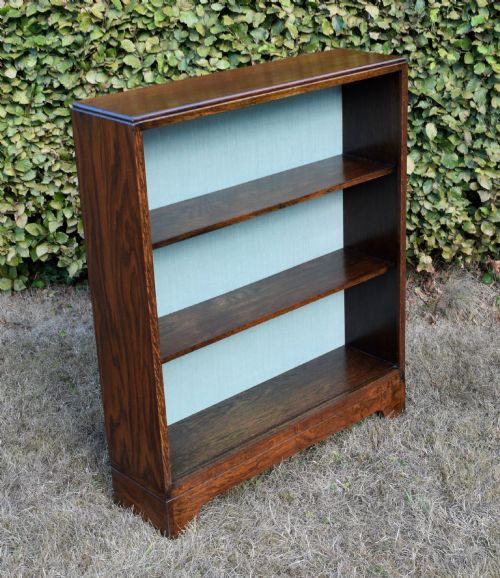
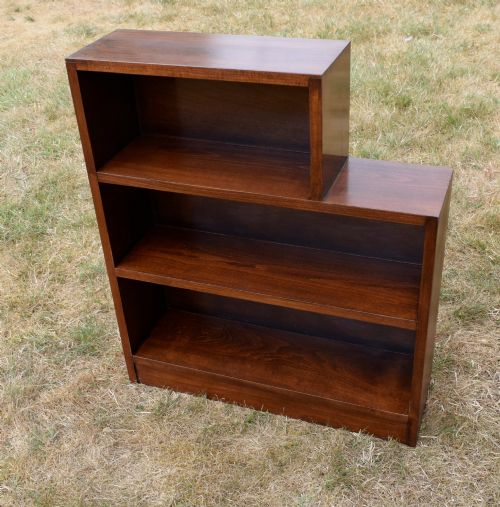
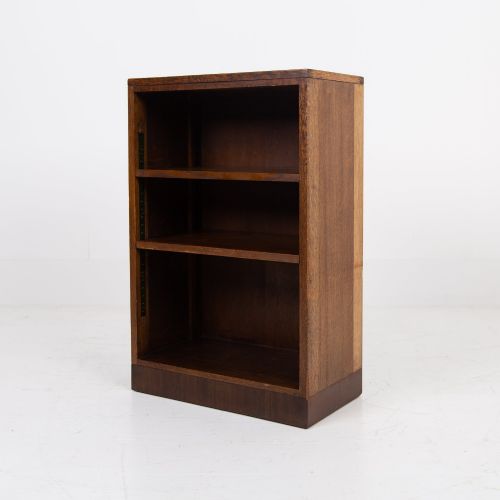
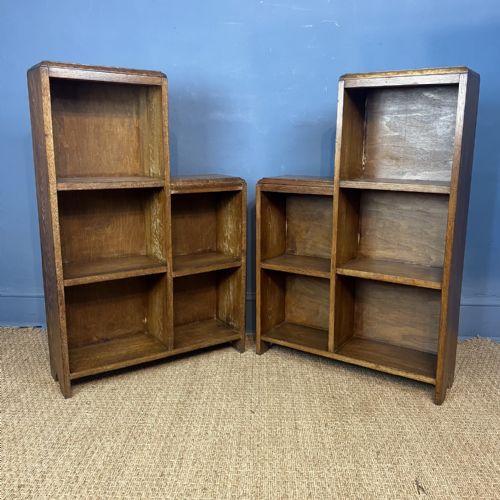
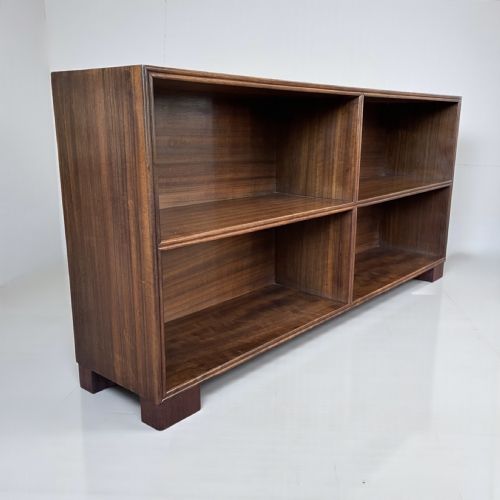


1930s Low Bookshelf
These 1930s low bookshelf designs offer practical book storage while bringing clean lines and period character into a modern room.
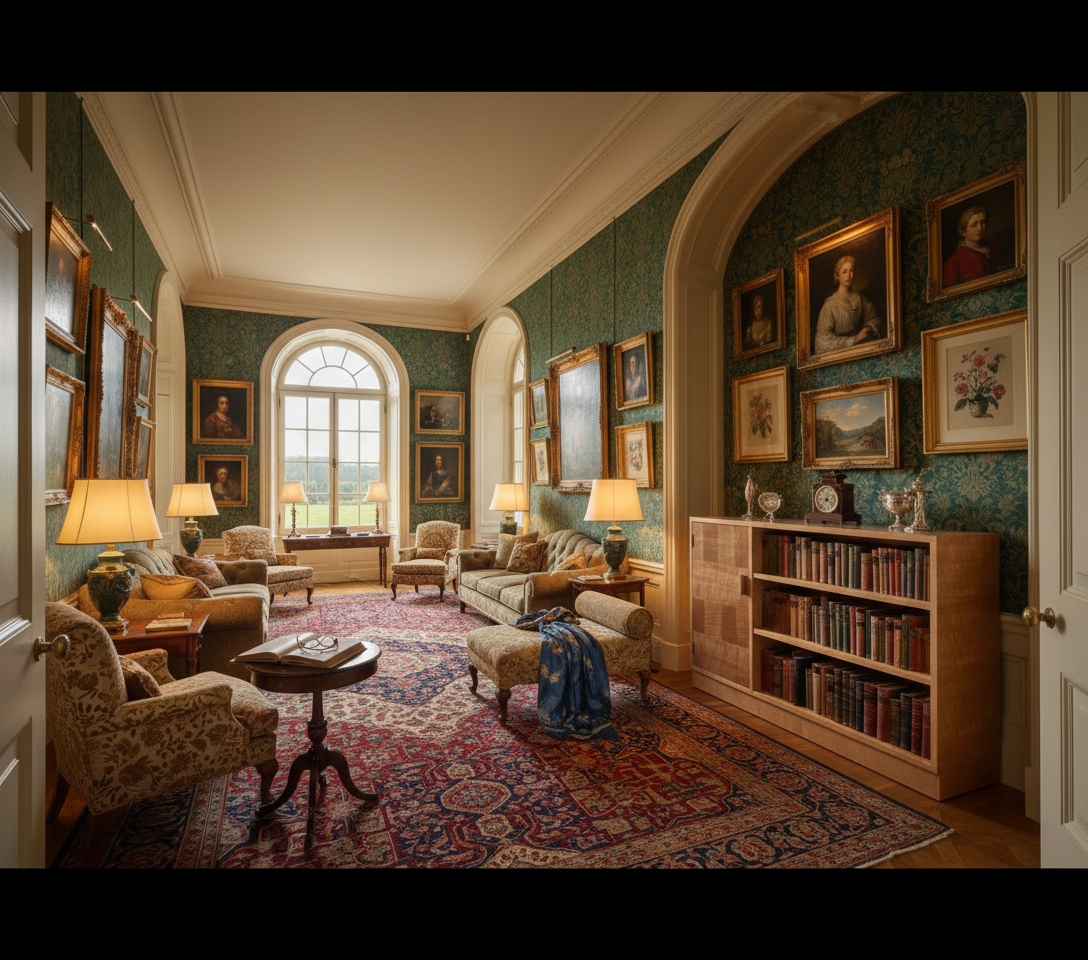
1930s Low Bookshelf
A 1930s low bookshelf provides accessible shelving at a manageable height, making it well suited for modern rooms where ceiling space or heavy furniture is not required. These pieces span straightforward open forms as well as hybrid bookcase cabinets that combine display space with enclosed storage.
The selections on this page lean heavily towards the Art Deco aesthetic, alongside Tudor Revival and Anglo-Indian interpretations. Buyers will frequently encounter compact open configurations designed to sit beneath windows or along living room walls.
Most examples originate from the 1930s or the adjacent 1940 period, maintaining a low profile that keeps rooms feeling open. The forms range from simple rectangular timber boxes to structured multi-tier units with leather tops.
Materials and construction methods
Carpenters of the period utilised a broad palette of timbers, recording pieces made from oak, walnut, birch, ash, mahogany, teak, and burr elm. Some workshops also applied ebonised finishes to achieve a dark, uniform surface.
Construction relies heavily on solid timber boards joined to create sturdy open frames, occasionally supplemented with specialised surfaces such as inset leather tops. The contrasting wood grains on burr elm and walnut show careful selection of veneer and solid stock alike.
Even books from the 1930s needed a sturdy home, preferably one finished in burr elm to distract from the rainy English afternoons.
Distinctions in quality and execution
Quality separates standard utilitarian storage from pieces bearing distinct stylistic conviction, such as those associated with known makers or particular design movements. The handling of timber selection, particularly the grain matching on burr elm or ash, indicates the level of care taken during production.
Finishing details like smooth-running internal compartments, precise jointing, and thoughtful proportions mark the distinction between mass production and higher-grade cabinet making.
Maurice Adams·Betty Joel·Heals
The 1930s Low Bookshelf Glossary
- Art Deco
- A design style characterised by sleek geometric shapes, stylised motifs, and streamlined forms that dominated the interwar period. It influences many of the bookcases found within this selection.
- Open bookcase
- A piece of furniture designed for book storage featuring unobstructed front access rather than glass or timber doors. This format allows for quick retrieval and display of volumes.
- Burr elm
- A highly figured timber featuring intricate swirling grain patterns caused by growths on the elm tree. It is prized for decorative veneering on cabinet fronts and top surfaces.
- Tudor Revival
- An architectural and decorative style drawing inspiration from sixteenth-century English building traditions. Pieces in this idiom often incorporate heavy oak and traditional panelling motifs.
- Ebonised
- Timber treated with a stain, dye, or paint process to imitate the dark, dense appearance of ebony wood. This finish was frequently applied to achieve sharp contrast in interwar interiors.
1930s Low Bookshelf: Frequently Asked Questions
What defines a 1930s low bookshelf?
A 1930s low bookshelf is characterised by its reduced height, allowing it to sit comfortably beneath standard window sills or picture rails. These pieces keep living spaces feeling open while providing accessible horizontal storage.
Most examples from this decade favour clean lines, often drawing on Art Deco geometry or traditional oak revival styles to suit domestic interiors of the period.
Where were these bookcases used?
These low bookcases were typically placed in domestic living rooms, studies, and bedrooms where full-height shelving would feel overpowering. Their height made them convenient for holding frequently read volumes within easy reach.
Some variants with leather tops or cabinet compartments also served dual purposes as small side units or display surfaces in hallways.
How do I identify Art Deco pieces?
Art Deco pieces are recognised by their streamlined silhouettes, symmetrical arrangements, and an emphasis on geometric form rather than heavy carving. They often showcase distinct timbers like ash, walnut, or burr elm.
Makers working in this idiom avoided excessive ornament, letting the natural grain of the wood and the clean architectural lines define the piece.
What timbers should I expect?
The listings show a wide variety of woods, including traditional English oak alongside more decorative surfaces like walnut, birch, ash, and burr elm. Darker finishes such as ebonised timber also appear.
Each wood brings a different visual weight to the room, from the pale warmth of ash to the deep grain patterns of burr elm.