
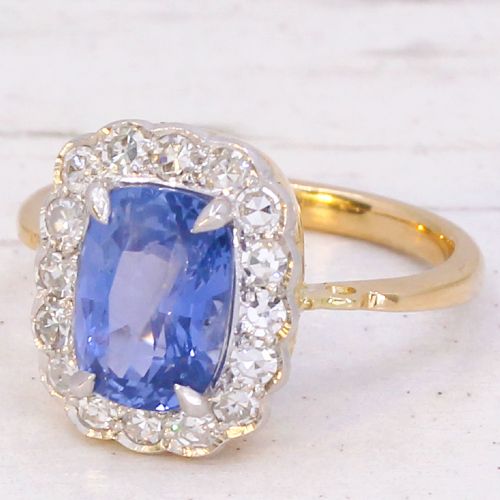


1930s Gold Gemstone Ring
A 1930s gold gemstone ring brings the geometric elegance of the interwar period straight to the hand.
1930s Gold Gemstone Ring
When searching for a 1930s gold gemstone ring, you encounter pieces defined by the distinct geometry of the Art Deco style. These items span cluster rings, multi-stone configurations, and vibrant solitaires set in yellow gold or white gold.
The selections here frequently pair central gemstones like sapphire, emerald, ruby, or blue zircon with contrasting diamond accents. These combinations reflect the decorative priorities of the period, favouring strong colour contrasts over simple metal work.
Most examples date firmly to the 1930 and 1920 periods, capturing the transition into mid-century design. Cluster settings dominate the available forms, presenting substantial coloured stones bordered by smaller diamonds.
What varies in quality
The standard of a ring rests primarily on the quality, origin, and weight of the central gemstone. Stones accompanied by specific geological certifications regarding oil treatments or regional provenance hold distinct status.
Execution of the metalwork also separates standard pieces from exceptional examples. The finesse of the surrounding diamond work and the structural integrity of the gold or platinum claw settings dictate the overall refinement of the jewel.
Some yellow sapphires in these rings exceed eleven carats, offering a surprisingly hefty splash of sunshine on the finger.
The 1930s Gold Gemstone Ring Glossary
- Art Deco
- A design style characterised by geometric lines, symmetry, and stylised motifs that peaked during the 1920s and 1930s. This aesthetic governs the structural layout of the mounts.
- Cluster ring
- A ring design featuring a prominent central gemstone surrounded by a cluster of smaller stones, typically diamonds. This arrangement maximises visual impact on the hand.
- Ceylon sapphire
- A sapphire originating from Sri Lanka, known for its vivid and bright blue or yellow coloration. These stones are frequently paired with diamond borders.
- Minor oil
- A term used in gemstone certification to indicate a very small amount of clarity enhancement in emeralds. This minimal treatment preserves the natural integrity of the stone.
- Solitaire
- A ring set with a single gemstone, often a blue zircon in these examples. The focus remains entirely on the optical properties of that one stone.
1930s Gold Gemstone Ring: Frequently Asked Questions
What defines a 1930s gemstone ring?
These rings are defined by Art Deco geometry, featuring central coloured stones like ruby, emerald, or sapphire paired with diamond accents.
They rely on 18ct gold, white gold, and platinum settings that emphasise sharp lines and high-contrast colour arrangements.
How do I wear an antique ring?
Wear these items with care, as delicate claw settings and softer gemstones require protection from heavy impact.
Removing them during manual tasks preserves the structural integrity of the gold and the security of the smaller diamonds.
Are these rings made of solid gold?
Yes, the listings utilise solid 18ct yellow gold, 14ct yellow gold, 9ct gold, and platinum or white gold for the mountings.
These metals provide the necessary durability to support multi-stone cluster configurations over decades of use.
How do I spot an Art Deco ring?
Look for symmetrical patterns, stepped shoulders, and strict geometric arrangements rather than flowing organic curves.
The integration of calibre-cut stones and star cluster formations further signals the design language of the period.