


1930s Ruby Diamond Ring
A 1930s ruby diamond ring brings together rich red gems and brilliant stones in geometric Art Deco designs.
1930s Ruby Diamond Ring
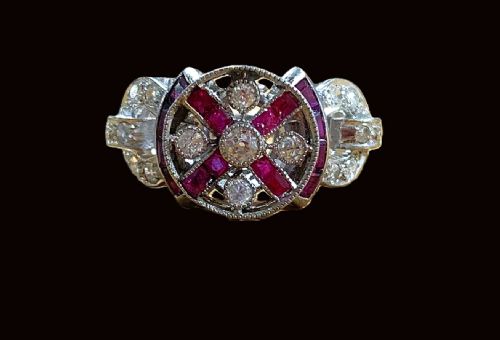
A 1930s ruby diamond ring is an item of jewellery defined by the aesthetics of the Art Deco period. These pieces showcase geometric arrangements and contrasting colour palettes that remain remarkably collectable.
The selections available here span the 1920s and 1930s eras, featuring cluster, three stone, five stone, and dress ring configurations. Many examples originate from the Art Deco period, highlighting the distinctive taste of the time.
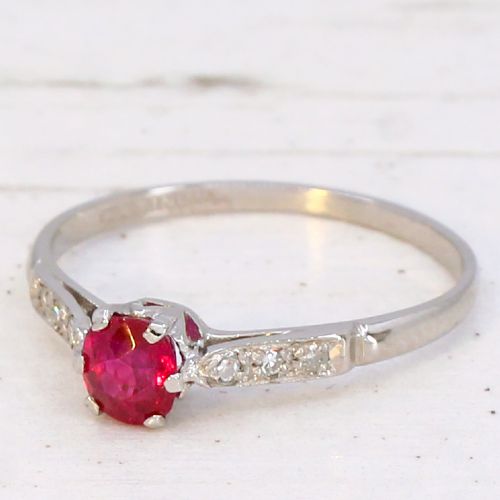
Buyers will encounter configurations featuring central rubies flanked by diamonds, or structured cluster formats. These rings offer a direct connection to the jewellery design vocabulary of the interwar years.
How they were made
The pieces in this selection utilise precious metals including platinum, 18ct yellow gold, and 18ct white gold. Metalworkers of the period employed these materials to provide secure settings while maintaining delicate visual lines.
Craftsmen set natural rubies and diamonds into these precious foundations using traditional techniques appropriate for the Art Deco style. The combination of gold and platinum highlights the distinct brilliance of both diamond and ruby stones.
Listings for a 1930s ruby diamond ring feature platinum, 18ct yellow gold, and 18ct white gold across the Art Deco period.
What varies in quality
Quality differences often lie in the carat weight and origin of the gemstones, such as natural Burmese rubies with specific unheated properties. The scale of the diamond work, ranging from modest accent stones to prominent multi-carat arrangements, also distinguishes individual pieces.
The choice of metal mounting plays a role, with combinations of platinum and 18ct gold demonstrating varied manufacturing complexity. Cluster rings with larger stone weights represent a different tier of design compared to simpler three stone or five stone configurations.
The 1930s Ruby Diamond Ring Glossary
- Art Deco
- A design style dominant in the 1920s and 1930s characterised by geometric symmetry, clean lines, and stylised motifs. This aesthetic heavily influences the architecture and jewellery of the era.
- Cluster ring
- A ring featuring a central stone surrounded by a group of smaller gems, typically diamonds encircling a ruby. This layout maximises visual impact and perceived stone size.
- Trilogy ring
- A three stone ring symbolising the past, present, and future, often arranged with evenly proportioned gems across the band. It is also known as a three stone configuration.
- Unheated ruby
- A ruby that has undergone no thermal enhancement to improve its natural colour or clarity. Such stones are particularly sought after by collectors for their untraced natural state.
- Platinum
- A dense, durable, and naturally white precious metal utilised for fine jewellery settings during the 1930s. It allows for secure, delicate prongs that hold stones firmly.
1930s Ruby Diamond Ring: Frequently Asked Questions
What defines a 1930s ruby diamond ring?
These pieces are defined by their Art Deco styling, combining red rubies with white diamonds in geometric or cluster settings.
They utilise metals like platinum and 18ct gold, reflecting the manufacturing standards of the 1920s and 1930s.
How do I identify an Art Deco ring?
Look for symmetrical geometric patterns, straight lines, and the contrasting use of white platinum or gold alongside coloured gemstones.
Settings often feature precise arrangements that maximise the visual geometry characteristic of the period.
Are these rings suitable for everyday wear?
Many buyers wear them daily, though care should be taken with antique settings and softer gemstones like rubies compared to diamonds.
Regular checks by a jeweller help ensure the security of the stones within their original mountings.