


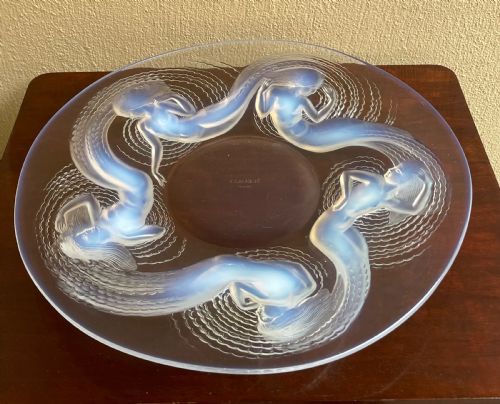


1930s Glass Dish
A 1930s glass dish brings the bold geometry and tactile opalescence of Art Deco design straight onto a modern table.
1930s Glass Dish
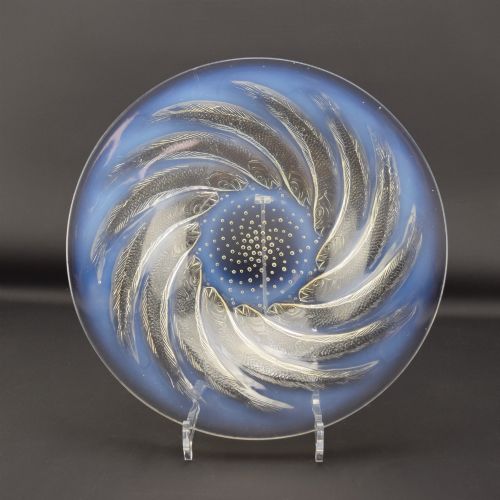
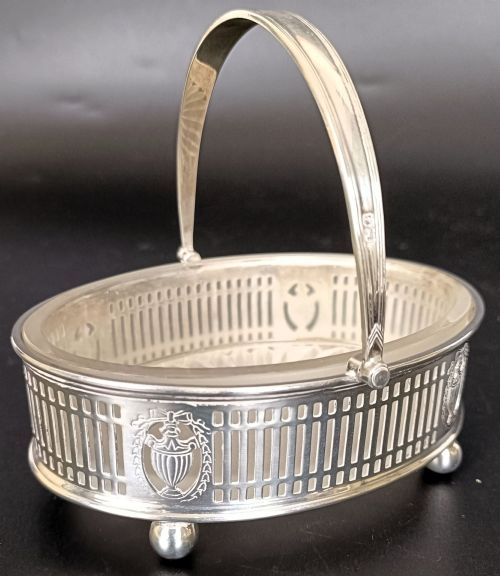
A 1930s glass dish encompasses a variety of decorative bowls, shallow plates, open coupes, and vanity vessels originating mainly from French, Belgian, Italian, and British makers. The selection leans heavily toward opalescent and frosted glass pieces produced during the height of the Art Deco movement, alongside functional tableware paired with sterling silver or silver plate mounts.
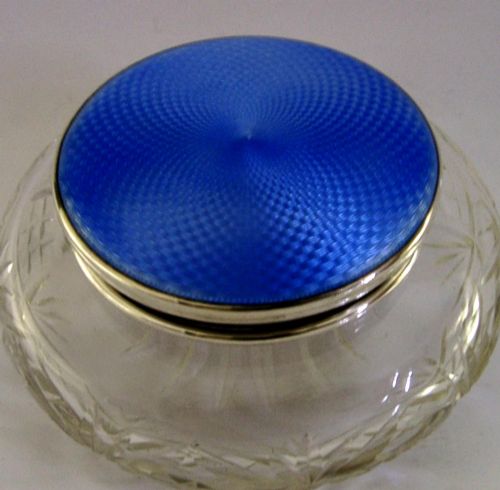
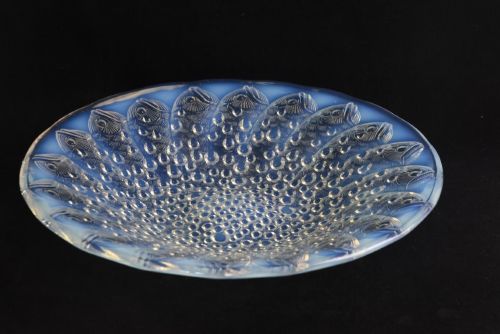
Buyers will encounter substantial moulded chargers, fruit bowls adorned with fish or floral motifs, and smaller dressing table jars fitted with enamel lids. These objects reflect the transition from ornate revival styles to streamlined modernism, utilising pressed and blown techniques to achieve striking visual depth.
Judging the Range
Quality rests on the crispness of the moulded relief and the depth of the opalescence within the glass. Superior examples exhibit sharp, well-defined motifs without distortion from worn moulds, and display a vibrant play of blue and amber tones when held to the light.
The integration of secondary materials also dictates standing, where hallmarked sterling silver mounts or fine enamel work show superior craftsmanship compared to standard silver plating. Maker signatures and registry marks further distinguish standard commercial output from masterworks.
Some glass bowls from this era glow an eerie neon green under ultraviolet light due to uranium content.
Venini·Rene Lalique·Val St. Lambert·Jobling·Etling·Sabino
The 1930s Glass Dish Glossary
- Opalescent Glass
- Glass that diffuses light to display milky white tones with contrasting blue or amber highlights. This effect is achieved through chemical additives during the melting process.
- Coupe Ouverte
- An open bowl or shallow dish designed for display or serving. Makers utilised this French term for wide-rimmed table vessels.
- Millefiori
- A glasswork technique producing multicoloured mosaic patterns. Italian workshops incorporated these intricate glass canes into decorative bowls.
- Vaseline Glass
- Glass containing uranium dioxide that glows under ultraviolet light. It appears in transparent yellow or green shades across vintage tableware.
- Coupe
- A stemmed or footed shallow bowl used for serving fruit or desserts. The form was widely adapted by European glasshouses during the interwar period.
1930s Glass Dish: Frequently Asked Questions
How do I identify opalescent glass?
Opalescent glass contains chemical agents that create a milky, translucent body which shifts in colour from creamy white to pale blue when turned in the light.
This optical quality is most pronounced on raised moulded details, where the glass catches and diffuses illumination.
Were these dishes used daily?
Many bowls and plates served functional roles on dining tables or dressing rooms, holding fruit, sweets, or vanity accessories.
Heavier chargers and decorative coupes were frequently kept purely for ornamental display in interwar interiors.
How do I spot a maker signature?
Signatures appear as moulded reliefs, acid-stamps, or hand-scribed incisions near the base or rim of the glass body.
Faint signatures require angled light to read clearly through dense opalescent or frosted surfaces.
What metals accompany the glass?
Silver plate, sterling silver, enamel, and patinated brass form the primary mounts, handles, and lids found on these vessels.
British pieces often feature hallmarks stamped directly onto the silver elements to indicate assay office and date.