
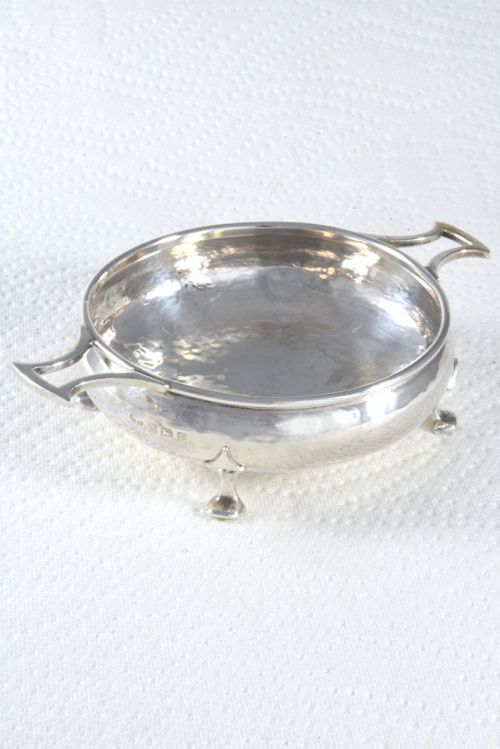
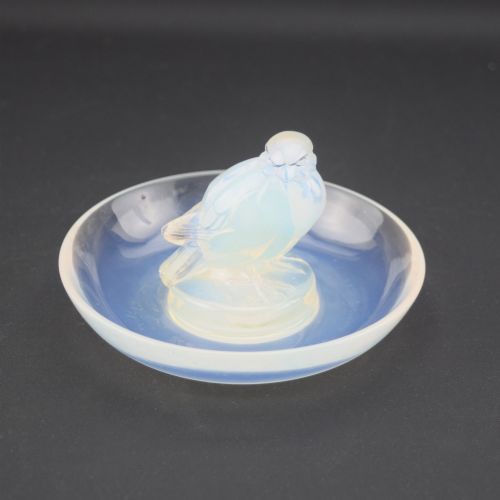
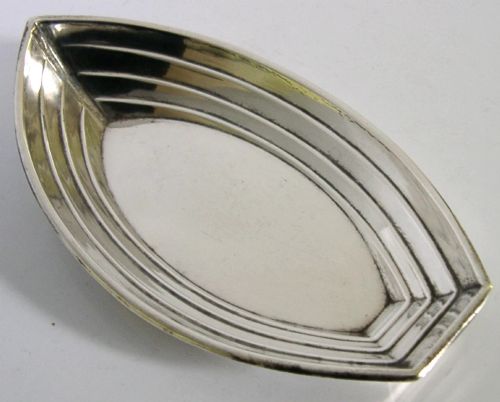


Art Deco Pin Tray
These art deco pin tray pieces are small decorative dishes designed to hold pins and trinkets, offering a functional touch of period elegance for a desk or dressing table.
Art Deco Pin Tray
An art deco pin tray is a compact dish intended for small personal items, appearing in diverse forms ranging from silver and glass to ceramic and bronze. The versions most commonly met on this page span the 1920s and 1930s, combining geometric styling with practical everyday utility.
Makers produced these decorative dishes in materials such as sterling silver, opalescent glass, and glazed earthenware to serve as trinket dishes, ashtrays, or small desk tidies. Collectors encounter both British outputs and continental European works, including French opalescent glass and Scandinavian porcelain.
How they were made
Silversmiths shaped sterling silver and silver plate through pressing and hand-finishing, often incorporating guilloche enamel or novelty motifs like rowing boats and animals. Glassworks relied on moulding and pressing techniques to create clear, frosted, and opalescent pieces with sculptural reliefs.
Potteries and ceramic workshops utilised glazed earthenware and porcelain, applying hand-painted or transfer designs such as cabbage roses and fish patterns. Spelter and bronze pieces typically involved metal casting followed by cold-painted surface decoration.
Materials span sterling silver, opalescent glass, glazed earthenware, and cold-painted bronze across pieces dated between 1900 and 1930.
What varies in quality
Quality rests upon the clarity of the design and the execution of the material, whether in the crispness of a moulded glass relief or the fine detail of a silversmith's engraving. Superior examples display careful finishing, intact enamel work, and well-preserved cold-painted or glazed surfaces.
The reputation of the maker or designer heavily influences the standing of a piece, with recognised glass artists and silversmiths commanding greater attention than anonymous works. Material purity, such as solid sterling silver versus plated metal, also defines the upper tiers of the range.
Rene Lalique·John Grinsell And Sons·Sabino·Royal Copenhagen·Mappin And Webb
The Art Deco Pin Tray Glossary
- Opalescent glass
- Glass that diffuses light with a milky, iridescent appearance, frequently utilised by French makers in the period for decorative dishes and plates.
- Guilloche enamel
- A decorative technique where geometric patterns are engraved beneath a transparent enamel layer, often seen on small silver trays and compacts.
- Spelter
- A zinc alloy commonly used as a cost-effective substitute for bronze in decorative figures and trays during the early twentieth century, usually given a painted finish.
- Trinket dish
- A shallow container designed for holding small personal accessories such as rings, pins, and coins on a dressing table or desk.
- Cold-painted bronze
- Metal cast sculpture or vessels decorated with paint applied after the casting process without subsequent firing, prone to surface wear over time.
Art Deco Pin Tray: Frequently Asked Questions
What were art deco pin trays used for?
These small dishes served primarily to hold pins, cufflinks, and small daily accessories on dressing tables, desks, or hall stands.
They also functioned as ashtrays or simple decorative ornaments within the domestic interior of the period.
How do I care for silver and glass trays?
Sterling silver benefits from occasional gentle cleaning with a specialised cloth to maintain the shine without removing historic patination.
Glass pieces require careful washing in lukewarm water with mild soap, avoiding abrasive scrubbers that might scratch the surface.
How can I tell glass periods apart?
Moulded signature marks, lettering styles, and the specific tone of opalescence help distinguish works by period glassmakers.
Weight, texture, and the presence of residual manufacturing seams also provide clues regarding the production era.
Where should I display a pin tray?
A bedside table or dressing chest offers a practical surface where the small dish can hold daily jewellery items securely.
Alternatively, placing one on a desk or entryway console allows the decorative form to be appreciated as a standalone display piece.