




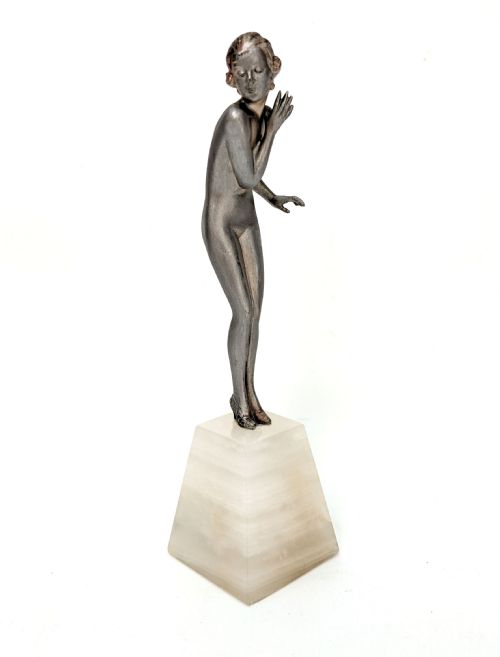


1930s Female Desk Ornament
A 1930s female desk ornament brings unmistakable Art Deco flair to a room, cast in bronze, spelter, or patinated metal upon stone bases.
1930s Female Desk Ornament
A 1930s female desk ornament typically takes the form of a small bronze, spelter, or cast metal sculpture depicting a female nude or dancer. These pieces capture the energetic spirit of the period through dynamic poses such as hoop dancers or seated figures.
Most examples originate from the 1930 or 1920 periods, reflecting French and English Art Deco design sensibilities. The sculptures frequently incorporate integral bases of marble or onyx to anchor the figural groups for tabletop display.
Buyers encounter individual figurines and figural groups alike, each scaled appropriately for domestic interior surfaces. The combination of patinated metal and polished stone defines the physical presence of these decorative objects.
Materials and construction methods
Workshops utilised traditional metalcasting techniques, pouring bronze, gilt bronze, and spelter into moulds to shape the female figures. Spelter served as a cost-effective alternative to bronze, often finished with patinated or painted coatings to mimic richer metals.
The finished metal figures were mounted firmly onto heavy bases cut from natural materials like marble and onyx. These stone plinths provided stability and added a contrasting textural weight to the slender metal sculptures.
The objects span the Art Deco style, capturing movement through subjects like hoop dancers and seated nudes.
Distinctions in quality
The choice and preparation of the mounting base also mark differences in grade. Dense, finely polished marble or onyx plinths matched specifically to the proportions of the figure elevate the overall integrity of the piece.
Aurore Onu·C Neuhaus·Josef Lorenzl·Geo Maxim
The 1930s Female Desk Ornament Glossary
- Spelter
- A zinc alloy commonly utilised for decorative figures in the early twentieth century. It accepts patination well but remains softer and lighter than bronze.
- Patinated metal
- Metal treated with chemicals or heat to produce a specific surface colour and tone. This finish protects the underlying material while enhancing visual depth.
- Art Deco
- The dominant design style of the 1920s and 1930s characterised by stylised forms and modern geometric influences. It informs the posture and aesthetic of these female figures.
- Gilt bronze
- Bronze coated with a thin layer of gold or gold-coloured alloy. This technique provides a bright, reflective surface finish to highlight sculptural details.
1930s Female Desk Ornament: Frequently Asked Questions
What metals are these figures made from?
These decorative sculptures appear predominantly in bronze, gilt bronze, and spelter. Spelter offers a lighter, softer alternative to traditional bronze casting.
Foundries often applied patinated or painted surface treatments to these metals to achieve specific visual effects and protect the material.
Are all these pieces from the 1930s?
The available selection spans the 1920 and 1930 periods, reflecting the height of the Art Deco movement. Both decades share similar stylistic approaches to female figures and dancers.
Design motifs remained consistent across this timeframe, focusing on stylised movement and modern aesthetics.
What kind of bases do they have?
Most figures are secured directly onto polished stone plinths made from marble or onyx. These heavy bases anchor the slender metal sculptures for display on desks and tables.
The natural veining in the stone often complements the metallic tones of the figures above.
Where were these ornaments produced?
The recorded pieces show origins primarily in France and England. European foundries and studios drove the production of these decorative metal figures during the interwar years.
Export markets distributed these domestic ornaments widely across British interiors.