
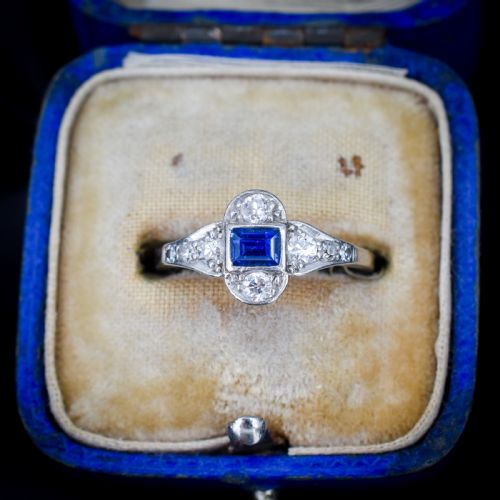


1930s Emerald Dress Ring
A 1930s emerald dress ring delivers the geometric elegance and bold stone work defining the Art Deco period.
1930s Emerald Dress Ring
When you search for a 1930s emerald dress ring, you encounter striking cocktail and cluster jewellery from the Art Deco era. The examples on this page primarily showcase central emeralds flanked by diamonds, originating from the 1920s and 1930s.
Most pieces combine significant emerald weight with diamond accents, following the distinctive geometric layouts of the period. Platinum forms the primary metal framework for these rings, alongside traditional yellow gold and white gold.
While emeralds take centre stage, the inventory also includes related sapphire, ruby, and aquamarine variations sharing the same definitive Art Deco aesthetic. These rings were designed for evening wear and social occasions, prioritising visual impact.
How they were made
Master jewellers of the period utilised durable platinum and gold to securely set vibrant emeralds and sparkling diamonds. Platinum provided the structural strength required for intricate, fine-line mounting without dominating the gemstones.
Stones were precision-cut into rectangular, emerald, and circular facets to catch the light within strict geometric designs. Metalwork was kept crisp and architectural, perfectly embodying the hallmark style of the 1930s.
1930s Emerald Dress Ring Retail Price Guide 2026
Typical asking prices for 1930s emerald dress ring among the pieces listed under this phrase on Sellingantiques today, from the lower quarter to the upper quarter. They describe what is for sale here now, not the wider market.
What varies in quality
The distinction between tiers rests upon the origin, clarity, and carat weight of the central emerald, alongside the total weight and brilliance of the accompanying diamonds. Colombian and Zambian stones with documented minor oil treatments command particular attention.
Execution of the platinum or gold setting dictates the overall finesse of the piece. Superior examples display seamless integration of smaller accent stones and meticulous metalwork that remains entirely crisp under magnification.
The 1930s Emerald Dress Ring Glossary
- Art Deco
- The dominant design style of the 1920s and 1930s, characterised by symmetry, geometric lines, and bold ornamentation. It remains the defining aesthetic for period cocktail jewellery.
- Platinum
- A dense, strong, and naturally white precious metal favoured during the 1930s for securing fine gemstones. Its strength allowed jewellers to create delicate yet robust settings.
- Minor Oil
- A standard enhancement treatment for emeralds using natural oils to improve clarity and stability. Documentation of minor oil treatment is an indicator of a higher quality stone.
- Cluster Ring
- A ring featuring a prominent central gemstone surrounded by a cluster of smaller stones, typically diamonds. This layout maximises visual presence on the hand.
1930s Emerald Dress Ring: Frequently Asked Questions
How do I wear a 1930s emerald dress ring safely?
These historical rings benefit from mindful wear during daily activities, particularly given the softer nature of emeralds compared to diamonds. Removing the ring during manual tasks preserves the delicate platinum settings and protects the central stone.
Regular professional checks ensure the claws holding the emeralds and diamonds remain secure. Storing the piece in a dedicated lined box prevents scratching from other harder jewellery items.
What defines Art Deco ring design?
Art Deco design relies on strict geometric symmetry, clean lines, and stark contrasts between bright metals and deeply coloured gemstones. Jewellers moved away from the flowing curves of the preceding Edwardian era in favour of architectural precision.
This style uses stepped shoulders, straight baguettes, and circular diamond halos to frame the central emerald. The overall effect prioritises modern sophistication and bold visual rhythm.
Are all these rings from the 1930s?
The pieces span the late 1920s through the mid-1930s, capturing the height of the Art Deco period. Stylistic continuity bridges these years, as jewellers maintained consistent geometric motifs throughout the decade.
Exact dating is typically established through assay marks, stylistic benchmarks, and historical documentation accompanying the piece. This narrow timeframe ensures a unified aesthetic across the collection.
What metal is most common in these rings?
Platinum is the predominant metal found in these rings due to its exceptional strength and bright white finish. It permitted jewellers to craft ultra-fine settings that maximised light entry into the diamonds and emeralds.
Yellow gold and white gold also appear, offering warmer tones or alternative metal choices favoured during the era. Platinum remains the hallmark metal for high-end cocktail rings of this vintage.