


1930s Drinks Trolley
A 1930s drinks trolley brings genuine period glamour to entertaining, combining ingenious mechanical design with striking modernist lines.
1930s Drinks Trolley
A 1930s drinks trolley is a movable serving piece designed specifically for domestic cocktail service and entertaining. These items range from simple two-tier tea trolleys to sophisticated metamorphic cocktail bars on wheels.
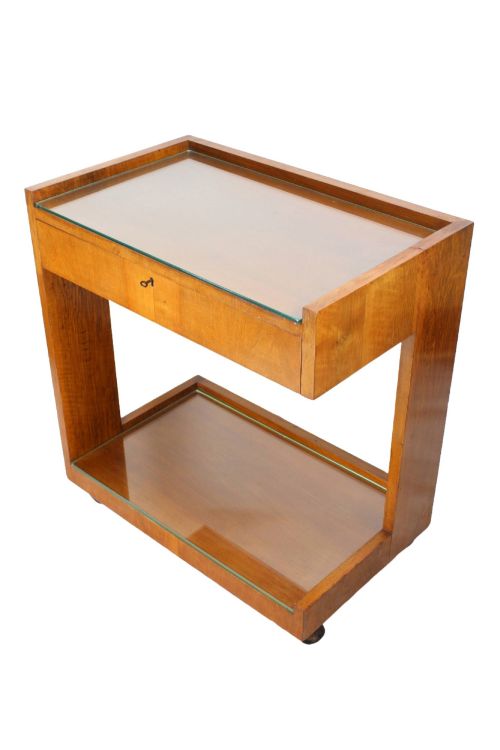
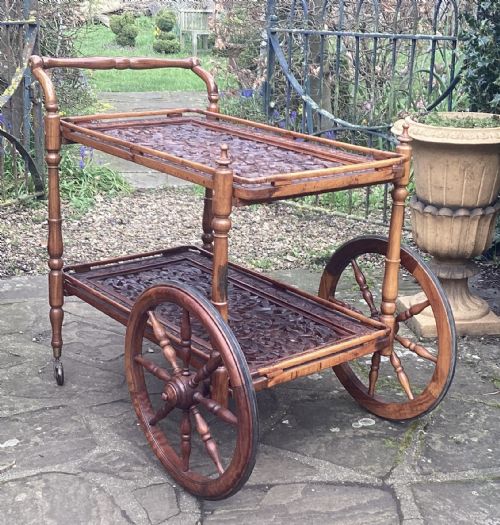
The dominant style on this page is Art Deco, expressed through circular walnut frames, streamlined chrome tubing, and geometric tiers. English and French examples appear frequently, alongside occasional Anglo-Indian carved hardwood variations.
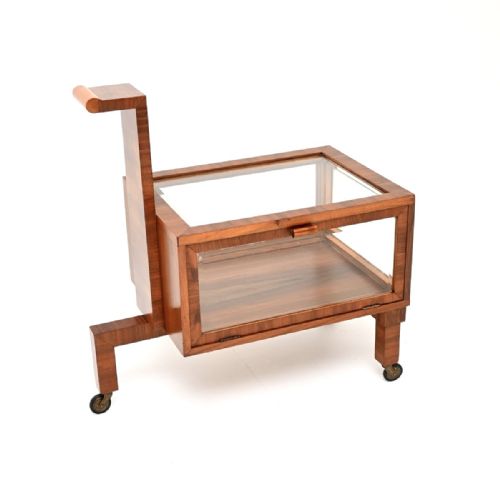
Most pieces date from the 1930s, though related examples stretch from the 1920s into the 1940s. Forms vary from static side tables to pop-up bars and display cases fitted with casters.
Materials and construction
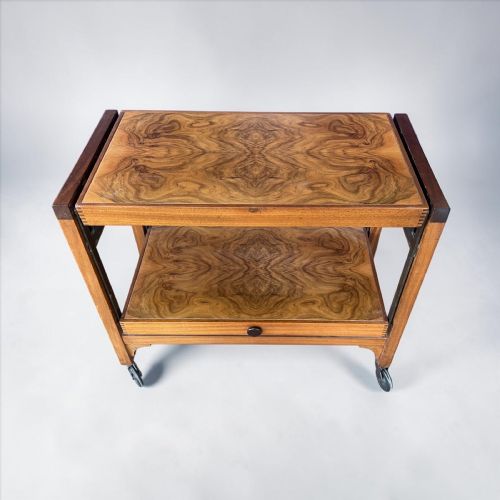
Makers combined rich timbers like walnut, burr amboyna, mahogany, and oak with industrial metals including chrome, brass, aluminium, and steel. Glass surfaces, often black or mirrored, provide the main serving levels.
Wood elements rely heavily on veneer over solid carcases, showcasing figured grains and ebonised details. Metal frames use welded or tubular construction, paired with integrated handles and smooth-rolling casters for mobility.
Judging quality and execution
Quality rests in the cleverness of the mechanics, particularly on metamorphic and pop-up cocktail models that transform from side tables into serving stations. Smooth movement in folding leaves and rising bottle compartments marks superior workshop execution.
Material selection dictates the upper tier of the range, visible in richly figured burr amboyna or matched walnut veneers paired with heavy gauge chrome. Lesser examples rely on simpler timber finishes and standard pressed metal fittings.
Incorporall
The 1930s Drinks Trolley Glossary
- Metamorphic
- Describing furniture designed to transform its shape or function through folding, sliding, or rising mechanisms. These clever pieces change from compact tables into fully accessible cocktail bars.
- Art Deco
- The dominant design movement of the interwar period, characterised by sleek geometric forms, stylised curves, and a blend of traditional woods with modern metals. It remains the defining aesthetic for this category.
- Casters
- Small swivel wheels attached to the base of the legs to allow easy movement across carpets and floors. Original metal or rubber casters enhance both authenticity and mobility.
- Veneer
- A thin layer of choice hardwood applied over a stable secondary timber base. This technique allowed makers to display dramatic grain patterns like burr amboyna across large surfaces.
- Hostess trolley
- A specialised serving cart equipped with multiple tiers, trays, or compartments for bottles and glassware. They were essential accessories for interwar domestic entertaining.
1930s Drinks Trolley: Frequently Asked Questions
What is a 1930s drinks trolley?
A 1930s drinks trolley is a mobile serving cart built to hold bottles, glassware, and cocktail equipment during the interwar period. They combine utilitarian mobility with the bold geometric styling of the Art Deco era.
These pieces function as portable bars, tea carts, and side tables. Many feature multiple tiers, glass shelves, and clever mechanical transformations.
How do metamorphic trolleys work?
Metamorphic trolleys use hidden hinges, folding leaves, or pop-up mechanisms to alter their shape and utility. Opening the top reveals concealed compartments for bottles and cocktail accessories.
These mechanisms allow a compact side table to expand into a fully serviceable cocktail station on casters.
What materials are typical for these trolleys?
The materials reflect a bridge between traditional cabinetmaking and modern industrial design. Walnut, oak, and figured burr amboyna appear alongside polished chrome, brass, and aluminium.
Surfaces frequently incorporate clear, black, or mirrored glass to provide durable tiers for glassware and bottles.
Where were these trolleys made?
The examples on this page originate primarily from English and French workshops. French pieces often lean towards high-style modernist chrome and exotic veneers, while English models frequently feature circular walnut frames.
Occasional global influences appear, such as Indian carved hardwood trolleys from the same decade.
How do I use a trolley in a modern home?
A drinks trolley serves as a dedicated station for spirits, glassware, and barware in a living room or dining space. Their mobility allows you to wheel them easily between rooms when entertaining.
Beyond drinks, they work effectively as side tables, display surfaces for collections, or compact tea carts.