
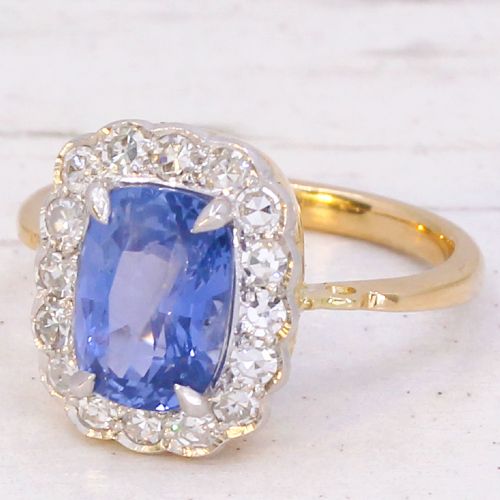
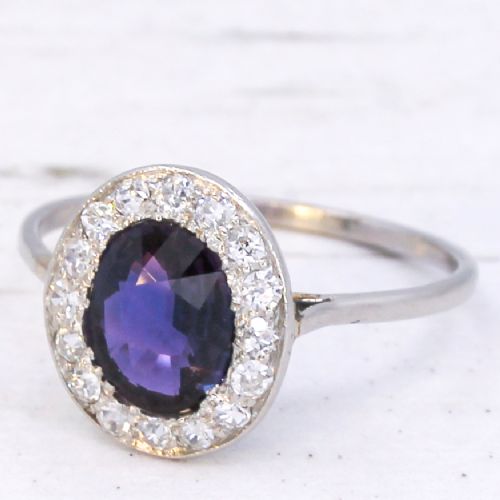


1930s Diamond Halo Ring
A 1930s diamond halo ring brings geometric sparkle and vibrant coloured centre stones to the hand.
1930s Diamond Halo Ring
A 1930s diamond halo ring centres on a bright gemstone surrounded by a border of smaller diamonds. These pieces belong firmly to the Art Deco period, expressing the clean, geometric tastes of the era.
The central gems frequently include sapphires, emeralds, rubies, aquamarines, or amethysts, alongside diamond-only clusters. Dress rings and cluster rings dominate the forms found here, often set with substantial carat weights.
Originating predominantly from the 1930 and 1920 periods, these rings showcase the architectural symmetry and refined proportions characteristic of interwar jewellery design.
How they were made
Platinised metals and white or yellow gold provide the structural foundation for these cluster arrangements. Platinum offers strong, delicate settings that secure small stones tightly without overwhelming the design.
Gems are cut in varied styles, including old cut diamonds and smooth cabochon sapphires or emeralds. Master jewellers balanced the brilliance of the outer diamond border against the deep tones of the central stone.
1930s Diamond Halo Ring Retail Price Guide 2026
Typical asking prices for 1930s diamond halo ring among the pieces listed under this phrase on Sellingantiques today, from the lower quarter to the upper quarter. They describe what is for sale here now, not the wider market.
What varies in quality
The calibre of the central gemstone dictates much of the standing within this group. Unheated origins, certified carat weights, and desirable geographical sources for sapphires and emeralds elevate individual examples.
Metalwork finesse also sets pieces apart, particularly where delicate millegrain edges and pierced platinum galleries demonstrate superior hand skill. The uniformity and match of the surrounding diamond halo complete the visual harmony.
The 1930s Diamond Halo Ring Glossary
- Halo
- A circular or geometric arrangement of smaller gemstones enclosing a larger central stone. This design maximises overall brilliance and presence on the finger.
- Cabochon
- A gemstone shaped and polished with a smooth, rounded dome rather than faceted edges. This cut highlights the rich colour of sapphires, emeralds, and rubies.
- Old cut
- A diamond facet style hand-cut during the interwar era or earlier, featuring smaller tables and deeper pavilions. These cuts produce a softer, candlelit sparkle compared to modern stones.
- Millegrain
- A decorative technique creating a fine border of tiny raised metal beads along the edges of settings. It adds a refined, tactile texture typical of Art Deco workmanship.
1930s Diamond Halo Ring: Frequently Asked Questions
How do I wear a 1930s diamond halo ring safely?
These rings suit daily wear provided you remove them during heavy manual tasks or swimming. Platinum and gold settings hold stones securely, but the antique prongs benefit from regular professional checks.
Pair your ring with slim, plain bands if stacking, ensuring the geometric edges do not rub against softer metals. Store each piece separately in a soft pouch to protect the central gems from scratches.
Are these rings genuinely from the 1930s?
The pieces span the 1920 and 1930 periods, aligning with the height of the Art Deco movement. Hallmarks, stone cuts, and mounting styles provide reliable indicators of this interwar provenance.
Expert certification often accompanies these rings, detailing stone origins and confirming the period manufacture through structural analysis.
What central stones appear in these halo rings?
Sapphires, emeralds, and rubies form the most common vibrant centrepieces, alongside aquamarines, amethysts, and pure diamond clusters. Sapphires range from deep blue Ceylon and Burmese varieties to basaltic stones.
Emeralds frequently originate from Colombia or Zambia, while rubies and zircons add rich red and blue tones to the interwar palette.
Can I resize a vintage cluster ring?
Most gold and platinum rings from this era can be altered by a skilled jeweller. The intricate gallery work underneath requires careful handling to preserve the original metal integrity.
Consult a specialist who understands antique settings to ensure any band adjustment maintains the structural symmetry of the halo.