


1930s Desk Globe
These 1930s desk globe pieces bring authentic interwar character to a study, combining geographical interest with period design.
1930s Desk Globe
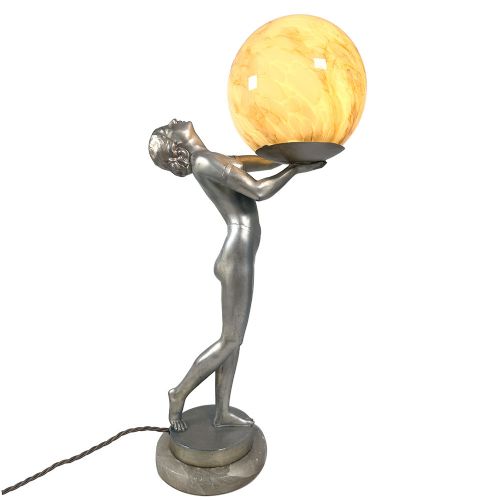
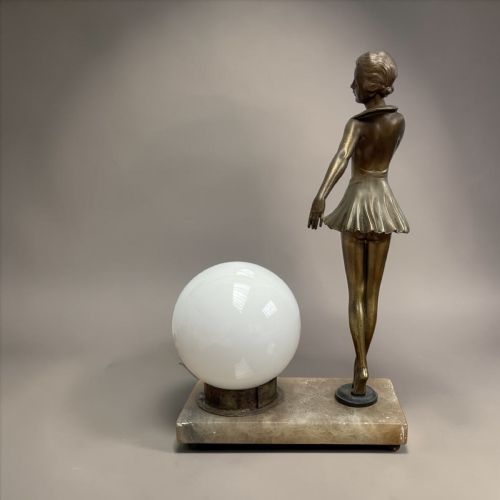
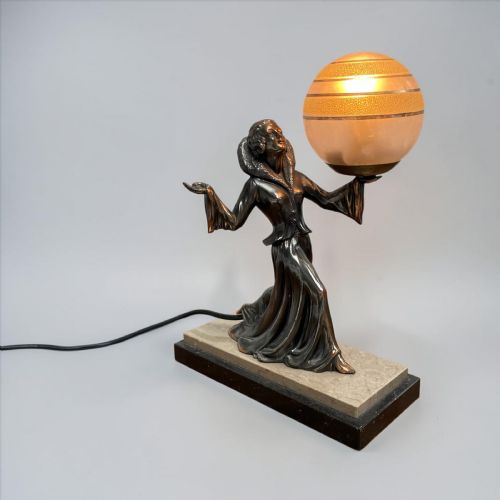
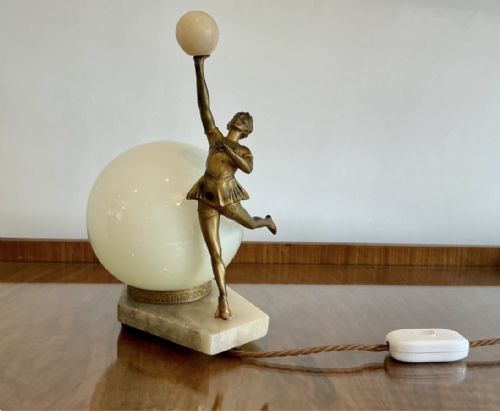
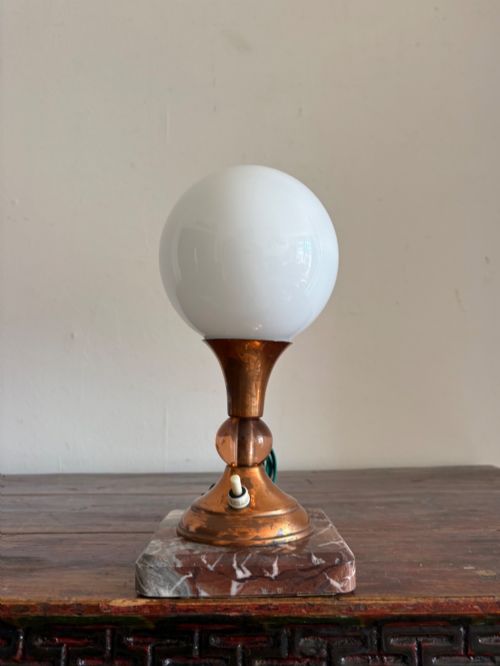
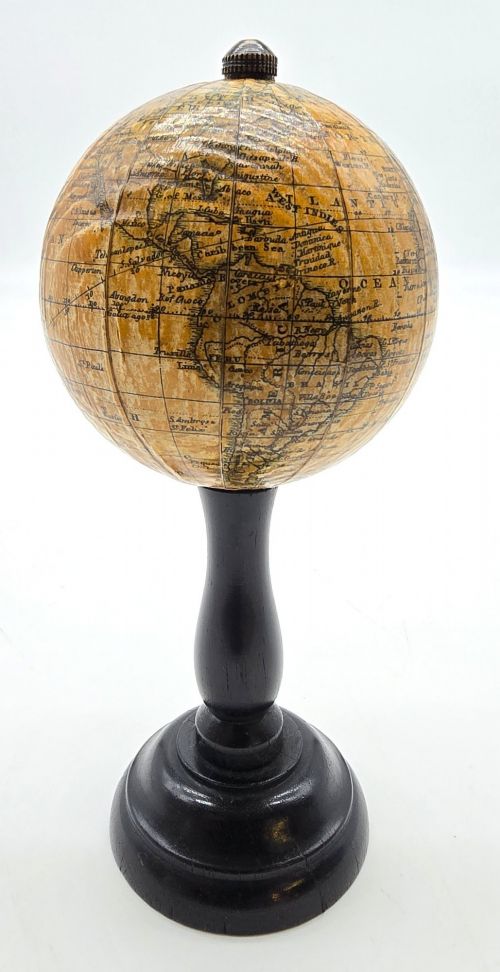
A 1930s desk globe brings interwar geography and design into a study or workspace. The pieces seen here span the 1920s to the 1940s, reflecting the broader Art Deco era.
While traditional cartographic globes appear alongside table lamps and figural lighting, the overall aesthetic remains firmly rooted in the interwar period.
English and French origins predominate in this selection, often combining geographical globes with compact stands suited for a desk or table.
How they were made
Makers utilised a diverse mix of materials, pairing heavy marble bases with chrome, bronze, spelter, and patinated metal. Glass elements frequently appear as frosted or opaline shades, while early plastics such as bakelite and catalin phenolic provide distinct interwar detailing.
Figural metalwork and stone bases required specialist casting and cutting techniques typical of the French Art Deco workshops and English makers of the period.
Listings incorporate items spanning the 1920s, 1930s, and 1940s, utilising materials from glass and marble to chrome and bakelite.
What varies in quality
Quality rests in the crispness of the casting for figural elements and the choice of materials, such as genuine marble bases versus simpler supports. The integration of the globe or shade with its stand distinguishes standard production from finer examples.
Condition of the surface patination, glass components, and original wiring or cartography paper dictates the desirability of each piece among collectors.
The 1930s Desk Globe Glossary
- Art Deco
- A design style prevalent in the 1920s and 1930s characterised by sleek geometric shapes and stylised figures. It influences the lamps and stands found alongside period globes.
- Spelter
- A zinc alloy commonly utilised as a cost-effective substitute for bronze in decorative figures. It accepts patination well to resemble heavier metals.
- Bakelite
- An early form of synthetic plastic developed in the early twentieth century. It appears in switches, bases, and fittings of the period.
- Terrestrial Globe
- A spherical map representing the earth mounted on a stand. Examples from this era reflect historical geopolitical boundaries of the 1930s.
1930s Desk Globe: Frequently Asked Questions
Are these globes up to date geographically?
Globes from this period reflect the geopolitical borders and place names of the interwar era rather than modern geography.
They serve primarily as historical objects and decorative items for a desk rather than current reference tools.
How do I care for marble bases?
Marble requires gentle cleaning with a soft, dry cloth to remove dust without damaging the polished surface.
Avoid using harsh chemical cleaners or abrasive pads that can etch the stone or ruin the aged patina.
How do I distinguish 1920s pieces from 1940s ones?
Items from the 1920s often display classic French Art Deco ornamentation, whereas 1940s pieces tend towards streamlined or utilitarian Machine Age designs.
Comparing the materials, such as early plastics versus traditional bronze, helps clarify the manufacturing era.