



1930s Deco Wall Mirror
These pieces give a room geometric confidence, bringing together tinted glass, metal frames, and striking forms.
1930s Deco Wall Mirror
When you search for a 1930s deco wall mirror, you find pieces that rely on clean lines, geometric shapes, and contrasting materials. The selections here include wall mirrors, overmantel mirrors, and girandoles spanning the 1920s to the 1950s.
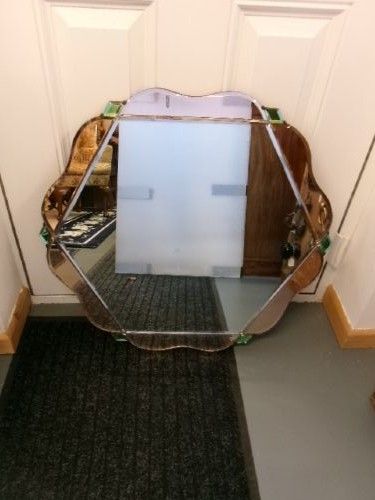
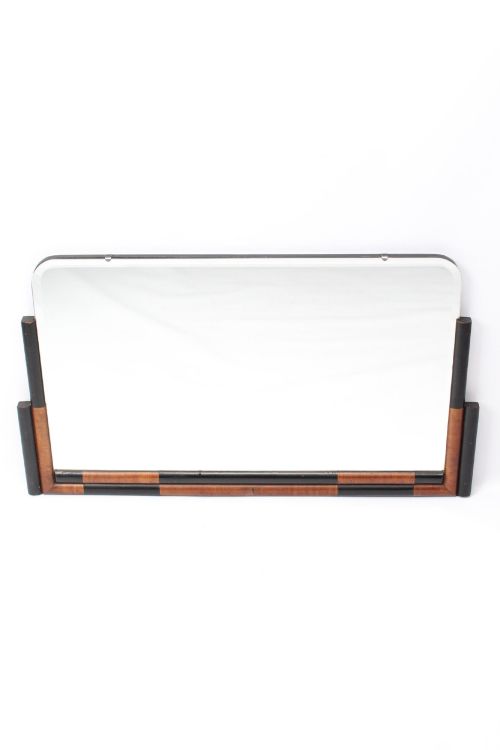
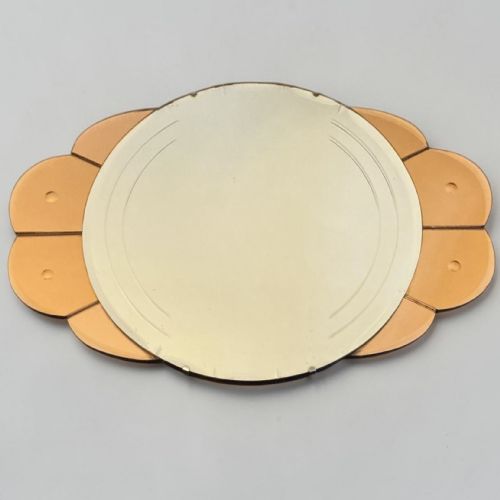
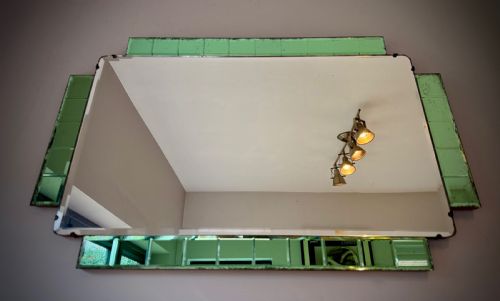
The most common form is the wall mirror, often circular, rectangular, or diamond-shaped, utilising peach, green, or pink coloured glass panels alongside traditional silvered glass. Frames vary from wooden structures in walnut and ebonised finishes to chrome, brass, and embossed metal.
How they were made
Makers combined wood, metal, and glass, using walnut, bamboo, and ebonised timber alongside chrome and brass framing. Glass was frequently bevelled, etched, or produced in distinctive colour tones such as peach and blue.
Construction methods involved mounting glass panels onto wooden or metal backings, sometimes incorporating copper highlights, leather details, or integrated clock movements and lighting branches.
Materials across these listings include chrome, brass, walnut, leather, and coloured glass in peach, green, and pink.
What varies in quality
Quality rests in the harmony of the materials and the precision of the glass cutting. Pieces with multi-tone coloured glass panels or specialised etching display greater ambition than plain rectangular variants.
The choice of framing material also distinguishes the range, with substantial carved silvered wood frames or complex geometric layering representing the more ambitious end of the period.
The 1930s Deco Wall Mirror Glossary
- Overmantel mirror
- A wide mirror designed specifically to be hung above a fireplace mantelpiece. These often span a greater horizontal length to balance the proportions of the hearth below.
- Girandole
- A decorative wall mirror that incorporates attached candle branches or light fittings. The reflective glass serves to multiply the illumination from the central light source.
- Bevelled
- A glass edge cut at an angled slope rather than a straight right angle. This technique catches the light and creates a framed optical border.
- Ebonised
- Timber that has been finished to resemble ebony, typically through a staining and polishing process. It provides a dense, dark contrast to brighter glass panels.
1930s Deco Wall Mirror: Frequently Asked Questions
Where should I place an overmantel mirror?
An overmantel mirror sits naturally above a fireplace, reflecting light and the opposite side of the room. It anchors the vertical space of the chimney breast.
Ensure the width does not exceed the mantelpiece itself to maintain balanced proportions within the interior.
Can I clean coloured glass mirrors normally?
Coloured and silvered glass benefits from gentle cleaning with a soft cloth and mild solution rather than harsh chemical sprays. Avoid letting moisture pool behind the edges.
Care protects the original backing and prevents tarnishing around the bevelled margins.
What defines French Art Deco style?
French pieces often incorporate luxurious materials like leather, bamboo, and intricate glass etching. They tend to emphasise bold silhouettes and refined craftsmanship.
This aesthetic sits alongside English interpretations that favour geometric panels and industrial metals.