


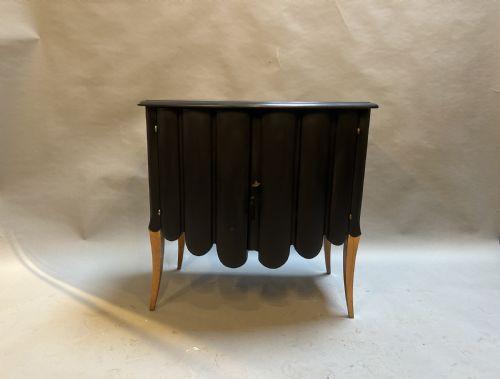

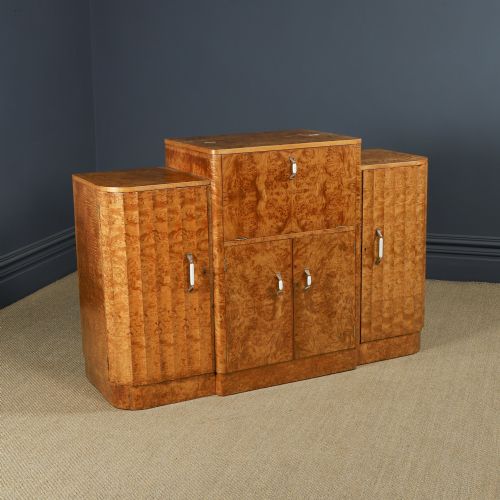


1930s Cocktail Sideboard
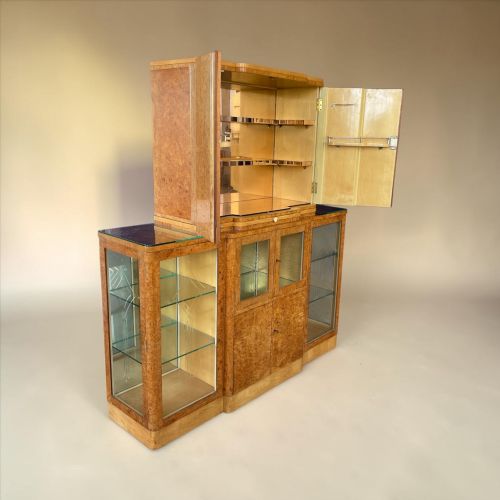
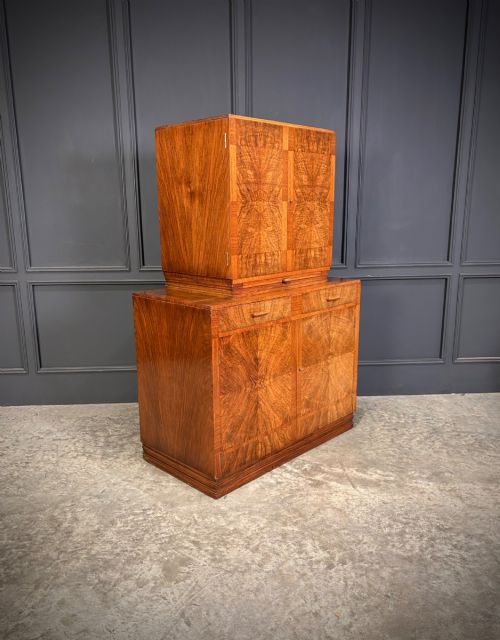
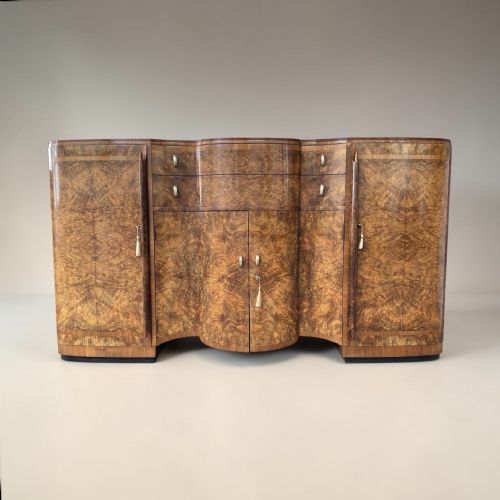
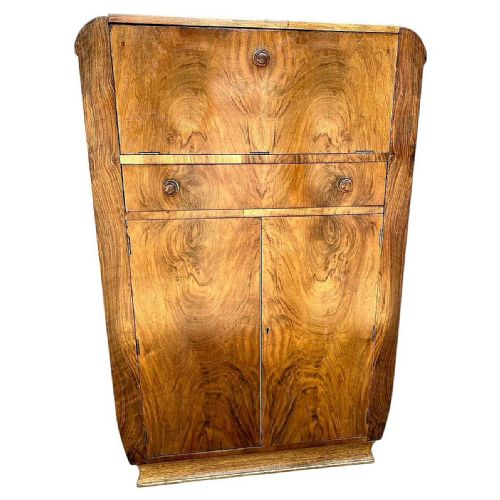
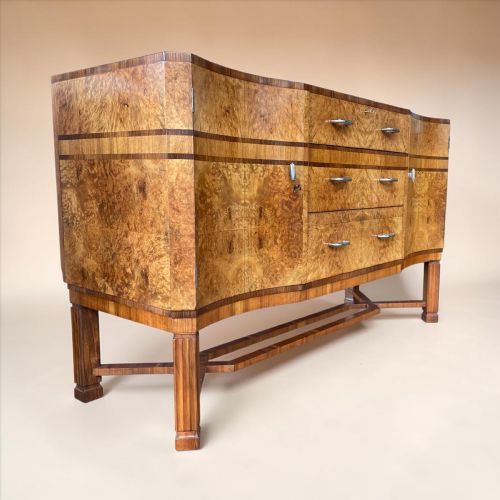
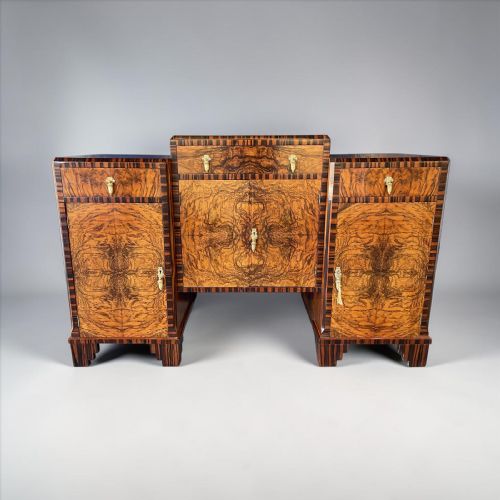
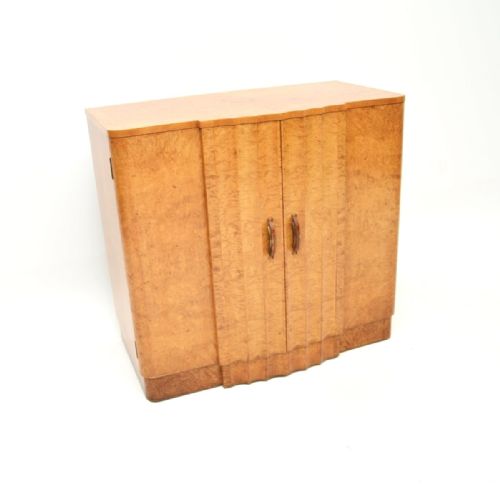
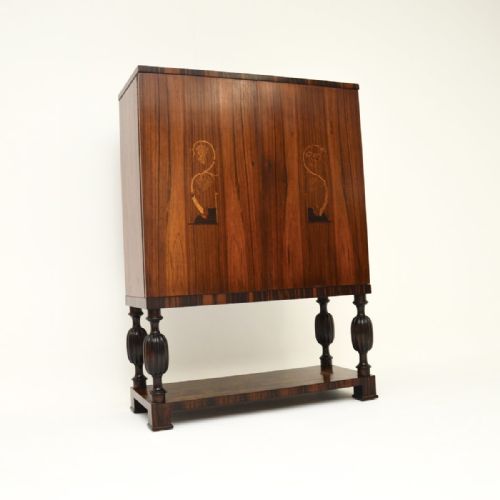
A 1930s cocktail sideboard combines generous storage with dedicated glassware compartments, offering a sophisticated centrepiece for entertaining.
1930s Cocktail Sideboard
A 1930s cocktail sideboard brings together the function of a serving console and a specialised drinks cabinet. These pieces belong predominantly to the Art Deco movement, alongside French Art Deco, Swedish Grace, and broader vintage traditions from the 1920s and 1930s.
Materials and construction
Cabinetmakers relied heavily on figured hardwoods, notably burr walnut and standard walnut veneer, applied over solid wooden carcases to showcase dramatic grain patterns. Other significant timbers include rosewood, satinwood, birch, elm, and bamboo, which reflect the international reach of the period's design vocabulary.
Metal components play a crucial structural and decorative role, with brass hardware, bakelite details, and cast-iron legs appearing frequently. Glass elements are integrated into doors and internal shelving, while specialised electric fittings are incorporated into select sophisticated drinks cabinets.
1930s Cocktail Sideboard Retail Price Guide 2026
Typical asking prices for 1930s cocktail sideboard among the pieces listed under this phrase on Sellingantiques today, from the lower quarter to the upper quarter. They describe what is for sale here now, not the wider market.
Listings feature items from the 1920s and 1930s, constructed in woods like burr walnut, rosewood, satinwood, birch, and elm with brass and bakelite hardware.
Distinguishing craftsmanship
The calibre of a piece rests largely on the selection and matching of wood veneers, where symmetrical grain patterns across large surfaces demonstrate superior cabinet work. Finely figured burr walnut and intricate inlay work indicate a higher standard of production by skilled makers.
Hardware execution and structural integration also set examples apart. Solid brass mountings, robust cast-iron supports, and seamlessly integrated electrical or mirrored internal compartments mark out the superior output of the period's notable workshops.
Maurice Adams·Harry and Lou Epstein·Hamptons of Pall Mall London
The 1930s Cocktail Sideboard Glossary
- Art Deco
- A design style characterised by streamlined forms, geometric patterns, and modern industrial materials. It dominated international architecture and decorative arts throughout the interwar period.
- Burr Walnut
- A specialised wood cut from a tree growth, yielding highly figured, swirling grain patterns. It is prized by cabinetmakers for decorative veneer work on prominent surfaces.
- Veneer
- A thin slice of desirable hardwood applied over a stable secondary wood base. This technique allows makers to display striking grain figures without relying entirely on solid scarce timber.
- Bakelite
- An early form of synthetic plastic utilised for handles, knobs, and decorative trim. Its smooth finish and durability suited the modern aesthetic of the era.
- Cast-Iron
- A strong, heavy alloy used for structural legs and supports. It provides industrial stability beneath lighter wooden cabinetry.
1930s Cocktail Sideboard: Frequently Asked Questions
How do I identify Art Deco furniture?
Art Deco furniture is recognised by its clean geometric lines, symmetrical compositions, and celebration of modern materials. You will often see stepped profiles, curved corners, and sweeping horizontal or vertical emphasis.
The use of highly polished exotic wood veneers combined with contrasting metal or glass accents further defines the aesthetic of the decade.
Which woods were commonly used?
Walnut is the predominant timber found in these pieces, particularly utilised as figured walnut or burr walnut veneer. Cabinetmakers also employed satinwood, rosewood, birch, elm, and bamboo depending on regional workshops and specific stylistic traditions.
These woods were chosen primarily for their natural grain patterns, which added visual texture to otherwise restrained geometric designs.
How should I care for a veneer cabinet?
Protect delicate wood veneers by keeping the cabinet away from direct sunlight and maintaining stable indoor humidity levels. Dust regularly with a soft, dry cloth and avoid harsh chemical polishes that can degrade the original finish.
Treat internal glass and mirrored surfaces with mild cleaners applied to a cloth rather than sprayed directly near wooden joins.