





1930s Cocktail Cart
A 1930s cocktail cart brings the bold geometry and glamour of interwar entertaining straight into a modern room.
1930s Cocktail Cart
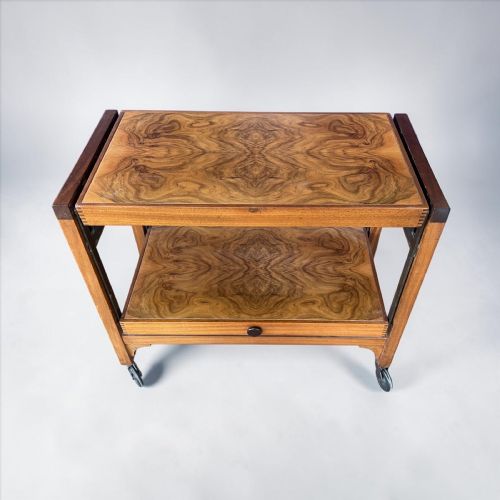
A 1930s cocktail cart serves as the ultimate piece for entertaining, combining mobility with striking period design. When searching this phrase, buyers seek functional pieces that double as decorative focal points in a reception room.
The versions met on this page span drinks trolleys, hostess carts, and bar carts sharing distinct Art Deco lines. French and English examples dominate, often taking circular or tiered forms designed for bottles and glassware.
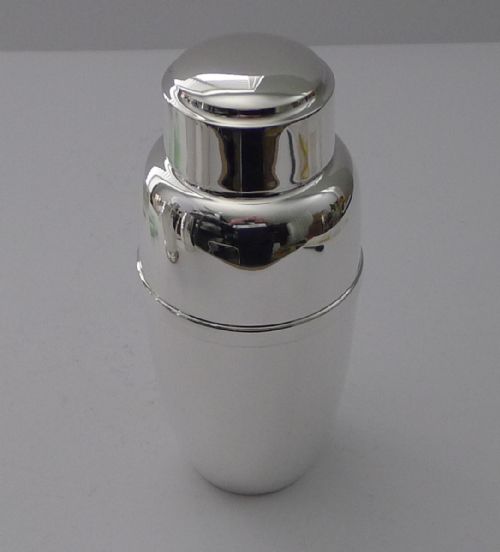
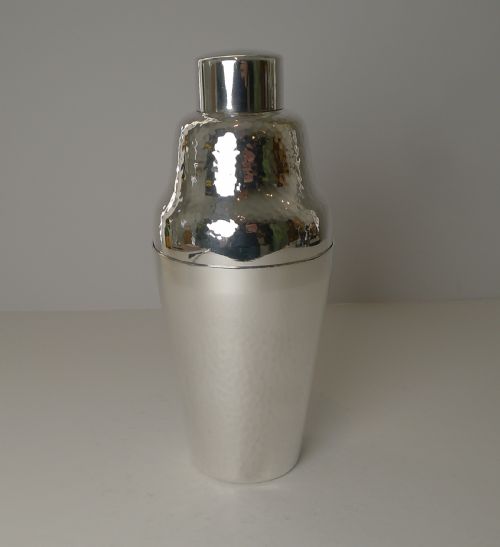
Beyond the main trolleys, the category extends to associated barware such as cocktail shakers, trays, and novelty items like cocktail sticks. Walnut, chrome, and mirrored surfaces define the physical presence of these pieces.
Materials and construction
Makers of the period utilised a contrast of warm woods and industrial metals, pairing figured walnut and burr amboyna with gleaming chrome, brass, and silver plate. Glass and mirror inserts form the practical tiers and serving surfaces.
Woodworking techniques yielded curved, streamlined frames, while metalworking produced tubular chassis and bright plating. Metamorphic mechanisms appear in certain designs, allowing surfaces to expand or transform for service.
Listings feature walnut, chrome, glass, and burr amboyna across pieces dated from the 1920s to the 1940s.
Judging quality and design
The distinction between standard items and the top of the range lies in the choice of timber veneer and the precision of metal finishing. Figured walnut and burr amboyna demand skilled cabinetmaking to display natural grain patterns across curved tiers.
Design ambition separates basic trolleys from exceptional examples, with streamline styling and thoughtful proportion creating visual balance. Maker attribution, through stamps or distinct regional manufacture, further elevates the standing of a piece.
Sudre·C S Green & Co·Asprey·Carl Deffner
The 1930s Cocktail Cart Glossary
- Art Deco
- A design style characterised by sleek lines, geometric shapes, and modern industrial materials popular during the interwar period. It dominates the aesthetic of these carts and barware.
- Burr Amboyna
- A highly prized wood veneer showing intricate knot formations and deep warm tones. Cabinetmakers select it for luxury furniture fronts and surfaces.
- Hostess Trolley
- A wheeled serving piece designed for moving drinks, food, or tableware between rooms. Many include multiple tiers and handles for ease of transit.
- Silver Plate
- A thin layer of silver applied over a base metal foundation to give the appearance and lustre of solid silver. It appears frequently on shakers, trays, and hardware.
- Metamorphic
- A term for furniture designed to transform or change shape for different functions. These pieces often feature clever folding or sliding mechanisms.
1930s Cocktail Cart: Frequently Asked Questions
How were these carts used?
These trolleys served as mobile drink stations during the interwar cocktail revival, wheeled out to guests to dispense spirits and mixed drinks.
Hosts used the multi-tier designs to hold bottles, shakers, and glassware ready for evening gatherings.
What materials are typical?
Common materials include figured walnut, burr amboyna, chrome, brass, and silver plate paired with glass or mirror surfaces.
French and English workshops favoured the contrast between rich woods and bright industrial metals.
How do I style a trolley?
Keep the cart functional yet balanced by arranging vintage glassware, a cocktail shaker, and a few bottles on the main tier.
Reflective mirror surfaces and polished chrome do well when paired with darker wood furniture in a room.
Are these pieces English or French?
The selection includes both English and French examples, alongside occasional pieces from other European workshops.
French models often lean towards high-style chrome and exotic veneers, while English pieces frequently showcase figured walnut.