
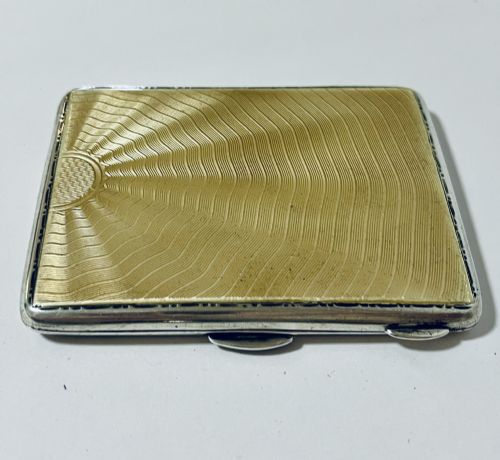


1930s Cigarette Box
These 1930s cigarette box pieces are smoking accessories that bring geometric Art Deco style and tactile materials straight to your desk.
1930s Cigarette Box
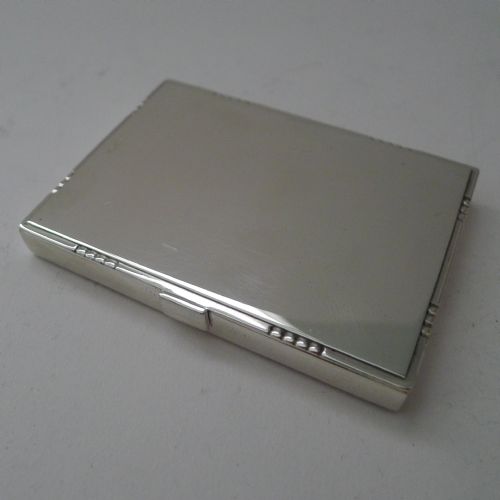
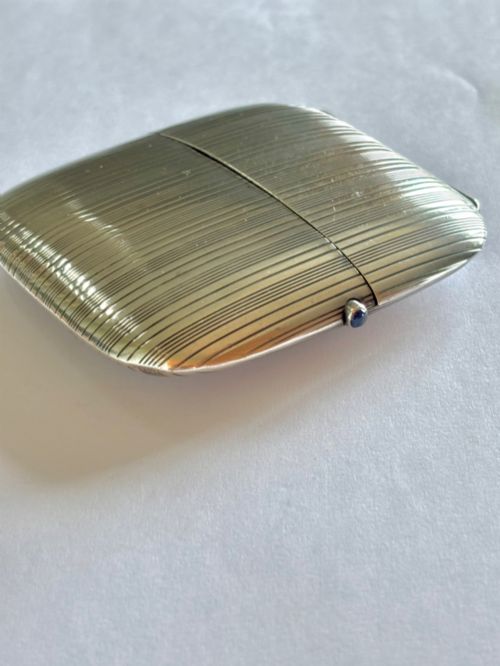
A 1930s cigarette box is a smoking accessory designed to hold cigarettes or cigars on a desk or table. These pieces often belong to the Art Deco movement, displaying the characteristic geometric lines and modernist forms of the interwar period.
The versions you are most likely to meet on this page span from silver and enamel to shagreen, walnut, onyx and crystal glass. Many double as desk boxes, trinket boxes or combination compacts while retaining their original smoking purpose.
How they were made
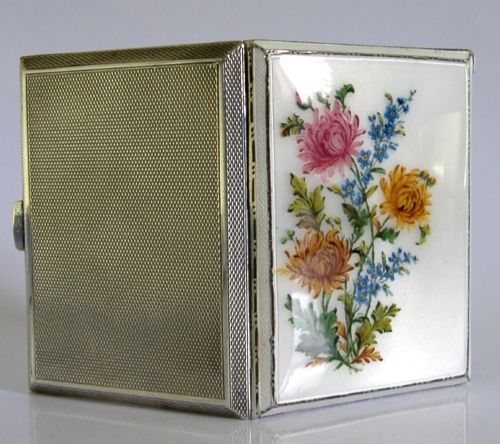
Makers utilised precious metals like sterling silver alongside structural materials such as wood, walnut, brass and leather. Enamel decoration, hand-painted chrysanthemums and crystal glass add decorative surface detail to these boxes.
Exotic finishes like green shagreen with bone trim appear alongside carved white onyx and malachite. Austrian bronze and pig's skin leather provide alternative tactile surfaces for the period designs.
Materials recorded across the selection include sterling silver, enamel, wood, brass, shagreen, glass, onyx, malachite, leather and bronze.
What varies in quality
The distinction between tiers rests upon the choice of materials and the complexity of the decoration. Pieces featuring hand-painted enamel, precious sterling silver or intricate shagreen with bone and brass trim sit at the higher end.
Simpler constructions in plain wood, brass or leather represent more utilitarian examples of the form. The integration of specialty stones like malachite or crystal glass by makers such as Hoffman elevates the design.
The 1930s Cigarette Box Glossary
- Art Deco
- A design style of the 1920s and 1930s characterised by sleek geometric shapes, streamlined forms and modern materials. This style dominates the period aesthetic of smoking accessories.
- Shagreen
- A type of untanned raw hide, often dyed green, historically used as a luxury covering for decorative boxes. It provides a distinct textured surface finish.
- Sterling Silver
- A silver alloy containing ninety-two point five percent silver by mass, frequently utilised for cigarette cases and decorative desk boxes. Hallmarks often indicate the date and origin.
- Onyx
- A banded variety of chalcedony quartz used to construct heavy, smooth desk boxes and cigar containers. White onyx is often paired with contrasting stones.
- Malachite
- A green copper carbonate mineral used as an ornamental stone trim on desk boxes. Its vivid banding creates a striking contrast against white stone.
1930s Cigarette Box: Frequently Asked Questions
What materials are used?
The listings show items made from sterling silver, enamel, crystal glass, walnut, green shagreen, brass, white onyx, malachite and pig's skin leather.
Combinations of bone and brass trim frequently appear alongside Austrian bronze elements.
How were they used?
These pieces served as desktop containers for holding cigarettes and cigars in homes and offices. Many functioned as table lighters, trinket boxes or combination compact cases.
They kept smoking materials organised and protected while displaying fashionable interwar decor.
How do I spot Art Deco?
Art Deco pieces display geometric lines, streamlined silhouettes and modernist decorative motifs. Materials like shagreen, enamel and contrasting stone accents reinforce this interwar style.
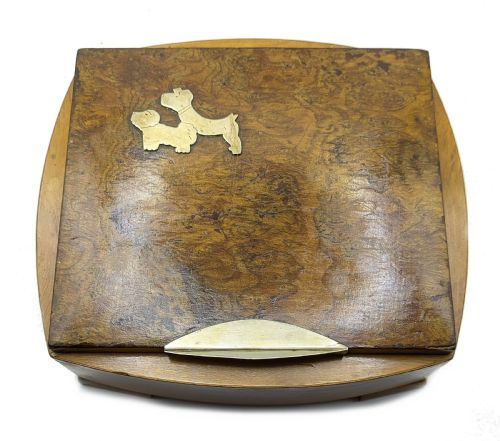
Objects often feature clean rectangular forms or novelty shapes such as Scottie dogs.
Are these boxes hallmarked?
Silver examples from English makers often carry hallmarks indicating the metal standard and year of assay, such as nineteen thirty-seven. Other materials rely on stylistic traits and period context for dating.
Certain pieces are attributed to specific designers like Hoffman.