
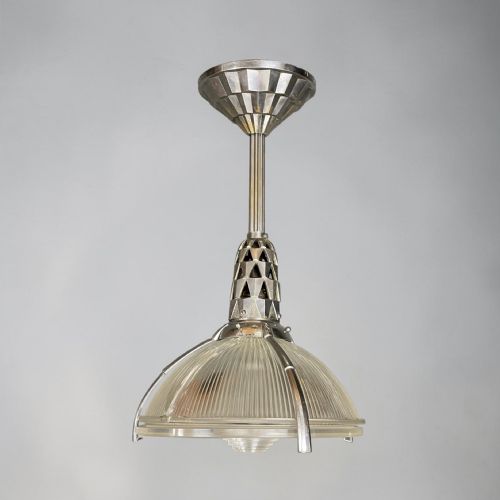


1930s Chrome Globe Lamp
A 1930s chrome globe lamp delivers streamlined Machine Age style and brilliant task illumination, making it a striking choice for any desk or table.
1930s Chrome Globe Lamp
A 1930s chrome globe lamp encompasses a variety of domestic lighting forms shaped by the Art Deco movement and Modernist aesthetics. You encounter table lamps, desk lamps, floor lamps, and ceiling lights that utilise spherical shades paired with polished metallic finishes. The period pieces range from simple geometric designs to elaborate figural supports.
Most examples originate from the 1920s through to the 1940s, reflecting the interwar embrace of industrial materials. Table lamps and pendant lights dominate the selection, often integrating contrasting elements like bakelite, catalin, or frosted glass. These pieces capture an era when domestic lighting transitioned into sculptural modern art.
Materials and construction
The fabrication of these fittings relies heavily on plated metals, specifically chrome and nickel-plated metal, applied over a solid base structure. This creates a durable, high-shine surface that defines the Machine Age aesthetic. Artisans paired the cold metallic sheen with organic or geometric glass components to soften the output.
Glass shades were formed using techniques such as moulding, resulting in opaline, frosted, or opal glass spheres that diffuse light evenly. Electrical components frequently incorporate early plastics like bakelite and catalin phenolic resin for switches, bases, and decorative accents. The combination of spun metal and pressed glass represents the standard manufacturing approach of the decade.
Materials documented across the inventory include chrome, nickel-plated metal, bakelite, catalin, and moulded frosted glass.
Assessing quality and craftsmanship
Quality in these lighting fixtures rests on the thickness of the metal plating and the integrity of the underlying base material. Superior pieces exhibit heavy, substantial casting rather than flimsy sheet metal, ensuring the lamp stands firmly without warping. The precision of the joints and the crispness of any figural casting separate standard production items from finer studio pieces.
The quality of the glass components also dictates the tier of the piece, with uniform thickness and smooth rims marking superior manufacture. Original switches, intact period wiring housings, and branded fittings indicate higher grade production. Consistency in the chrome finish without pitting or excessive wear points to better initial craftsmanship.
Émile-Jacques Ruhlmann
The 1930s Chrome Globe Lamp Glossary
- Chrome
- An electroplated chromium coating applied over metal to provide a bright, corrosion-resistant finish. This process became the hallmark of modern industrial design during the interwar period.
- Bakelite
- An early thermosetting phenol formaldehyde resin used for electrical insulation and structural components. Its dark, durable finish provides a stark contrast to the polished chrome.
- Opal glass
- A translucent, milky-white glass created by adding bone ash or other agents to the molten batch. It diffuses light gently while concealing the bulb within.
- Torchiere
- An indirect floor lamp designed to direct illumination upwards toward the ceiling. These fixtures often feature large bowls or globe-adjacent configurations.
- Catalin
- A cast phenolic resin developed in the 1920s that offered vibrant, jewel-tone colours compared to traditional dark bakelite. It appears frequently in decorative bases and switch housings.
1930s Chrome Globe Lamp: Frequently Asked Questions
How do I date a chrome globe lamp?
Dating relies on examining the manufacturing techniques, fastener types, and materials such as early plastics and glass styles characteristic of the interwar period. Distinctive design cues from the Art Deco and Machine Age movements help narrow the decade of production.
Examining internal components and wiring channels also provides clues regarding the era of manufacture. Comparing the construction against documented pieces from the same period confirms the timeline.
Can these lamps take modern bulbs?
Most vintage fittings accommodate contemporary LED bulbs provided the wattage matches the original electrical tolerances of the lamp holder. Care must be taken to select bulbs that fit within enclosed globe shades without generating excessive heat.
Consulting a qualified electrician ensures the internal wiring safely supports modern usage. Preserving the original lamp holder while updating the cord is a common preservation step.
Are original glass globes fragile?
Original glass shades, particularly frosted or opaline variants, require careful handling due to their age and specific thermal properties. Replacement vintage-style glass is sometimes necessary if an original shade has suffered damage over the decades.
Cleaning should be done with mild agents to protect the delicate surface finishes. Securing the shade properly prevents vibration damage during daily use.
Where should I place a torchiere?
A torchiere works best in corners or adjacent to seating areas where upward illumination can bounce off the ceiling to light the room. These taller floor lamps create ambient illumination rather than direct task lighting.
Positioning them away from high-traffic zones protects the extended metal shafts and delicate shades from accidental knocks. They serve as vertical sculptural elements in an interior scheme.