

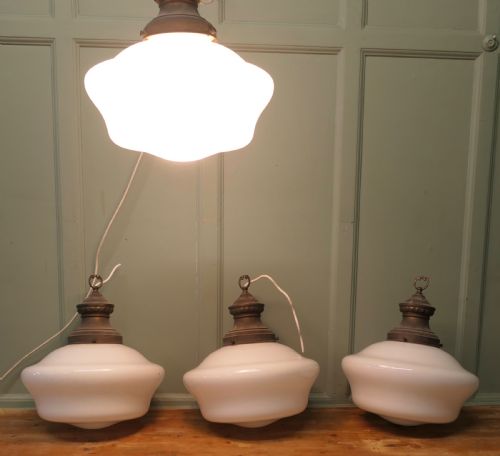


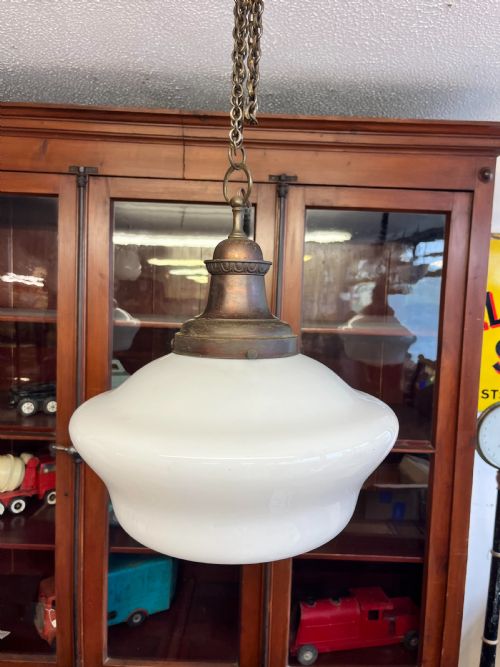


Milk Glass Globe Lamp
These milk glass globe lamp examples bring together practical illumination and diffuse, opaque light across styles from Victorian to Mid-Century Modern.
Milk Glass Globe Lamp
A milk glass globe lamp brings together a rounded diffuser of opaline, opal, or moonstone glass with fixtures formed from brass, chrome, or ceramic. When a buyer searches for a milk glass globe lamp, they find forms ranging from substantial oil lamps to industrial ceiling lights and pendant shades.
The selections span the Victorian, Edwardian, and Art Deco periods, alongside robust industrial and early twentieth century designs. Ceiling lights, pendant lights, and table lamps dominate the current offerings, often paired with metal collars or rings.
Smaller variants such as diminutive light shades and hallway pendants sit alongside large chapel lights and pharmacy pendants. These pieces serve domestic and commercial spaces alike, utilising opaque glass to soften the glare of the internal bulb.
How they were made
The milk glass globe lamp relies on specialised glassblowing techniques to achieve an opaque, milky appearance that distributes light evenly. Opaline and moonstone glass formulations create this characteristic density.
Metal components in brass and chrome provide structural support, often fitted as collars or rings to secure the glass globes. Ceramic elements and metal frames complete the assembly of these pendant and ceiling fixtures.
Milk Glass Globe Lamp Retail Price Guide 2026
Typical asking prices for milk glass globe lamp among the pieces listed under this phrase on Sellingantiques today, from the lower quarter to the upper quarter. They describe what is for sale here now, not the wider market.
Materials across the listings include opaline glass, brass, chrome, and ceramic, spanning periods from the nineteenth century to the mid-century modern era.
What varies in quality
The density and uniformity of the opaline or moonstone glass distinguish finer examples from standard production. A well-blown globe diffuses light without dark patches or heavy swirls in the material.
The integration of the metal elements, whether brass rings or chrome fittings, dictates the finish of the piece. Substantial metalwork paired with well-formed opaque glass creates a more resolved object.
The Milk Glass Globe Lamp Glossary
- Opaline glass
- A semi-opaque glass that diffuses light softly, frequently tinted in white or pastel shades. It forms the primary shade material for many Victorian and twentieth century fixtures.
- Moonstone glass
- A translucent white glass with a mottled appearance resembling the gemstone. This material creates a particularly soft, atmospheric glow when lit.
- Pendant light
- A hanging light fixture suspended from the ceiling by a cord, chain, or metal rod. These units position the glass globe at a distance from the structural attachment.
- Oil lamp
- A lighting device that burns liquid fuel via a wick before the widespread adoption of electricity. Many survive converted for electrical use or retain their original glass shades.
- Chapel light
- A large hanging light fixture sourced from ecclesiastical buildings. These pieces often feature generous proportions designed to illuminate wide interior spaces.
Milk Glass Globe Lamp: Frequently Asked Questions
How do I clean a milk glass globe lamp?
Wash the glass gently in warm soapy water using a soft cloth to avoid scratching the surface. Dry thoroughly before reattaching the shade to its metal mount.
Keep metal components dry and polish brass or chrome only with appropriate non-abrasive cleaners to preserve the finish.
Are these lamps converted to electricity?
Many older oil lamps and chapel lights have been adapted for modern electrical use. Check the specific wiring details of each pendant or table lamp.
Original oil lamp shades are frequently paired with newly wired fixtures to combine period glass with safe electrical function.
What rooms suit a pendant light?
Pendant lights work well in hallways, kitchens, and dining areas where direct overhead illumination is required. Their drop length determines their suitability for high or standard ceilings.
Opaque glass shades ensure the light spreads evenly without harsh downward glare.
How do I date a milk glass globe lamp?
Stylistic indicators such as Art Deco geometric lines or Victorian brass detailing help assign pieces to specific decades. Materials like chrome point toward later twentieth-century production.
Examine the construction of the metal fittings and the thickness of the glass to understand the period of manufacture.