
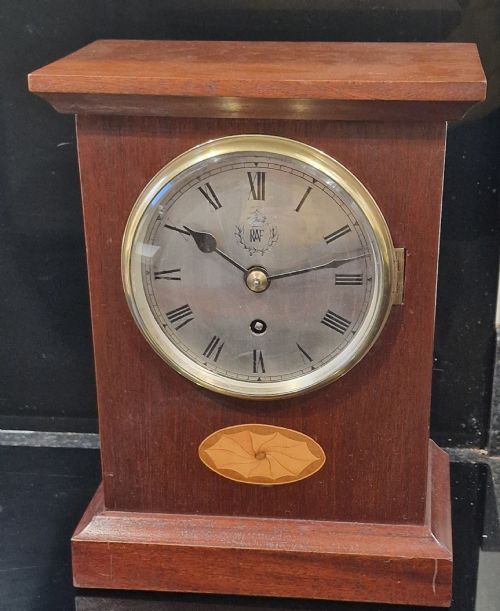
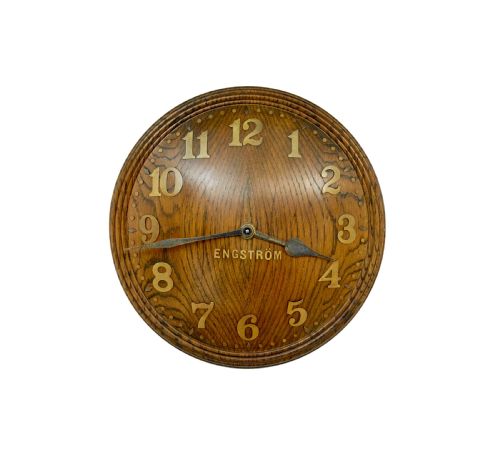


1930s Brass Clock
These 1930s brass clock pieces combine interwar design with reliable mechanics, offering a functional centrepiece for any room.
1930s Brass Clock
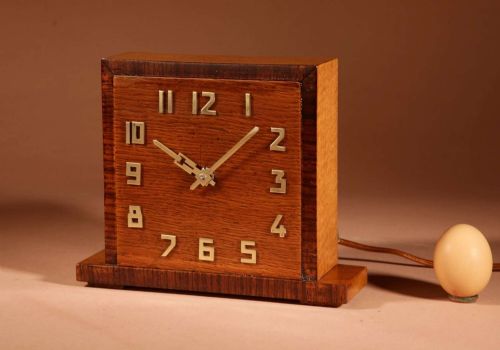
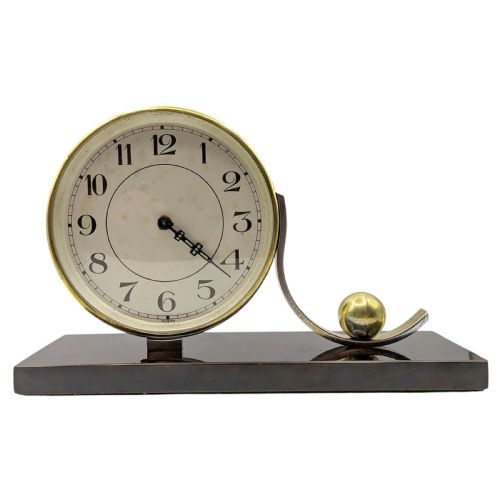
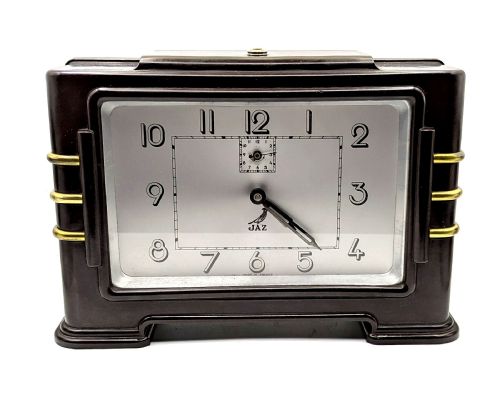
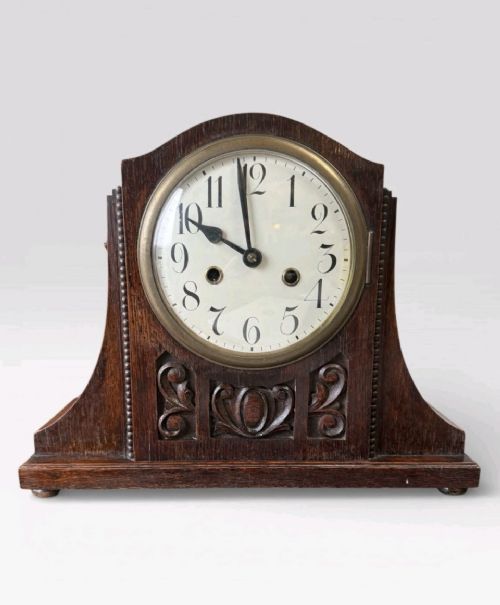
A 1930s brass clock encompasses everything from desk clocks on Bakelite bases to heavy mantel clocks incorporating green onyx, glass, and oak. When searching for a 1930s brass clock, you encounter domestic items as well as specialised military instruments from the era.
The objects listed display distinct styles including Art Deco, Chinoiserie Revival, and British military designs. Mantle clocks and desk clocks dominate the selection, often paired with contrasting materials like marble or mirrored panels.
Origins span British, French, and Dutch workshops, reflecting the widespread adoption of brass alongside modern synthetics like Bakelite during the interwar decades.
How they were made
Makers utilised cast and polished brass for bezels, cases, and fittings, frequently combining the metal with structural timber like oak and mahogany or decorative stone such as green onyx and marble.
Movements ranged from mechanical eight-day mechanisms and thirty-hour platforms to early electrical systems, housed securely within glass-fronted or mirrored enclosures.
Dial construction often featured enamel numerals and chapter rings, while specific military pieces incorporated robust fusee movements designed for precision in service messes.
Listings feature 1930s brass clocks paired with green onyx, oak, and Bakelite across various Art Deco forms.
What varies in quality
The distinction between standard production and superior pieces rests on the refinement of the movement and the integrity of the materials. Fine examples feature fully serviced mechanical or electric movements housed in unblemished brass and dense hardwoods or stone.
Execution of style marks another tier of distinction, seen in the clean symmetry of Art Deco streamlining or the precise casting of maker-signed clock sets.
Overall condition of the glass panels, enamel dials, and original mounting bases preserves the historical integrity of each item.
F W Elliott·Ferdinand Priess·Lilley And Reynolds·Zenith
The 1930s Brass Clock Glossary
- Bakelite
- An early form of synthetic plastic used extensively for clock bases and casings during the interwar period. It provides a durable, smooth dark finish.
- Fusee
- A conical pulley mechanism designed to maintain even force on the clock train as the mainspring unwinds. It ensures consistent timekeeping.
- Garniture set
- A decorative matching set comprising a central clock flanked by matching ornaments or side pieces. These arrangements were popular for mantelpieces.
- Mantel clock
- A freestanding clock designed to sit on the shelf above a fireplace. They appear in numerous materials including brass, marble, and oak.
- Dial
- The face of the clock where the hours and minutes are displayed. Enamel and metal versions are common in this period.
1930s Brass Clock: Frequently Asked Questions
How do I wind a mechanical desk clock?
Most mechanical versions require a key inserted into the winding arbor on the dial or back plate. Turn the key gently until resistance is felt.
Avoid over-winding to protect the mainspring from damage, and consult the specific movement type before making adjustments.
Where should I place a brass mantel clock?
These clocks sit securely on stable, flat surfaces away from direct sunlight and damp environments. A mantelpiece or sideboard offers a prominent display.
Ensure the surface is level to keep the mechanical pendulum or balance wheel beating evenly.
How do I identify an Art Deco clock?
Look for geometric forms, stylised numerals, and streamlined silhouettes in the brass and surrounding materials. Combinations of brass with Bakelite or glass are typical.
Cases often feature stepped designs or contrasting coloured stones like green onyx.