




1930s Bakelite Light
A 1930s bakelite light brings geometric modernity to a room, offering tactile warmth and striking early plastic design.
1930s Bakelite Light
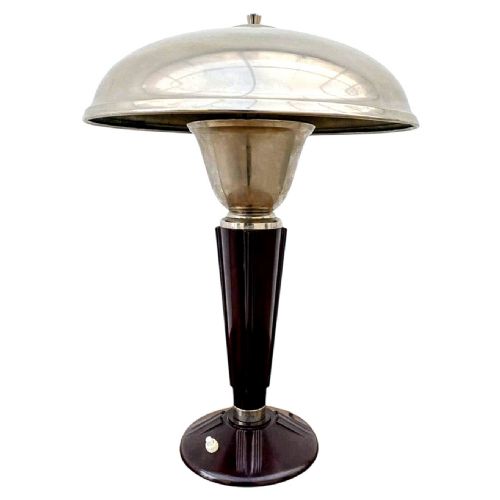
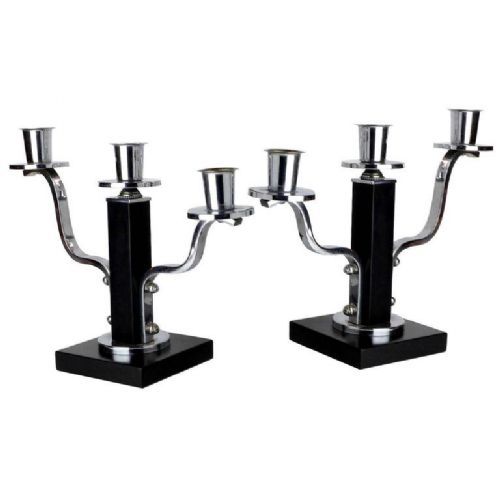
A 1930s bakelite light encompasses functional desk table lamps, wall lights, and candlesticks originating from the Art Deco period. These pieces demonstrate the distinctive aesthetic of early twentieth century industrial design.
The most common forms on this page include streamlined desk lamps and matching pairs of wall sconces. Originating from France and elsewhere, these objects capture the modernist shift towards new synthetic materials.
Makers and designers working in this era utilised phenolic resins to create sculptural lighting forms. Buyers encounter notable pieces associated with designers such as Eileen Grey and E. Cole, alongside industrial workshop items.
Materials and construction methods
Construction relies heavily on moulded bakelite and catalin, paired with contrasting metal elements like chrome and nickel. These synthetic polymers allowed manufacturers to achieve rich colour variations and smooth geometric contours.
Glass components, including frosted glass shades and flame forms, frequently accompany the plastic bodies. Metal frames and fittings provide structural support and electrical housing for the desk and wall fixtures.
Listings show items spanning the 1920 and 1930 periods, executed in bakelite, chrome, glass, metal, frosted glass, nickel, plastic, and catalin.
Evaluating quality and design
Quality in these lighting pieces depends upon the complexity of the moulding and the integrity of the combined materials. Streamlined designs and substantial two tone colour combinations represent superior design ambition.
The integration of metal work, such as heavy chrome plating or nickel fittings alongside the phenolic resin, distinguishes standard production from more iconic examples attributed to known designers.
Eileen Grey·E. Cole·Jumo
The 1930s Bakelite Light Glossary
- Bakelite
- An early thermosetting phenol formaldehyde resin invented in the early twentieth century. It allowed for mass production of durable, heat resistant electrical goods.
- Catalin
- A cast phenolic resin known for its brighter colours and translucency compared to standard bakelite. It was widely utilised in decorative objects during the Art Deco era.
- Streamline
- An aerodynamic design style of the 1930s emphasising sleek horizontal lines and curved forms. This aesthetic influenced the architecture of domestic desk and table lamps.
- Phenolic
- A class of synthetic polymers derived from phenol and aldehyde. These materials formed the durable base for moulded electrical housings and light fittings.
1930s Bakelite Light: Frequently Asked Questions
How do I identify a 1930s bakelite light?
Look for characteristic moulded synthetic resins paired with chrome or frosted glass elements in geometric Art Deco forms.
Examine the construction methods and material combinations to understand the manufacturing period.
Were these lights used on desks or walls?
The evidence shows both desk table lamps and wall light sconces were produced during this decade.
Desk versions provided focused task illumination while wall pairs served ambient interior lighting purposes.
What materials were used alongside bakelite?
Manufacturers combined the moulded plastic with chrome, nickel, metal, and glass.
Frosted glass and catalin phenolic resin frequently appeared in the construction of these decorative fittings.
Which designers are associated with these lights?
Notable figures such as Eileen Grey and E. Cole created iconic lighting designs during this era.
Industrial workshops also produced streamlined desk lamps and matching wall sconces.