



1930s Art Deco Bedstead
A 1930s art deco bedstead brings geometric warmth and striking wood grains to a bedroom.
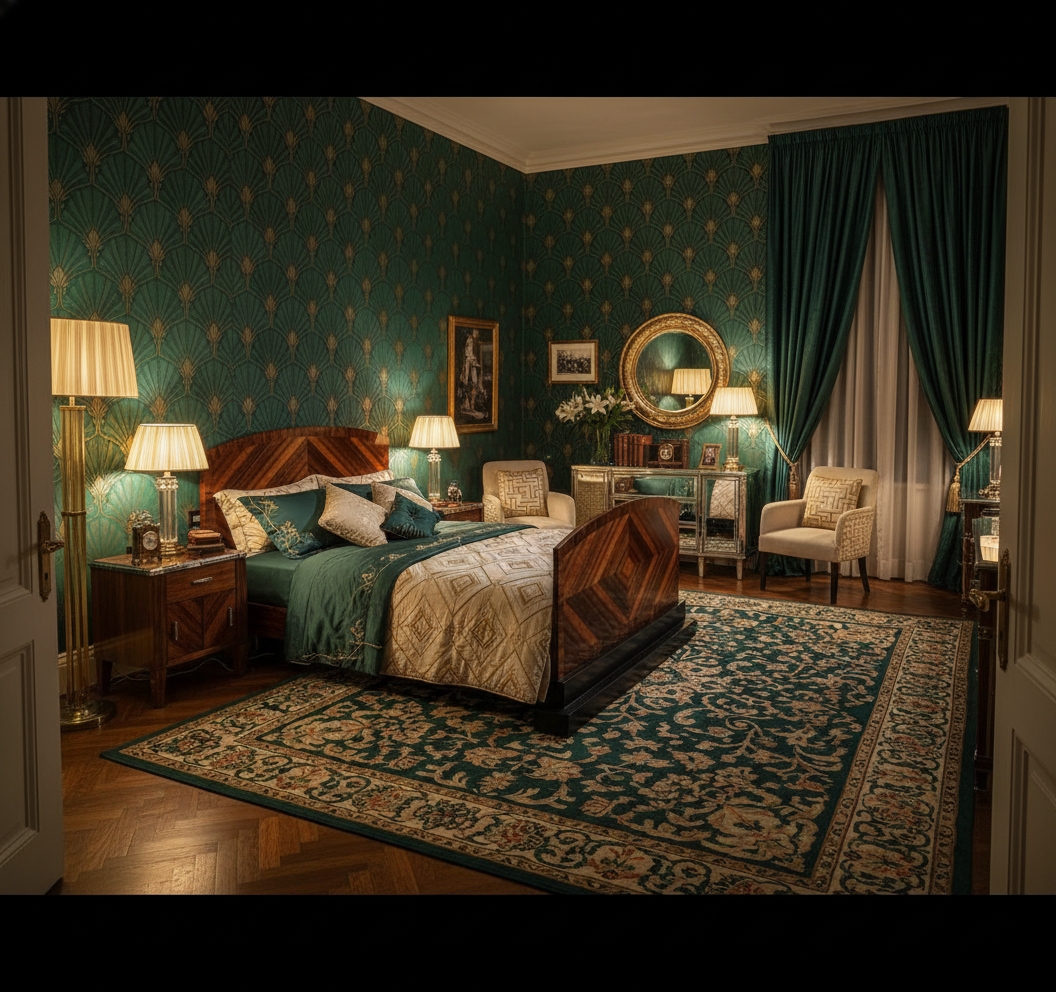
1930s Art Deco Bedstead
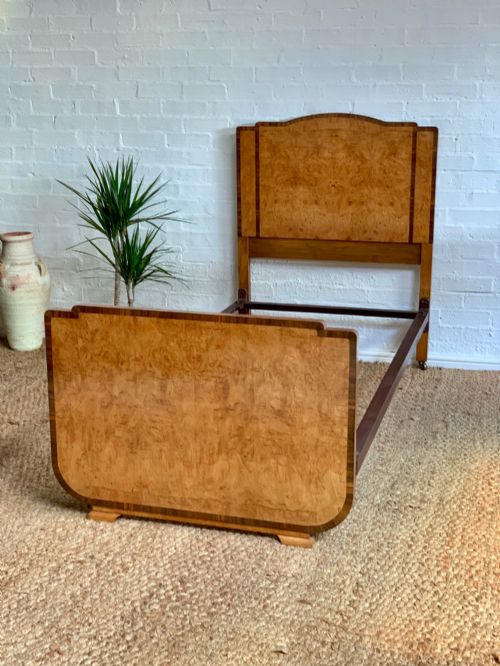
A 1930s art deco bedstead represents the distinct geometric styling and streamlined forms of the interwar period. The double bed frame emerges most frequently in the listings, alongside single beds, king size options, and occasional pairs designed for matching bedroom layouts.
Many examples incorporate integrated bedside tables, headboards with fan shapes, or architectural skyscraper silhouettes derived from modernist design. Originating largely from the 1930s, these pieces utilise robust timber frameworks adapted for domestic sleeping quarters.
French and English origins dominate the available forms, reflecting both continental curves and structured cabinetmaker execution. Buyers encounter both standalone bed frames and complete bedroom suites featuring coordinated nightstands.
How they were made
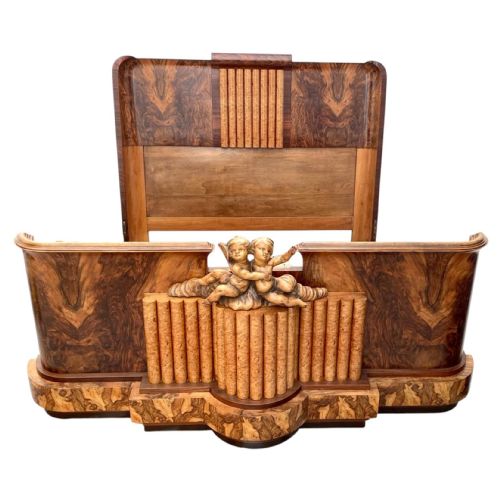
Makers constructed these bedsteads using solid timber foundations overlaid with decorative veneers such as burr walnut, burl walnut, satinwood, and birds eye maple. This technique allowed craftsmen to display dramatic figuring and contrasting grain patterns across wide headboard and footboard panels.
Selected pieces combine walnut with lighter satinwood or macassar accents, whilst others utilise carved walnut, limed oak, iron, and metal frameworks. Construction methods frequently integrated bedside cabinetry directly into the bedstead structure for a unified architectural aesthetic.
1930s Art Deco Bedstead Retail Price Guide 2026
Typical asking prices for 1930s art deco bedstead among the pieces listed under this phrase on Sellingantiques today, from the lower quarter to the upper quarter. They describe what is for sale here now, not the wider market.
The documented periods span from Victorian and 1900 through to the dominant 1930 art deco era.
What varies in quality
The choice of timber veneer dictates much of the visual distinction, with heavily figured burr walnut and blonde birds eye maple sitting at the sophisticated end of the range. Simpler plain walnut versions offer a more restrained appearance.
Design complexity also defines individual pieces, ranging from straightforward rectangular frames to elaborate fan-shaped headboards and constructions featuring integral cabinets or ensuite marble top nightstands. Named makers and specific workshop attributions further elevate the standing of particular examples.
Waring and Gillow England·Betty Joel·H L Epstein Brothers·Heal s
The 1930s Art Deco Bedstead Glossary
- Burr walnut
- A prized timber veneer taken from the growth excrescences on walnut trees, yielding swirling, organic patterns. It forms the primary decorative surface on many high-end bed frames.
- Birds eye maple
- A figured maple timber marked by small, swirling dots that resemble tiny eyes. This light wood creates striking contrast panels in modernist furniture.
- Skyscraper style
- An architectural influence in art deco design featuring stepped vertical structures and vertical emphasis. It translates into tall, imposing headboard silhouettes.
- Bedstead
- A framework supporting a mattress and box spring, distinguishing the complete wooden or metal structure from loose bedding. These items form the central focus of art deco sleeping arrangements.
- Macassar
- A dark, heavily striped exotic hardwood used for striking inlay and contrast banding. It punctuates lighter satinwood and maple surfaces.
1930s Art Deco Bedstead: Frequently Asked Questions
Do these beds take standard modern mattress sizes?
Many French and antique bed frames feature measurements that differ slightly from contemporary standard sizes. Buyers often need to check exact internal dimensions or utilise bespoke mattress solutions.
Widths for double and king size frames can vary according to continental manufacturing standards of the period. Confirming the specific rail lengths ensures proper mattress placement.
How do integral bedside tables attach to the frame?
Integrated units connect directly to the headboard structure or extend from the side rails as part of a unified architectural design. This built-in configuration creates a streamlined footprint typical of 1930s bedroom planning.
Such configurations remove the need for separate loose nightstands while maintaining visual symmetry. The arrangement suits rooms designed around fitted furniture concepts.
What is the difference between burl walnut and standard walnut?
Burl walnut utilises timber cut from a tree burl, producing dense, swirling grain patterns full of natural movement and variation. Standard walnut displays a straighter, more uniform grain structure.
Furniture utilising burl veneers usually represents a more decorative approach intended to catch the eye. Plain walnut versions provide a quieter aesthetic.
Can I dismantle these bed frames for transport?
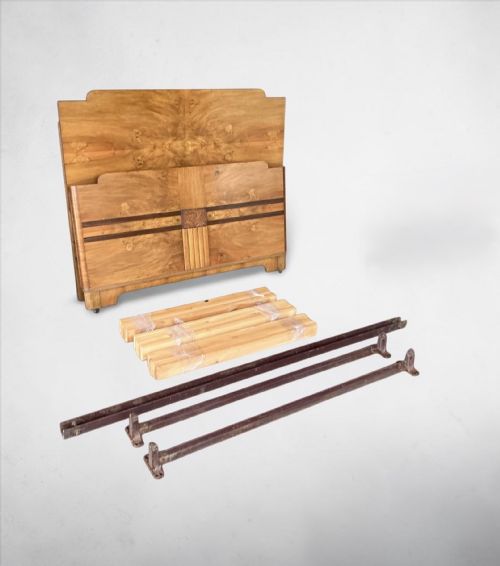
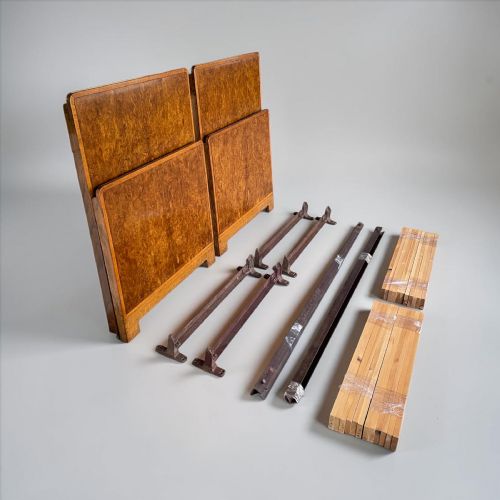
Most antique wooden bedsteads dismantle into headboards, footboards, and side rails using internal bolts or brackets. This modular construction facilitates easier movement through doorways and up staircases.
Care must be taken with veneered surfaces during assembly and dismantling to protect fragile edges. Professional delivery often ensures safe transit of large integrated units.