


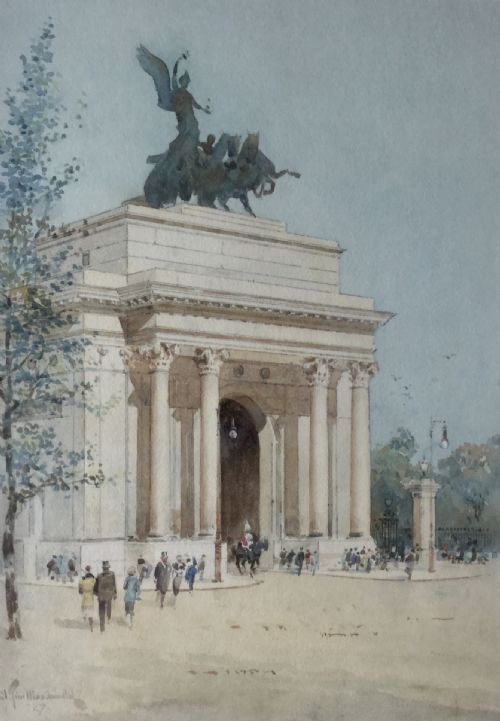


1920s Watercolour Picture
A 1920s watercolour picture brings lively pigment and delicate washes to your wall, offering authentic interwar charm.
1920s Watercolour Picture
A 1920s watercolour picture captures the artistic spirit of the interwar period through translucent pigment on paper. You will encounter framed artwork ranging from botanical studies and landscape scenes to portraiture.
The selections on this page span styles such as Modern British, Art Deco, and British Impressionism. Many examples arrive mounted behind glass within wood or gilt wood frames.
Makers and artists represented include Edward Horace Thompson, Edith E Caswall, Jane Utley, Robin Watt, J. Tim Macdonald, Dame Laura Knight, George Graham, and M.K Rhodes. These pieces frequently date from the 1920s alongside adjacent early twentieth-century periods.
Materials and construction
These works are executed primarily in watercolour on paper, sometimes combined with charcoal, gouache, or pencil over the preliminary sketch. Artists utilised fluid pigments to achieve tonal gradations across portrait and landscape subjects.
Framing materials commonly involve wood, gilt wood, and gilded wood, often paired with protective glass to shield the fragile paper surface. Patinated metal also appears in the supporting hardware or auxiliary elements of the framed objects.
Current listings feature paper, watercolour, wood, and gilt wood across Art Deco and Modern British styles.
Factors of quality
Quality rests in the assured handling of the brush and the clarity of the pigment upon the paper support. Masterful works display confident draftsmanship beneath the wash, capturing light and movement without heavy reworking.
The preservation of the paper and the integrity of the period frame contribute significantly to the standing of each piece. Intact glazing and sympathetic framing preserve the watercolour from atmospheric degradation.
Edward Horace Thompson·Edith E Caswall·Jane Utley·Robin Watt·J. Tim Macdonald·Dame Laura Knight·George Graham·M.K Rhodes
The 1920s Watercolour Picture Glossary
- Watercolour
- A paint consisting of a pigment suspended in a water-soluble vehicle, applied to paper to create translucent colour washes.
- Gouache
- An opaque water-based paint often used alongside watercolour to add highlights and solid areas of colour.
- Gilt wood
- Wood that has been thinly coated with gold leaf or gold paint, frequently seen on interwar picture frames.
- Interwar Realism
- An artistic style prevalent between the First and Second World Wars focusing on recognizable, objective representations of the world.
1920s Watercolour Picture: Frequently Asked Questions
How should I hang a vintage watercolour?
Keep watercolours away from direct sunlight to prevent the pigments from fading over time. Indirect natural light in a dry room is ideal for preserving the paper.
Ensure the frame remains securely sealed against dust and moisture. Professional framing with acid-free backing boards will protect the paper for decades.
Are these paintings original works?
Yes, the listings comprise original hand-painted watercolours rather than modern reproductions. Each piece bears the unique brushstrokes and touch of the individual artist.
Signatures or inscriptions by artists such as Dame Laura Knight or George Graham often appear directly on the sheet.
What framing is typical for this period?
Many works retain their original wood or gilt wood frames under glass. These frames reflect the aesthetic tastes of the early twentieth century.
Retaining the original framing preserves the historical context of the artwork. Minor scuffs on vintage frames are normal signs of age.
How do I identify a 1920s style?
Interwar watercolours often exhibit movements like Modern British, British Impressionism, or Art Deco linear precision. Subject matter ranges from botanical studies to landscape views and character portraits.
Signatures, dates, and stylistic conventions help narrow the creation window to the decades surrounding 1920.