



1920s Walnut Cupboard
A 1920s walnut cupboard brings rich grain and practical storage together, offering timeless character for modern rooms.
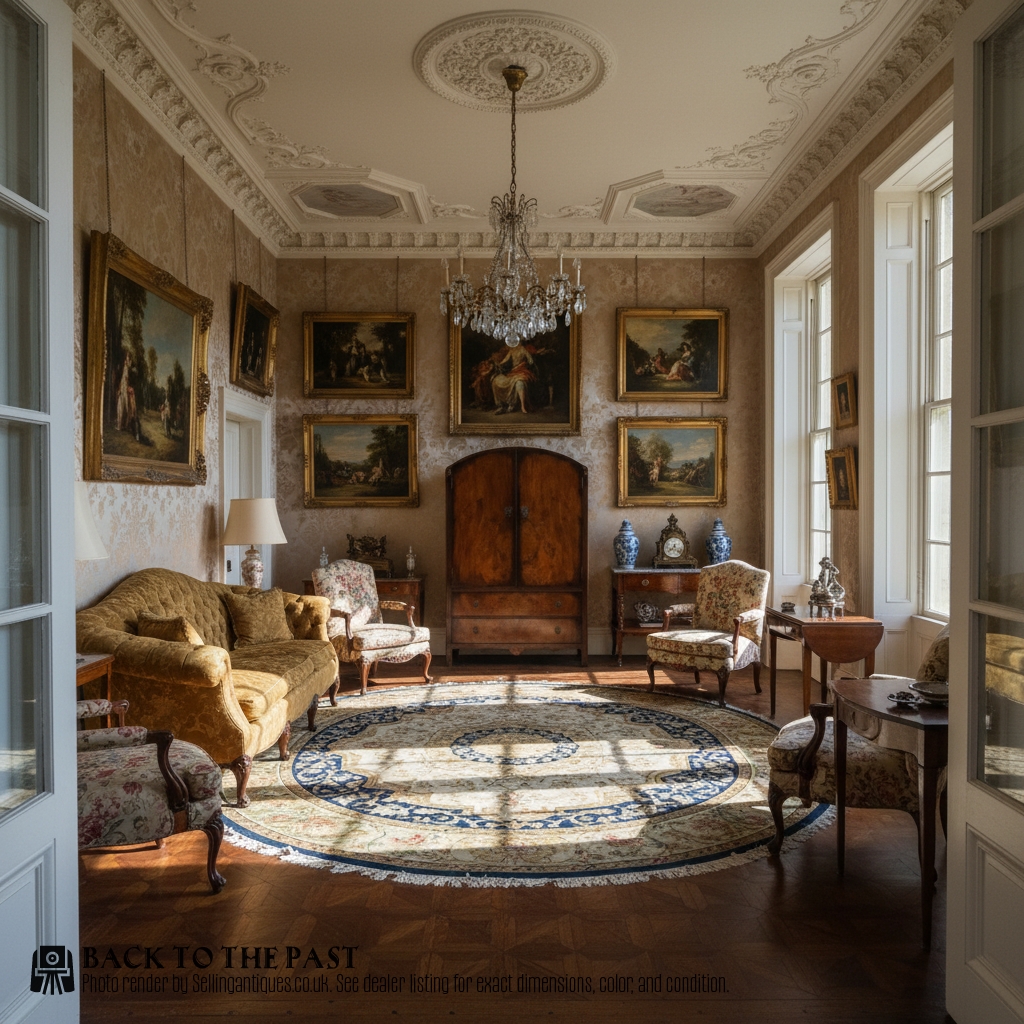
1920s Walnut Cupboard
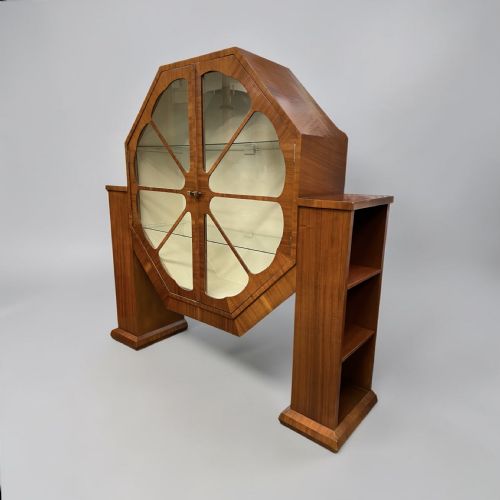
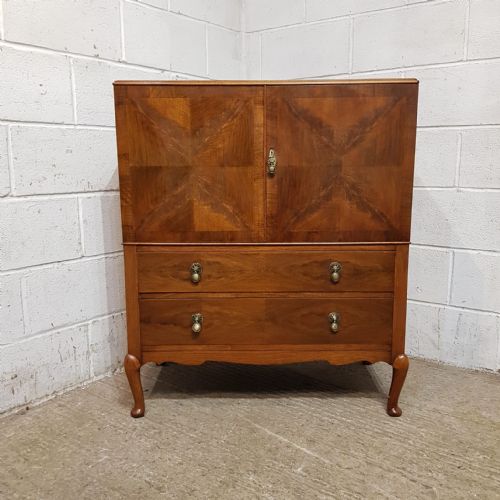
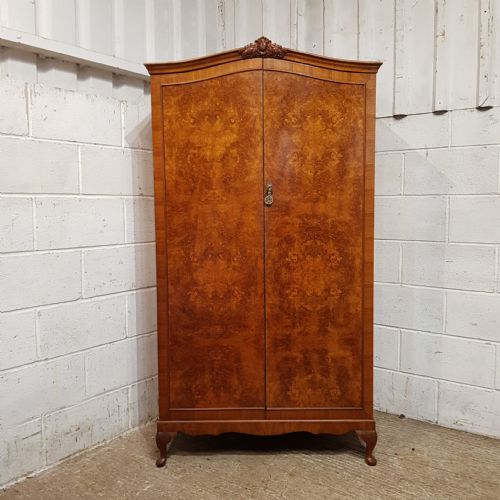
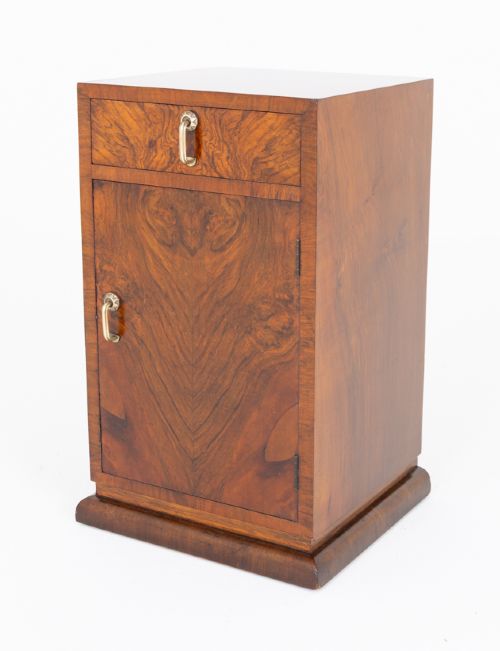
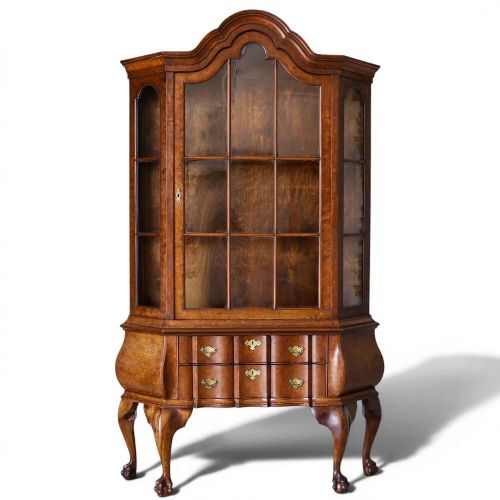
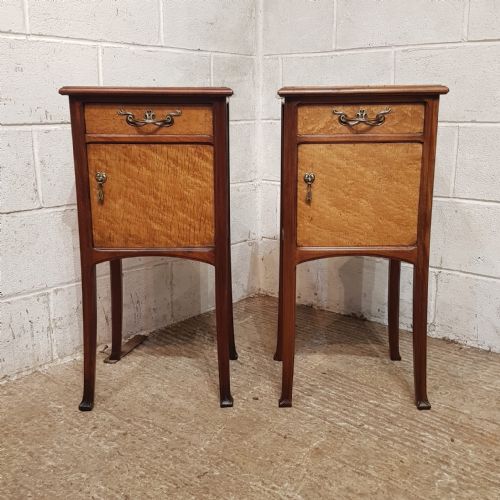
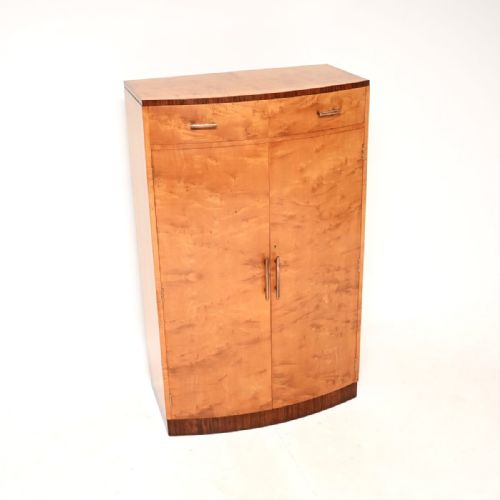
A 1920s walnut cupboard encompasses a diverse array of storage furniture, ranging from compact bedside cabinets and tallboys to expansive wardrobes and cocktail cabinets. Buyers searching this phrase encounter pieces that reflect the aesthetic shifts of the interwar period, spanning clean-lined Art Deco designs and revivalist styles.
Origins vary across British, French, and Italian workshops, bringing distinct regional interpretations to the use of walnut and burr walnut. Alongside dedicated drinks and display cabinets, domestic forms include compactum wardrobes and bookcase combinations with glazed upper sections.
Materials and Construction Techniques
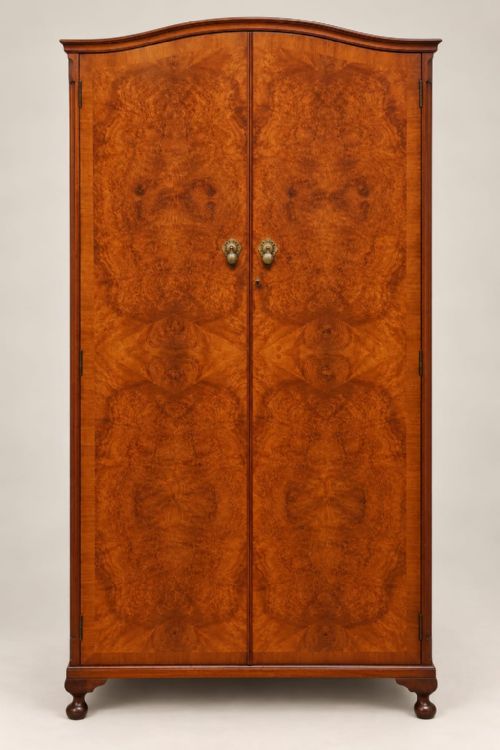
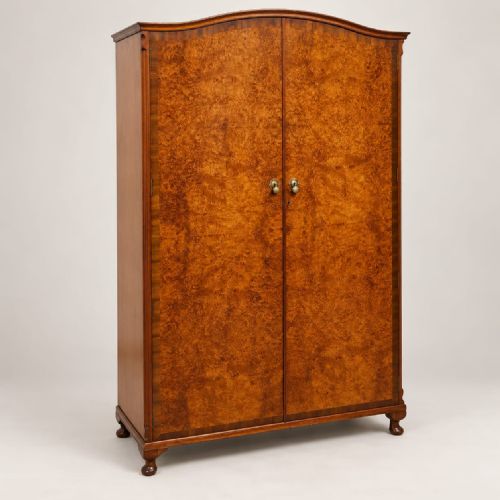
Cabinetmakers utilised solid walnut and decorative walnut veneer, often selecting burr walnut to create striking symmetrical patterns on principal surfaces. Secondary woods and framing support the primary structure, while decorative accents incorporate materials such as brass, glass, metal, and bakelite.
Veneering technique governs the exterior appearance, requiring precise placement to mirror grain patterns across double doors and drawer banks. French polishing and protective clear finishes seal the wood while deepening the natural tone and warmth of the walnut.
Hardware integration includes cast brass handles, escutcheons, and specialised hinges designed for heavy cocktail cabinet drop-down doors and full-length wardrobe enclosures. Internal fittings often feature satin birch or mirrored glass panels to complement the exterior timber.
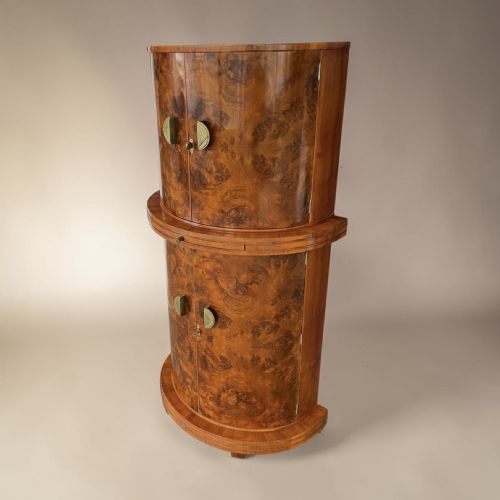
Behind closed burr walnut doors, mirrored cocktail interiors wait patiently to revive the lost art of the 1920s dry bar.
Distinguishing Quality and Craftsmanship
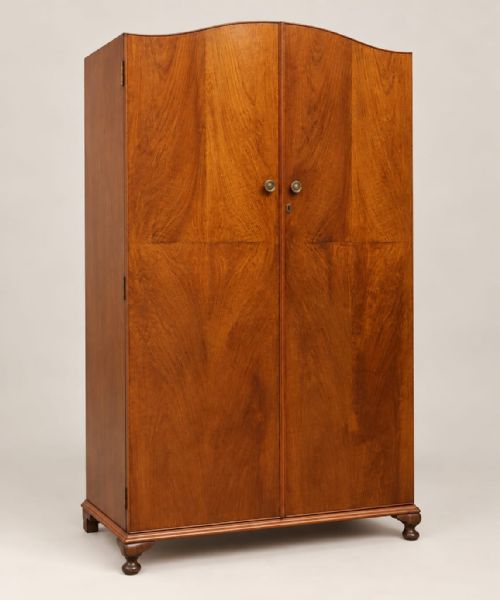
Quality rests upon the selection and matching of walnut veneers, where symmetrical burr patterns indicate superior cabinetmaking ambition. Plain, flat walnut surfaces generally denote more utilitarian production, whereas expertly book-matched panels elevate the piece.
The integrity of internal joinery and fitted compartments separates standard production from exceptional examples. Cocktail cabinets with fully intact original mirror backs, glass shelves, and pull-out mixing slides demonstrate higher manufacturing standards.
Proportion and stylistic cohesion dictate the overall success of revival and Art Deco pieces. Coordinated hardware, well-fitted drawers, and stable door alignment reflect the enduring skill applied during original construction.
Arthur Simpson·Heal's·Epstein
The 1920s Walnut Cupboard Glossary
- Burr walnut
- A specialised timber veneer harvested from tree growths, yielding intricate, swirling grain patterns highly prized for decorative furniture panels. It creates a dramatic visual texture on cabinet doors.
- Compactum
- A multi-functional wardrobe designed to maximise internal storage by combining hanging space, shelves, and drawers within a single carcass. This form suits rooms requiring efficient organisation.
- Astragal glazed
- A glass-fronted door divided into smaller panes by narrow wooden mouldings called astragals. This technique adds refinement to bookcase and display cabinet elevations.
- Waterfall
- A curved waterfall edge profile where the top surface rolls smoothly down the sides of the piece. This characteristic contour frequently identifies revival and modernist bookcases.
- Compact cabinet
- A small bedside or freestanding storage unit built for restricted spaces while maintaining traditional joinery standards. These items offer convenient enclosed storage.
1920s Walnut Cupboard: Frequently Asked Questions
How do I identify Art Deco style?
Art Deco furniture relies on clean geometric lines, symmetrical veneer patterns, and stylised decorative hardware made from brass, glass, or bakelite. The focus rests on sleek silhouettes rather than heavy carved ornamentation.
Walnut and burr walnut served as primary mediums for these designs, offering rich natural grain patterns that required minimal surface carving to achieve visual impact.
Where were these cupboards made?
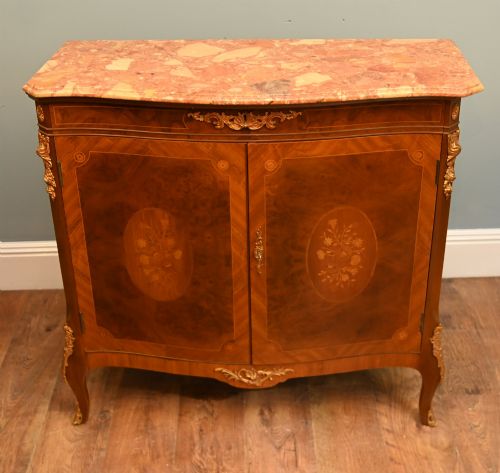
Production spanned British, French, and Italian workshops, each bringing distinct regional characteristics to the furniture. British pieces often align with Arts and Crafts or standard revival traditions, while continental workshops favoured dramatic marble tops and elaborate inlays.
Exotic veneers and local hardwoods were combined according to prevailing European design trends of the period.
How should I care for walnut veneer?
Walnut veneer requires protection from direct sunlight and excessive humidity to prevent fading and veneer lifting. Regular dusting with a soft, dry cloth preserves the polished finish.
Avoid placing items near direct heat sources and apply specialised furniture wax sparingly to maintain the natural moisture and lustre of the timber.