




1920s Vitrine Cabinet
A 1920s vitrine cabinet brings glass and polished timber together to display treasured objects with architectural clarity.
1920s Vitrine Cabinet
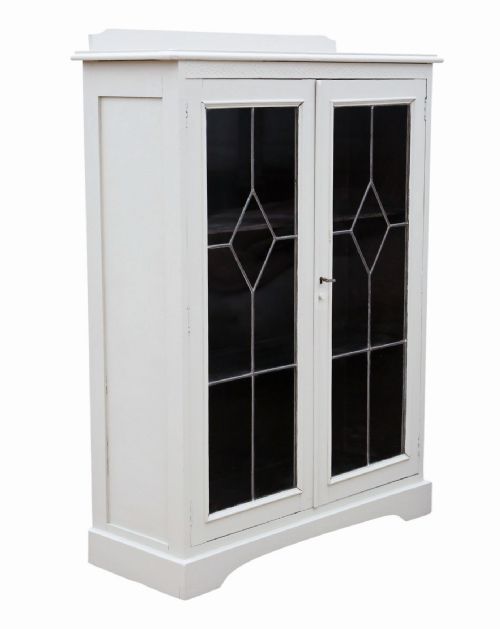
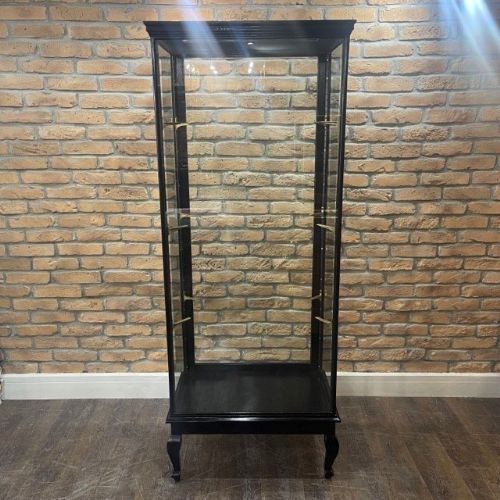
A 1920s vitrine cabinet acts as a dedicated enclosure for display, combining glazed doors or panels with timber or metal frames. These pieces emerge from periods including Edwardian and the 1930s, reflecting both domestic interior trends and commercial shop environments.
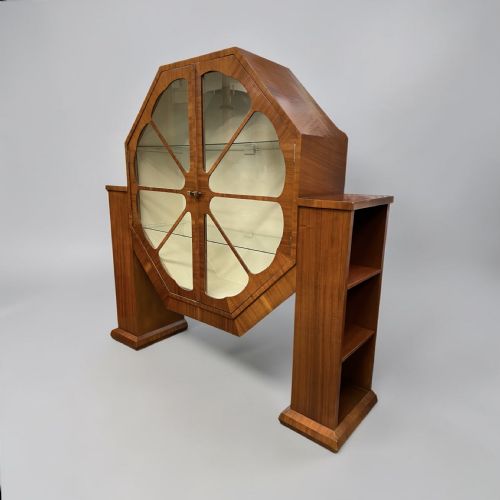
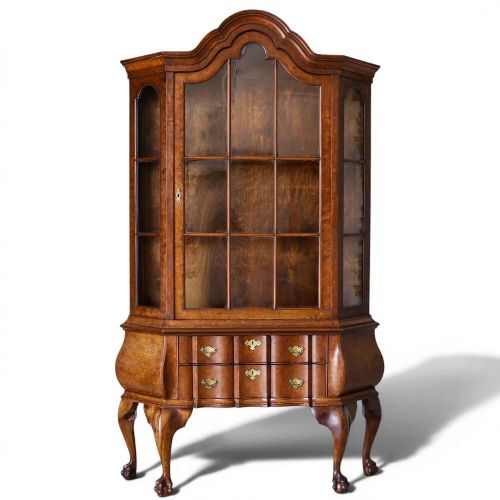
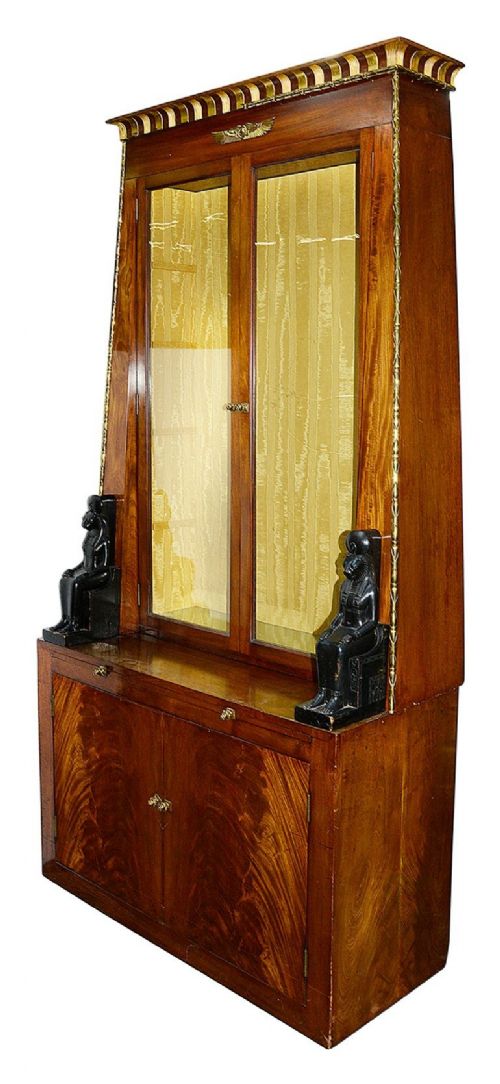
The forms span tall tower cabinets, countertop display cases, pentagonal counters, and large bookcases with glazed upper sections. Walnut, mahogany, and ebonised wood dominate the structural framework, often paired with glass on multiple sides to maximise visibility.
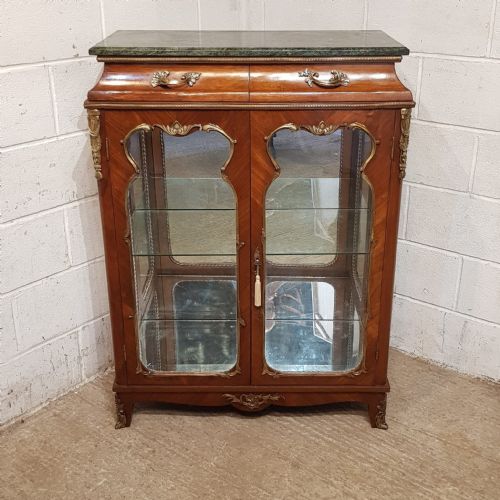
Stylistically, buyers encounter clean geometric lines alongside revivals of earlier aesthetics like Louis XV and Dutch Baroque. Art Deco and Egyptian revival influences also shape the visual language of these display pieces, offering distinct decorative motifs.
How they were made
Construction relies heavily on timbers such as mahogany, walnut, and solid oak, frequently enhanced by walnut veneers or ebonised finishes. Glazing is integrated into doors and sides to enclose the interior while keeping contents fully visible.
Metal components play a structural and decorative role, with brass and gilt metal mountings securing corners, frames, and hardware. Interiors occasionally incorporate velvet or other fabrics to line display surfaces and cushion objects.
Materials recorded across the inventory include mahogany, walnut, ebonised wood, glass, brass, gilt metal, velvet, and fabric.
What varies in quality
The distinction between commercial shop fittings and domestic salon furniture shapes the overall character of these cabinets. Maker involvement, such as pieces produced by established firms, introduces specialised hardware and refined mounting techniques.
The choice of timber and veneer work determines the visual depth of the cabinet, particularly in walnut and ebonised surfaces. Complexity in form, ranging from simple rectangular towers to pentagonal counters and multi-tiered bookcases, dictates the sophistication of the construction.
F. Sage & Co.·Siegel
The 1920s Vitrine Cabinet Glossary
- Bijouterie
- A low display table or case created specifically for small jewellery, trinkets, and personal ornaments. These pieces usually incorporate a glazed top for direct viewing from above.
- Ebonised
- Wood treated with a dark stain or finish to imitate ebony. This technique gained popularity for creating sharp, contrasting outlines in furniture.
- Gilt metal
- Metal coated with a thin layer of gold or a gold-coloured finish. It is often utilised for decorative mounts and framing details.
- Veneer
- A thin layer of figured wood applied over a secondary timber base. This method allows cabinetmakers to utilise rich grain patterns economically.
1920s Vitrine Cabinet: Frequently Asked Questions
What is a 1920s vitrine cabinet used for?
These cabinets serve primarily to display and protect collections of porcelain, glassware, or small ornaments. The glass panels allow items to be viewed clearly while remaining shielded from dust.
Commercial variants were originally built for retail shops to showcase goods, whereas domestic versions housed personal treasures in a drawing room or study.
How do I tell Art Deco from revival styles?
Art Deco examples feature streamlined geometric forms, clean vertical lines, and minimal ornamentation. They embrace the modern design language of the interwar period.
Revival pieces draw inspiration from earlier eras such as Dutch Baroque, Louis XV, or the Edwardian period, incorporating more elaborate curves, carved details, and traditional motifs.
Were these cabinets meant for homes or shops?
The inventory includes both domestic furniture and commercial fittings. Shop display counters, apothecary cases, and tall tower cabinets originated in retail or trade environments.
Domestic bookcase hybrids and salon vitrines were built for private residences, though both types utilise extensive glazing to highlight their contents.
What woods are typical for these cabinets?
Mahogany and walnut are the most common primary timbers, often paired with walnut veneers to create rich surface patterns. Solid oak also appears in larger glazed bookcases.
Ebonised wood is frequently utilised for a dramatic black finish, complemented by brass or gilt metal mountings that accent the structure.