

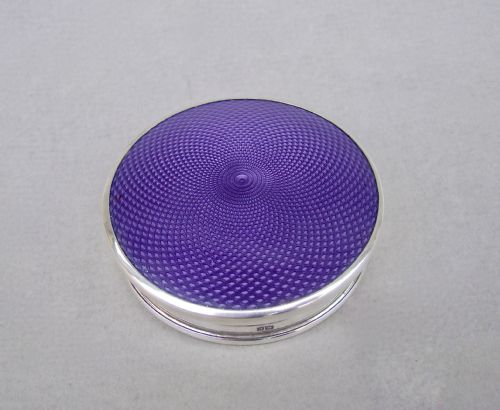


1920s Vanity Box
A 1920s vanity box holds personal treasures and cosmetics, offering a tactile glimpse into dressing table elegance.
1920s Vanity Box
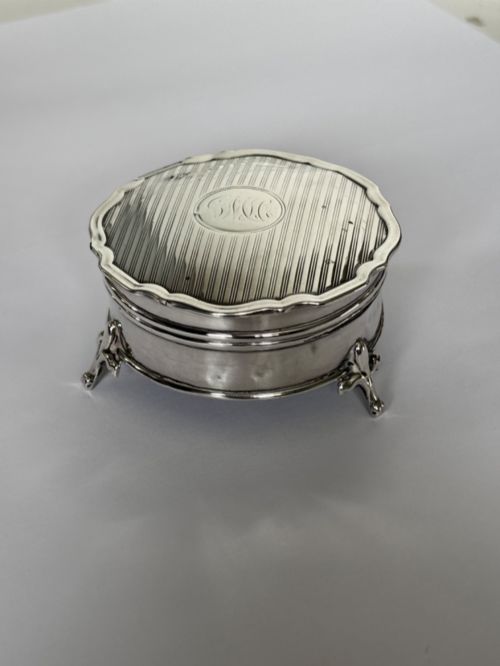
A 1920s vanity box encompasses dressing table jars, powder compacts, trinket boxes, and fitted leather travel cases from the early twentieth century. These pieces reflect the distinct shift towards modern dressing routines and compact accessories during the Art Deco period.
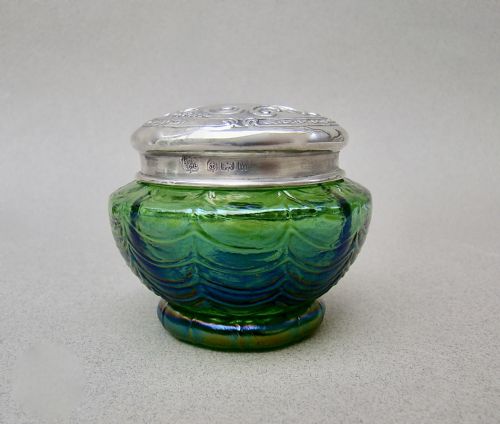
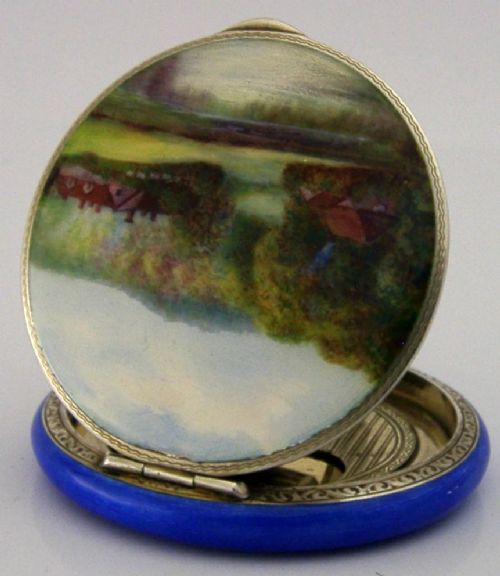
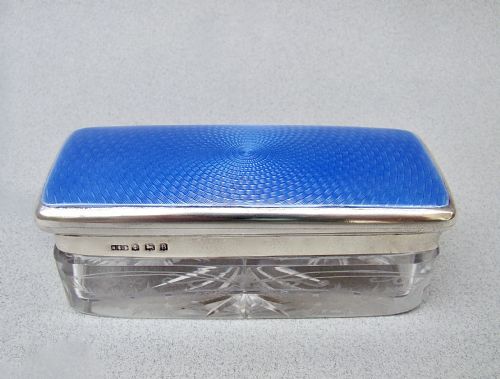
The version most commonly met on this page is the silver-lidded glass jar or enamel compact bearing hallmarks from Birmingham, alongside ceramic flapper girl powder boxes. Makers such as Henry Clifford Davis and Henry Matthews feature frequently in these functional containers.
Beyond small compacts, the selection extends to larger leather picnic cases and gentleman's valet suitcases with fitted interiors. These utilitarian objects demonstrate the era's taste for organised travel and portable luxury.
Evaluating the Pieces
The refinement of the guilloche enamel work and the crispness of the Birmingham silver hallmarks distinguish superior examples. Intact enamel surfaces without chipping elevate a compact or dressing table jar.
The integration of materials, such as the clarity of Kralik glass or the preservation of fitted leather interiors in travel cases, dictates distinction. Pieces retaining original ceramic half-doll figures or undamaged tortoiseshell demonstrate higher preservation.
The selection bridges personal pocket items like pill boxes and powder compacts with larger fitted leather cases for travel.
A. J. Pepper & Co·Henry Clifford Davis·Henry Matthews·The Daniel Manufacturing Co·Richard Hudnut
The 1920s Vanity Box Glossary
- Guilloche enamel
- A decorative technique where an intricate mechanical pattern is engraved beneath a translucent layer of coloured enamel. This method was widely utilised on silver compacts and dressing table jars.
- Hallmark
- An official stamp applied by an assay office, such as the one in Birmingham, indicating the metal standard and year of manufacture. It provides verifiable provenance for silver boxes.
- Kralik glass
- Art glass produced by the Kralik factory in Bohemia, known for striking colour treatments and organic forms. It frequently appears mounted with silver lids.
- Half doll
- A ceramic figurine modelled from the waist up, popular during the early twentieth century as a decorative lid for powder and trinket boxes. They often depict stylised flapper figures.
- Valet suitcase
- A portable leather case designed with fitted compartments for gentlemen's grooming accessories and personal items. These cases reflect early twentieth-century travel habits.
1920s Vanity Box: Frequently Asked Questions
What is a 1920s vanity box?
A 1920s vanity box is a container designed to hold cosmetics, jewellery, or dressing table accessories during the interwar period. These objects range from small silver compacts to fitted leather travel cases.
They reflect the changing fashions and grooming habits of the era, incorporating materials like glass, enamel, and porcelain alongside sterling silver.
How do I date a vanity box?
Dating relies primarily on metal hallmarks stamped onto the silver mounts, which indicate specific assay offices and production years. Birmingham hallmarks are particularly common among these pieces.
Stylistic indicators such as Art Deco geometric lines, flapper girl motifs, and specific maker marks also help narrow the production period to the 1920s or early 1930s.
Were these boxes used for travel?
Some larger examples, such as picnic cases and gentleman's valet suitcases, were built specifically for travel with fitted interiors. Smaller powder compacts and pill boxes were intended for daily personal use and handbags.
Dressing table jars and trinket boxes remained stationary on bedroom surfaces to hold everyday ornaments and powders.
What materials were used?
Makers utilised sterling silver for structural mounts, lids, and compact bodies, often combining it with glass, porcelain, and wood. Coloured enamel, tortoiseshell, and celluloid added decorative contrast.
Leather and ebonised wood formed the basis for larger storage boxes and fitted suitcases, while semi-precious stones appeared on select luxury items.