
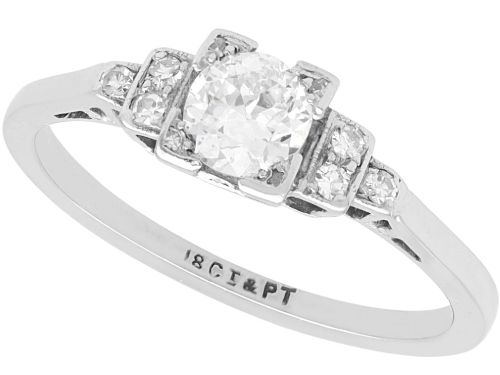
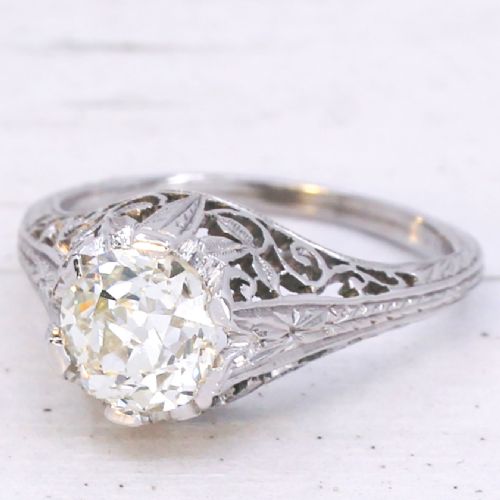
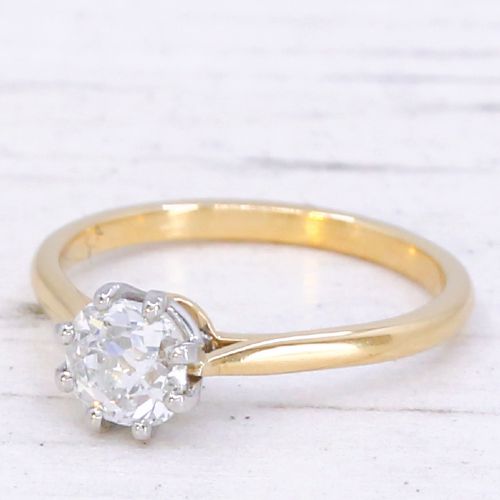


1920s Style Diamond Ring
A 1920s style diamond ring brings geometric clarity and crisp brilliance to the hand, combining period geometry with precious white metals.
1920s Style Diamond Ring
When you examine a 1920s style diamond ring, you encounter jewels shaped by the geometric rigour of the Art Deco movement. These pieces primarily function as engagement rings and dress rings, originating across the 1920s, 1930s and 1940s periods.
The selections available here lean heavily toward cluster and solitaire configurations, frequently incorporating calibré-cut blue sapphires, pink sapphires, emeralds or aquamarines alongside the central stones. French origin pieces also appear, demonstrating the distinctive regional flavour of European benchwork from the era.
Materials and construction methods
Makers of these jewels relied heavily on platinum and 18ct white gold to provide a bright, neutral backdrop that enhanced the icy sparkle of old cut diamonds. Yellow gold appears in select daisy and zircon clusters, offering a warmer contrast to the dominant white metal aesthetic.
Stones are secured within tight settings that emphasise symmetry and linear flow, often utilising millegrain edges to soften the metallic borders. Gemstones such as natural sapphires, emeralds and zircon are integrated directly into the geometric patterns surrounding the primary diamonds.
Several rings squeeze massive high zircons past the diamond weight, proving that past owners loved a dramatic sparkle just as much as we do.
Factors determining quality
Quality in these rings rests upon the precision of the stone cutting and the integrity of the metalwork framing them. Old cut diamonds exhibit hand-cut facets that interact uniquely with candlelight, while calibrated coloured gems display exact matching in tone and saturation.
The refinement of the claw work and the crispness of the geometric arrangement distinguish superior examples from simpler productions. Balance between the central diamond and surrounding cluster stones dictates the overall visual harmony of the piece.
The 1920s Style Diamond Ring Glossary
- Art Deco
- A design style characterised by sleek geometric shapes, stylised motifs and a focus on symmetry. It dominated decorative arts through the 1920s and 1930s.
- Old Cut Diamond
- A diamond cut by hand before modern machinery standardised proportions, featuring a smaller table and larger culet. These stones produce a distinct, softer brilliance under low light.
- Cluster Ring
- A ring design featuring a prominent central stone encircled by a group of smaller gemstones. This layout maximises visual impact and perceived carat weight.
- Millegrain
- A decorative jewellery technique involving a line of tiny beaded metal dots along the edges of settings. It adds a delicate texture and finish to platinum and white gold.
- Trilogy Ring
- A ring set with three stones arranged in a row, traditionally symbolising the past, present and future. They frequently utilise old cut diamonds in these configurations.
1920s Style Diamond Ring: Frequently Asked Questions
How do I wear an old cut diamond daily?
These rings suit everyday wear provided you take sensible precautions with antique settings. Removing the jewel during heavy manual tasks protects the delicate claw work and platinum surfaces.
Store the piece in a fabric-lined box when not on the hand to prevent scratching against other jewellery.
What defines an Art Deco ring?
Art Deco rings rely on straight lines, chevrons, stepped motifs and strict symmetry. They break away from the flowing curves of earlier Edwardian and Victorian designs.
White metals like platinum dominate this aesthetic, often contrasted with calibre-cut sapphires or emeralds.
Are these rings suitable for engagements?
Original period rings serve as popular engagement choices due to their distinct character and enduring durability. Platinum and 18ct white gold provide strong mountings for daily wear.
Buyers often select cluster or solitaire formats specifically for proposal purposes.
How do I identify a French antique ring?
French pieces often carry small control marks or hallmarks stamped on the exterior of the shank or the mounting. These tiny symbols indicate specific metal purities and regional assay offices.
The workshop execution also tends to show particular attention to intricate under-gallery piercing.