
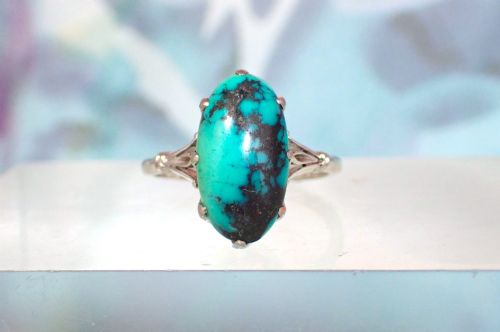


1920s Style Cocktail Ring
A 1920s style cocktail ring brings bold geometric lines and vibrant gemstones to the hand, offering genuine period character for daily wear.
1920s Style Cocktail Ring
A 1920s style cocktail ring centres on striking cluster forms designed to catch the eye across a room. These pieces emerge from the Art Deco period, spanning the nineteen twenties and nineteen thirties.
The selections on this page rely heavily on cluster and marquise formats. You encounter colourful centre stones framed by brilliant diamonds in settings typical of the interwar decades.
Makers of the era prioritized architectural symmetry and high-contrast palettes. Turquoise, sapphire, pink sapphire, emerald, aquamarine, and zircon provide the central colour against white precious metals.
How they were made
Master jewellers constructed these mountings predominantly in platinum and eighteen-carat white gold. These durable white metals allowed artisans to form delicate yet secure settings for tightly clustered stones without visual interference.
Gems were cut to precise geometric proportions, including old cut diamonds and baguette cuts that maximised light reflection. Stones were set closely together to create dense fields of colour and brilliance.
Periods represented across the current selection span the years 1920 through 1930 within the Art Deco style.
What varies in quality
The distinction in quality rests upon the calibre of the central gemstone and the precision of the metalwork. Superior examples combine substantial natural sapphires, emeralds, or high-carat zircons with finely pierced gallery work.
Execution of the geometric motifs defines the upper tier of these jewels. Balance in the stone arrangement and the crispness of the millegrain edge-work separate standard production from exceptional examples.
The 1920s Style Cocktail Ring Glossary
- Cluster ring
- A ring featuring a central gemstone surrounded by a border of smaller stones, typically diamonds. This arrangement maximises visual impact and perceived stone size.
- Art Deco
- A design style dominant in the 1920s and 1930s characterised by sleek geometric shapes, stylised motifs, and modern industrial influences. It rejected Victorian organic curves in favour of symmetry and clean lines.
- Marquise cut
- A boat-shaped gemstone cut with pointed ends and curved sides, designed to maximise carat weight appearance and elongate the finger. It forms a distinctive silhouette in vintage cluster rings.
- Old cut
- A diamond facet style hand-cut before the standardisation of modern brilliant cutting in the early twentieth century. These stones feature smaller tables and larger culets that produce a softer, candlelit sparkle.
- Millegrain
- A decorative technique involving a row of tiny raised metal beads along the edge of a setting. This detail softens the metal boundary and frames the stones with a delicate texture.
1920s Style Cocktail Ring: Frequently Asked Questions
Are these rings comfortable for daily wear?
Many people wear these historic cluster rings daily by taking sensible precautions. The low-profile settings sit comfortably on the hand, though the larger gemstone arrangements require care during manual tasks.
Removing the ring for heavy lifting, swimming, or gardening protects the delicate white gold or platinum claws from unnecessary wear. Regular professional checks ensure the small surrounding stones remain secure in their channels.
How do I identify an authentic Art Deco ring?
Authentic pieces from the 1920s and 1930s display specific construction methods and metal choices. Jewellers of that era relied heavily on platinum and early white gold alloys, paired with hand-cut stones shaped to fit rigid geometric designs.
Examining the underside often reveals intricate pierced gallery work rather than hollow modern casting. Wear patterns on the metal and the soft glow of old cut diamonds further confirm period origin.
What stones are common in these cocktail rings?
Vibrant coloured gemstones dominate this jewellery style, contrasted against colourless diamonds. Natural sapphires, striking zircons, vivid emeralds, and aquamarines serve as central focal points in these clustered designs.
Pink sapphires and turquoise also appear frequently, offering distinct pastel or intense hues. These stones reflect the era's taste for bold chromatic contrast against white precious metal mountings.
How should I clean a vintage gemstone ring?
Gentle cleaning maintains the sparkle of old cut diamonds and coloured gemstones without damaging antique settings. Warm water with mild dish soap and a very soft brush removes accumulated oils from beneath the stones.
Harsh chemical dips and ultrasonic cleaners should be avoided, particularly with treated or softer gems like turquoise and emerald. Pat the piece dry thoroughly with a lint-free cloth after rinsing.