


1920s Display Case
A 1920s display case brings architectural glass and period commercial craftsmanship straight into a modern interior.
1920s Display Case
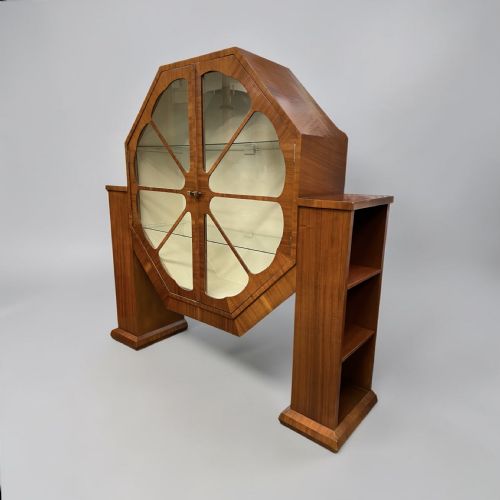
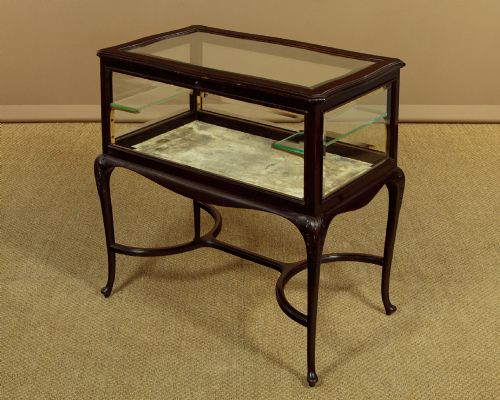
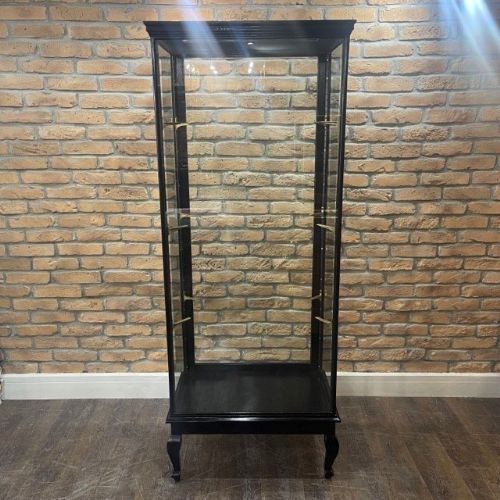
When you search for a 1920s display case, you encounter a specialised selection of shop counters, tall tower cabinets, and countertop bijouterie tables. The pieces span from Edwardian survivals into bold Art Deco designs.
Most examples originate from commercial retail settings, including apothecary counters and large mahogany shop serving units. These functional forms translate readily into domestic spaces for exhibiting collections.
Alongside timber cabinets, the selection includes specialised formats such as pentagonal display counters and glazed table top cases. Each configuration offers distinct viewing angles for small items.
Materials and construction methods
Frames rely heavily on timbers such as mahogany, walnut, and ebonised wood, often paired with structural brass mounts. Glass panels provide maximum visibility from multiple sides.
Interiors frequently feature upholstered surfaces lined in velvet or fabric to cushion delicate objects. Gilt metal detailing appears on select decorative framing.
Commercial joinery prioritises durability, utilising robust glazing bars and secure hardware designed to withstand daily retail traffic.
Current listings feature diverse forms spanning mahogany serving counters, pentagonal display tables, and tall ebonised tower cabinets.
Markers of distinction
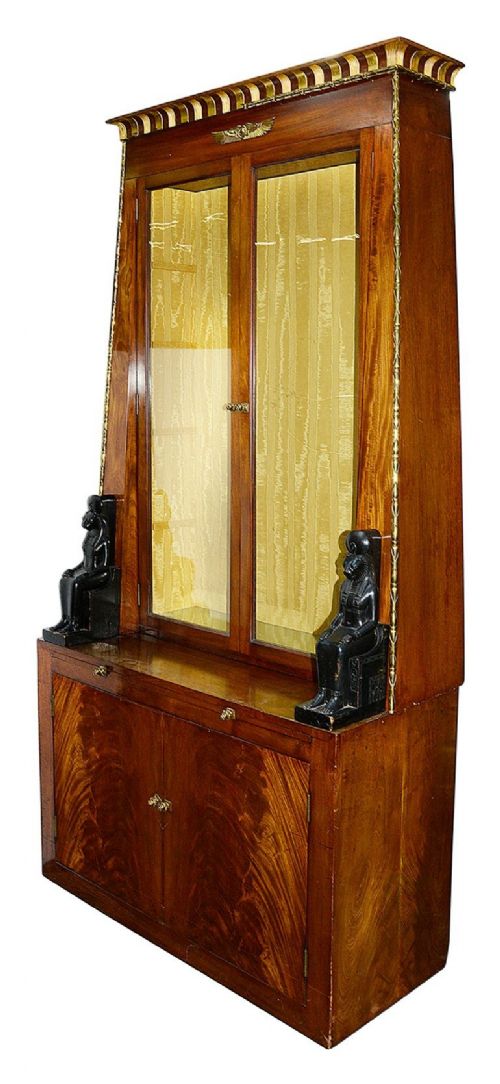
Superior examples distinguish themselves through integrated architectural details such as Egyptian revival motifs or custom brass fittings. The integration of maker signatures provides definitive provenance.
Finer construction is evident in the crispness of ebonised finishes and the weight of the structural framing. Simpler utility pieces offer straightforward functionality with less decorative elaboration.
F. Sage & Co.·W.F. Homer London·Siegel
The 1920s Display Case Glossary
- Bijouterie table
- A glass-topped display table specifically designed for showing jewellery and small valuables. These pieces typically lift open from the top or side.
- Ebonised wood
- Timber treated to resemble heavy, dark ebony wood. This finish creates a sharp contrast against polished brass fittings.
- Tower cabinet
- A tall, vertical display case featuring glass on multiple sides. It maximises display capacity while occupying a minimal floor footprint.
- Apothecary case
- A specialised countertop cabinet originally utilised in pharmacies for medicines and small goods. They feature compact drawer or shelf arrangements.
- Glazing bars
- The wooden or metal strips that hold individual panes of glass in place within the door or frame. Their width and profile contribute to the period aesthetic.
1920s Display Case: Frequently Asked Questions
How do I clean the glass?
Use a standard glass cleaner applied to a soft cloth rather than directly onto the cabinet. This prevents liquid from seeping into vintage wooden frames or brass mounts.
Take care around older putty or glazing bars which can loosen with excessive moisture or pressure.
Can these hold heavy items?
Countertop and table models suit lighter collections like ceramics, silverware, or small curiosities. Floor-standing tower cabinets offer sturdier internal shelving for slightly heavier objects.
Check the internal shelf construction before loading any substantial weight onto older wooden supports.
Are the interiors original?
Many commercial cabinets retain their original fabric or velvet linings, showing appropriate wear from decades of retail use. Some pieces may feature updated textiles where the original fabric deteriorated.
Look closely at the tacking and edges to determine if the lining material dates to the construction period.
How do I identify Art Deco influence?
Art Deco versions often incorporate geometric lines, symmetrical forms, and contrasting ebonised woodwork. Egyptian revival elements occasionally appear alongside these streamlined shapes.
Edwardian survivals tend to feature softer, more traditional classical proportions compared to the sharper 1930s designs.