



1920s Clothes Press
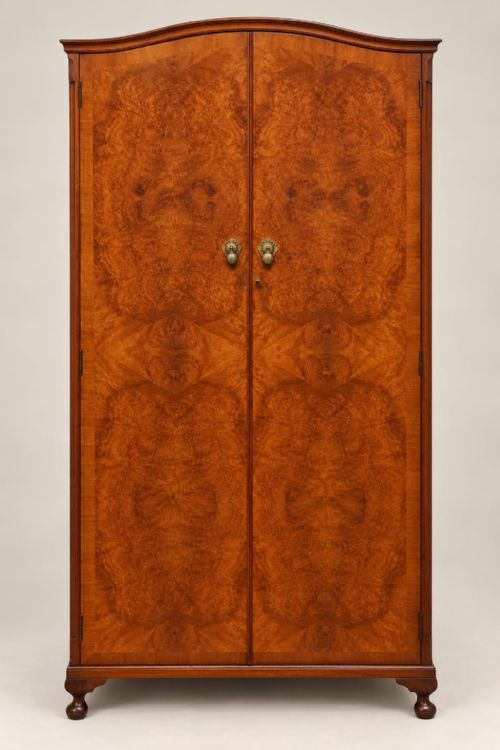
These 1920s clothes press examples bring generous storage and striking grain patterns to the bedroom, combining period practicality with distinctive period character.
1920s Clothes Press
A 1920s clothes press typically takes the form of a wardrobe or compactum, offering substantial storage capacity for garments and linen. These pieces serve as the main hanging and shelving units in period bedrooms.
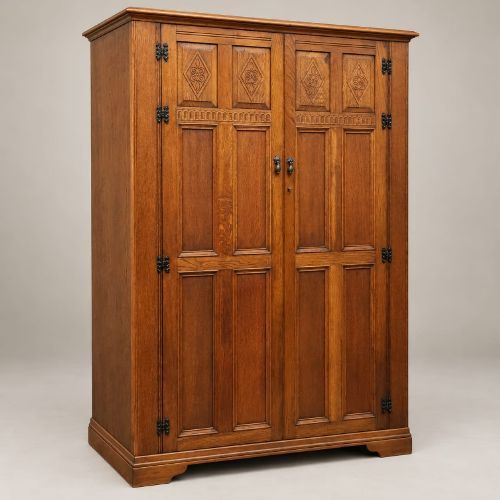
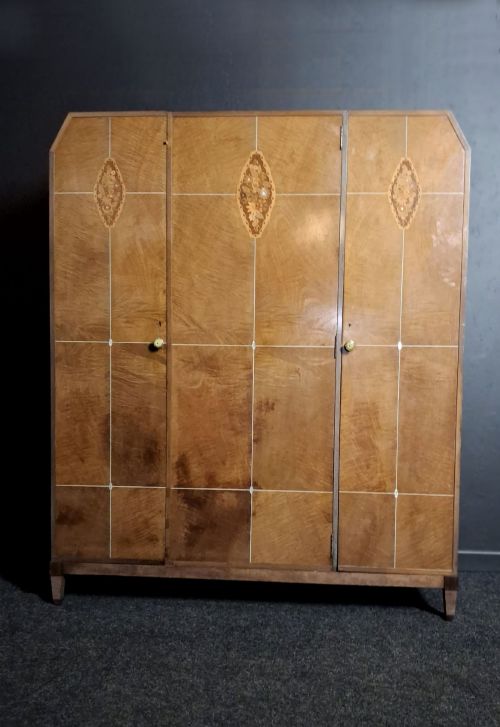
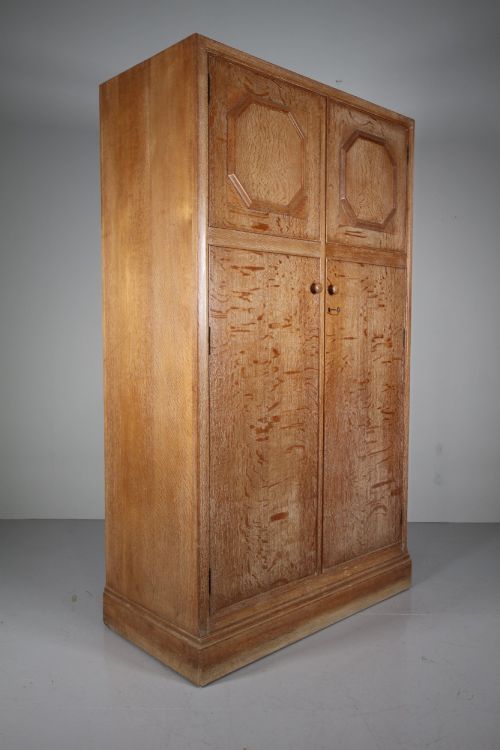
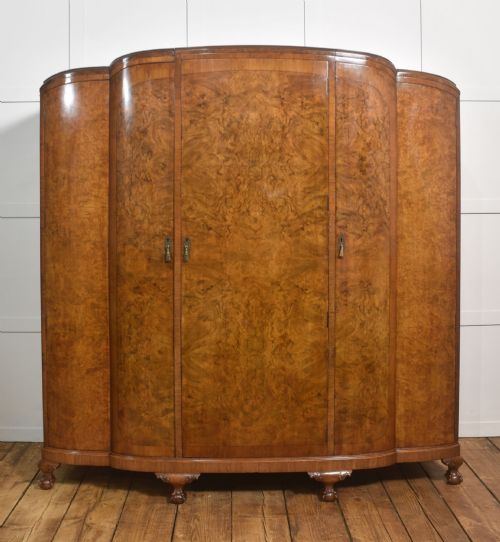
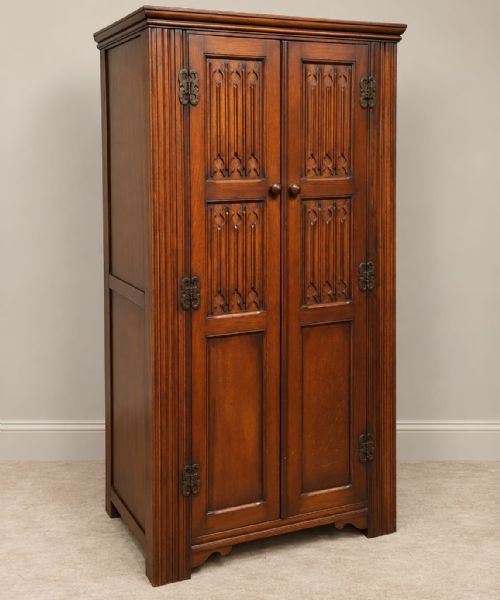
The versions most commonly met on this page span the 1920s and 1930s, alongside examples from the early 1900s. They range from single and double oak designs to expansive triple wardrobes.
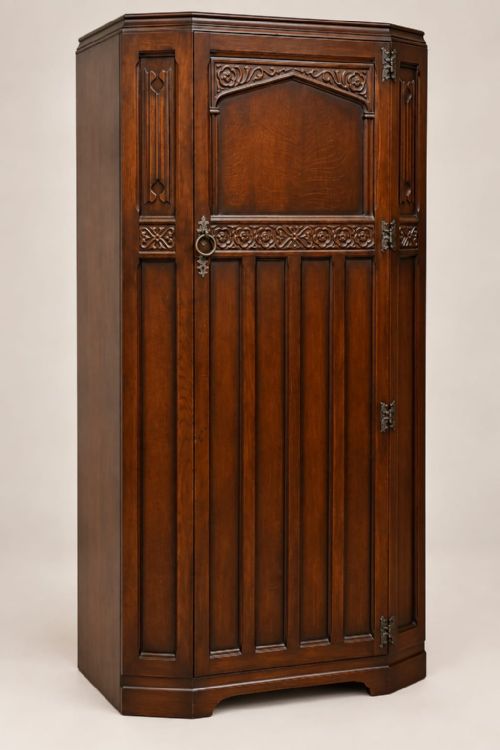
Makers and designers of the era deployed varied styles, incorporating Art Deco lines alongside revivals of earlier aesthetics like Gothic and Jacobean forms. Buyers encounter both plain timber utilitarian cupboards and highly decorated statement pieces.
Materials and construction
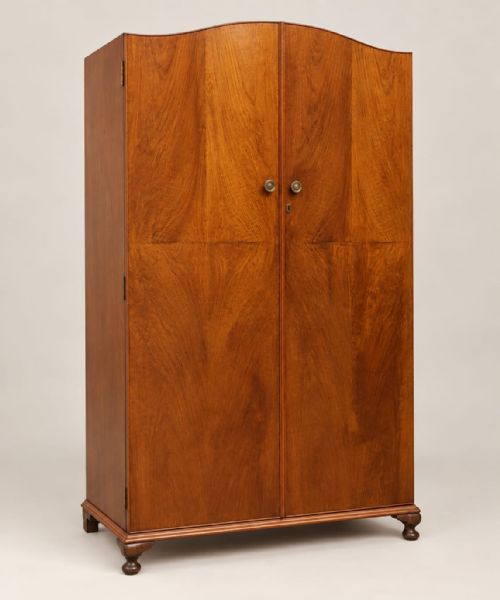
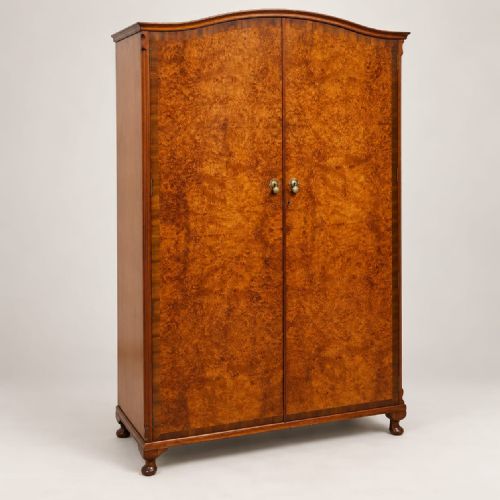
Makers utilised solid timbers such as oak alongside decorative veneers including burr walnut and plain walnut. These wooden surfaces frequently feature applied brass hardware and occasional bakelite details.
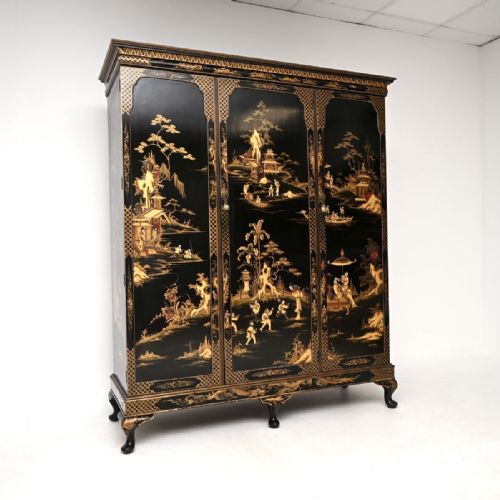
Structural integrity relies on traditional cabinet-making methods, supporting large doors and internal compartments. Lacquer is applied on specific decorative items to achieve smooth, finished surfaces.
1920s Clothes Press Retail Price Guide 2026
Typical asking prices for 1920s clothes press among the pieces listed under this phrase on Sellingantiques today, from the lower quarter to the upper quarter. They describe what is for sale here now, not the wider market.
Several wardrobes hide compartments originally designed for stiff detachable collars and top hats.
Judging quality in a 1920s clothes press
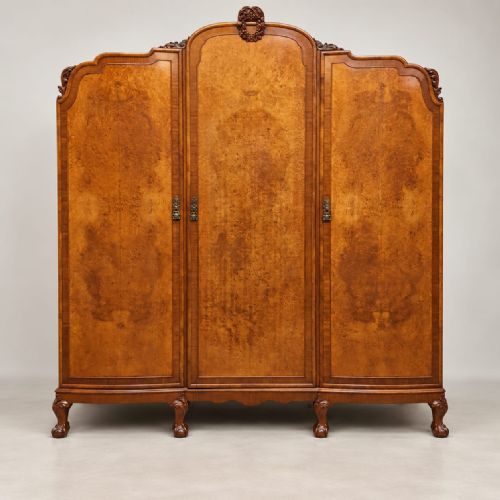
Quality rests heavily on the selection of timber and veneer work, where book-matched burr walnut demonstrates superior visual harmony compared to plain grain. The intricacy of the cabinet-making, from breakfront proportions to fitted internal compartments, elevates finer pieces above standard utility models.
Hardware selection and finishing details mark the distinction between mass production and high-end workshops. Original brass fittings and meticulous lacquer work indicate superior provenance.
Heals Of London·Hille for Harrods
The 1920s Clothes Press Glossary
- Compactum
- A fitted wardrobe combining hanging space, shelves, and internal drawers within a single unit. This design maximises storage efficiency in smaller floor spaces.
- Burr walnut
- A prized timber veneer sourced from the deformed growths of walnut trees. It yields complex, swirling grain patterns highly valued in Art Deco furniture.
- Breakfront
- A cabinet design where the central section projects forward from the flanking wings. This architectural arrangement creates depth and shadow on large wardrobes.
- Chinoiserie
- European decorative style imitating Chinese artistic traditions. It involves hand-painted motifs and lacquered finishes on wooden furniture.
1920s Clothes Press: Frequently Asked Questions
What is a compactum wardrobe?
A compactum is a specialised wardrobe that integrates hanging space, shelving, and internal drawers into one comprehensive storage unit. It was designed to hold a complete gentleman's or lady's wardrobe efficiently.
These pieces often feature clever internal partitioning, making them distinct from standard hanging wardrobes.
How do I identify Art Deco style?
Art Deco furniture relies on clean geometric lines, symmetrical forms, and luxurious veneers like burr walnut. Decoration is typically streamlined rather than heavily carved.
Hardware is often kept minimal or utilises contrasting materials such as bakelite and brass to accentuate the geometry.
Are these wardrobes easy to dismantle?
Many period wardrobes of this scale were built as single large carcasses or heavy modular units. Buyers should check whether a specific piece separates into sections for transport.
Transporting large oak or walnut pieces requires professional removal due to their substantial solid wood construction.
What wood was most popular then?
Oak and walnut dominated production during this period, utilised both as solid timber and as decorative veneers. Burr walnut veneer was particularly favoured for grander bedroom suites.
Secondary woods were often used internally for drawer linings and shelving while the main visible surfaces displayed the prime timber.