



1920s Clothes Armoire
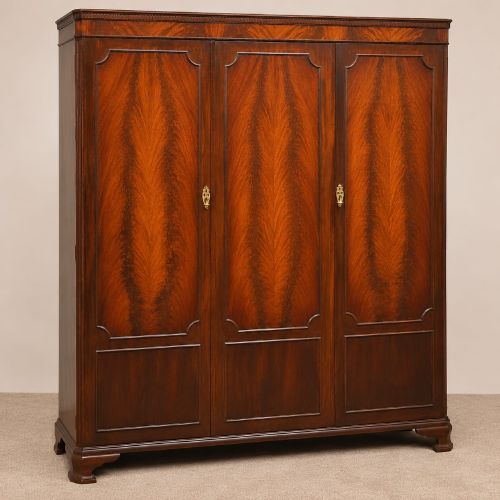
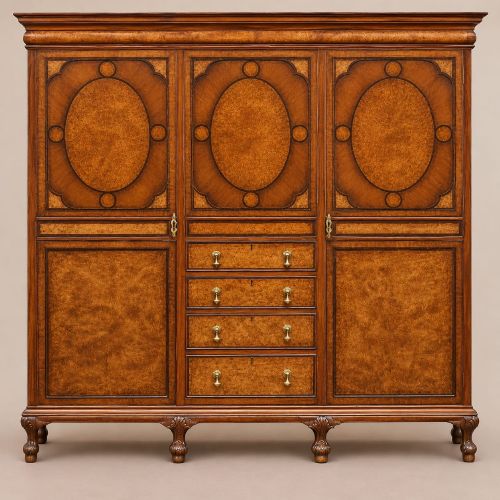
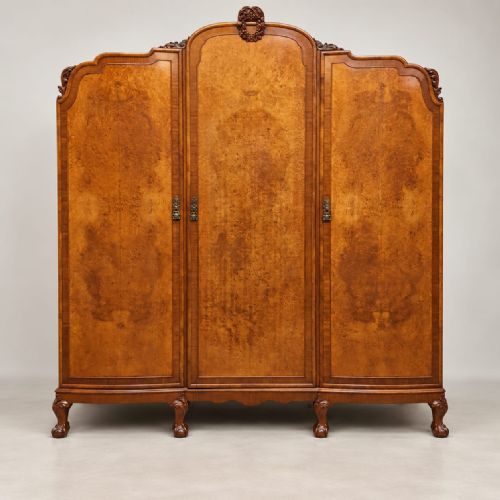
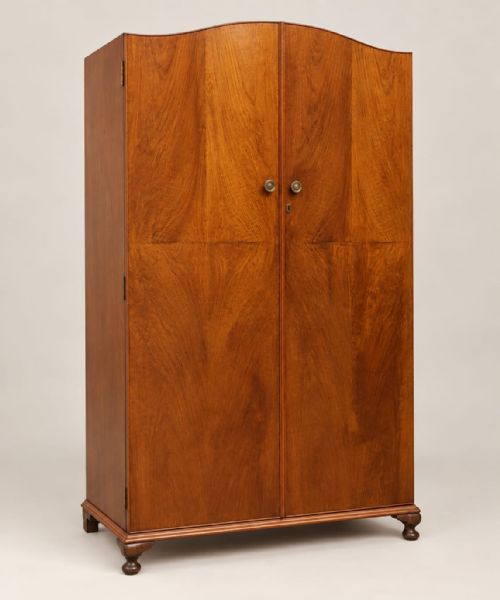
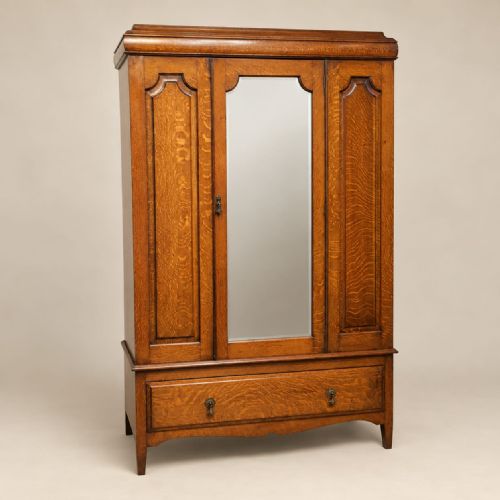
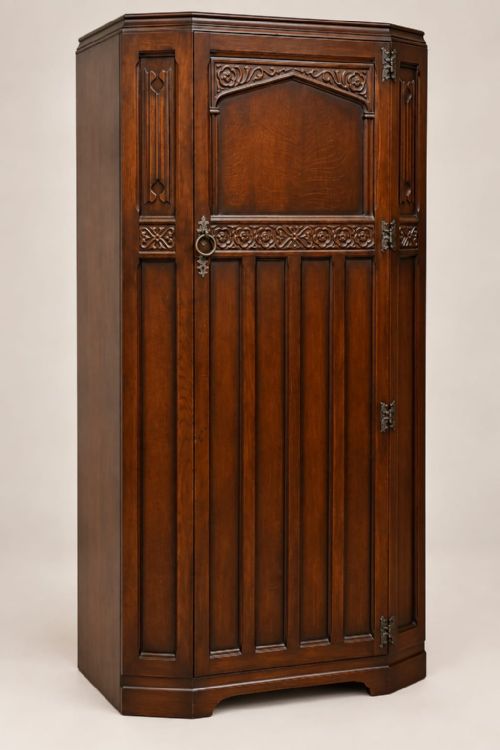
These 1920s clothes armoire pieces bring striking grain and practical scale to a bedroom.
1920s Clothes Armoire
When you search for a 1920s clothes armoire, you encounter substantial bedroom storage designed to hold garments with architectural presence. The pieces listed under this phrase span wardrobes, compactum wardrobes, and full bedroom suites from the early twentieth century.
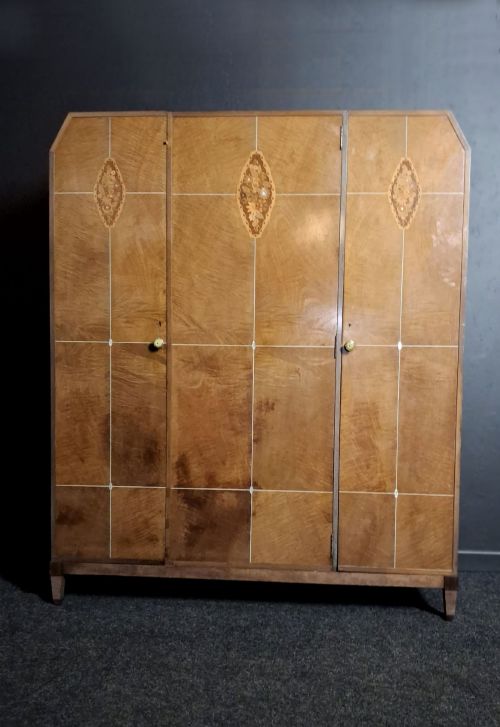
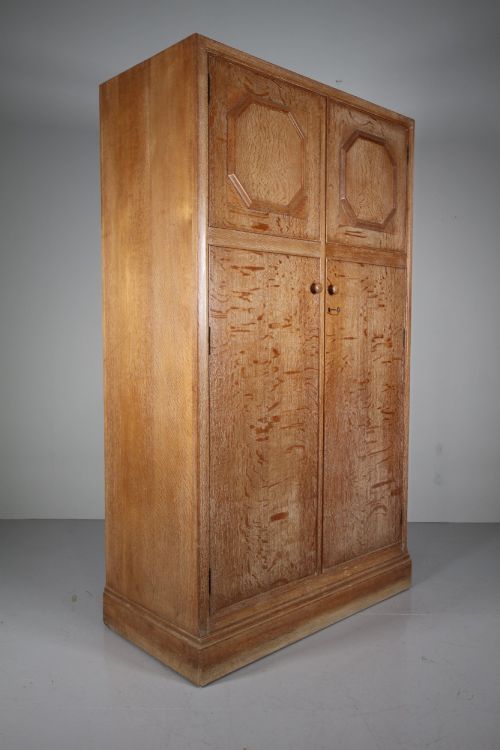
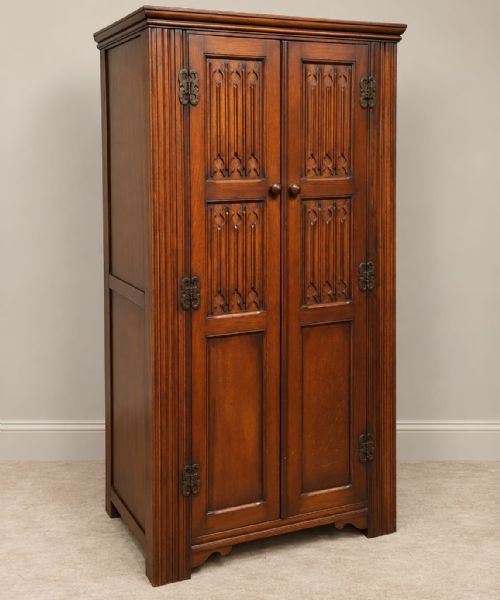
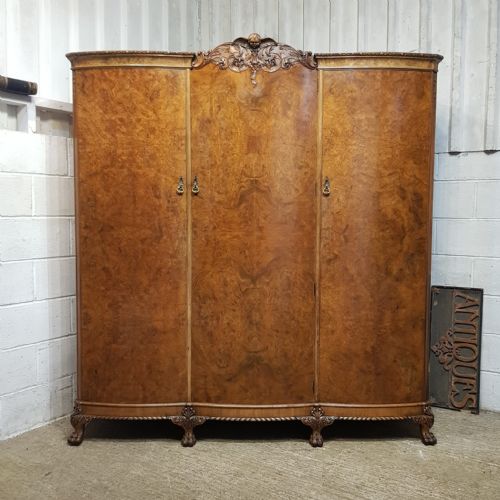
You meet variations ranging from single door oak cupboards to triple wardrobes and serpentine fronted layouts. The predominant forms reflect the cabinet-making standards of the period, executed primarily in oak and burr walnut.
Origins include notable London retailers and workshops from the 1920s and 1930s, alongside pieces showing earlier revivals. Buyers look to these items for genuine period character combined with functional hanging and shelving space.
Materials and construction
Construction relies heavily on solid oak and walnut, often enhanced with burr walnut veneer to create dramatic figuration across large doors. Cabinet makers utilised traditional joinery alongside internal fittings like brass hanging rails and compartmentalised drawers.
Surface finishes include clear polishing to highlight timber grain, lacquered Chinoiserie decoration, and limed oak treatments seen on specific bedroom suites. Iron and brass hardware provide functional contrast to the wooden carcases.
1920s Clothes Armoire Retail Price Guide 2026
Typical asking prices for 1920s clothes armoire among the pieces listed under this phrase on Sellingantiques today, from the lower quarter to the upper quarter. They describe what is for sale here now, not the wider market.
The furniture styles present range from Art Deco and Chinoiserie to Gothic Revival and Queen Anne Revival.
Distinctions in quality
The standard of a 1920s clothes armoire depends on the complexity of its timber selection and the integrity of its internal configuration. Pieces featuring book-matched burr walnut veneer across serpentine or breakfront forms represent a higher tier of design than plain single-door carcases.
Maker attribution and signed cabinet work elevate specific pieces, distinguishing standard regional manufacture from London workshop production. The execution of specialist finishes, such as hand-lacquered Chinoiserie, further separates everyday examples from exceptional commissions.
Heals Of London·Hille for Harrods·Heals·Jean Faure
The 1920s Clothes Armoire Glossary
- Armoire
- A tall cupboard or wardrobe used for storing clothing, typically featuring doors enclosing hanging space or shelves. In this selection, the term encompasses wardrobes and compactum pieces from the early twentieth century.
- Compactum
- A multi-functional wardrobe combining hanging space with internal drawers, trays, and smaller compartments. This form maximises storage efficiency within a single footprint.
- Burr Walnut
- A timber derived from the warted growth on walnut trees, prized for its swirling, highly figured grain pattern. Cabinet makers applied it as a veneer to prominent exterior surfaces.
- Serpentine Front
- A furniture front characterised by a concave central section flanked by two convex curves, or vice versa. This contour requires skilled carpentry to shape timber and veneer accurately.
- Chinoiserie
- European decorative style inspired by Chinese art and design, featuring hand-painted motifs on lacquered surfaces. Examples in this category display this orientalist aesthetic on wardrobe doors.
1920s Clothes Armoire: Frequently Asked Questions
How do I fit modern coat hangers inside?
Many wardrobes from this era feature shallower internal depths than contemporary furniture, requiring narrower hangers or front-facing rails.
Check the internal measurements of the specific armoire before purchase to ensure your garments hang without pressing against the closed doors.
Are these wardrobes easy to dismantle for moving?
Most pieces from this period were built as rigid, single-piece carcases rather than knock-down furniture. They require careful measurement of stairwells and doorways prior to delivery.
Largous triple and breakfront models demand professional removal teams to navigate tight corners safely.
How should I maintain burr walnut veneer?
Keep wooden surfaces away from direct sunlight and steady temperature fluctuations to prevent the veneer from drying or lifting. Apply natural wax polish sparingly to nourish the grain without building up a heavy residue.
Dust regularly with a soft, dry cloth rather than using liquid cleaners.
What is the difference between an armoire and a compactum?
A standard wardrobe focuses primarily on vertical hanging space behind large doors, sometimes with a single drawer beneath. A compactum integrates dedicated banks of internal drawers and shelves alongside the hanging compartments.
This division provides comprehensive storage for folded garments and accessories within one cabinet.