


1920s Ceramic Urns
These 1920s ceramic urns bring vibrant lustre glazes and striking Art Deco forms into a room, offering both bold colour and enduring decorative presence.
1920s Ceramic Urns
When you search for 1920s ceramic urns, you encounter a selection of vases, jardinieres, and decorative vessels spanning earthenware, porcelain, and bone china. The most frequent pieces on this page take the form of handled vases and jars shaped during the 1920s and 1930s, alongside a few Edwardian examples.
These items originate from English potteries, French studios, and Japanese kilns, showing styles ranging from bold Art Deco and Art Deco Chinoiserie to Imari and French Rococo Revival. Makers employ forms such as three-handled jardinieres and miniature cabinet vases alongside larger decorative display pieces.
How they were made
Potters shaped these vessels from earthenware, porcelain, and bone china, applying smooth glazes and lustrous metallic finishes. Artisans built up surface decoration using hand-applied enamel paints and intricate gold leaf detailing.
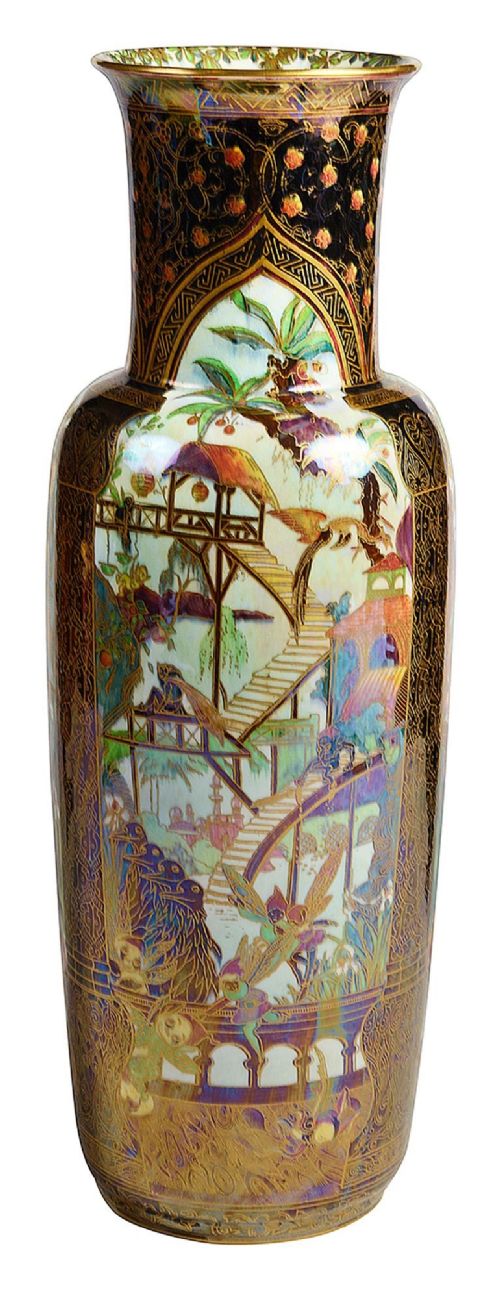
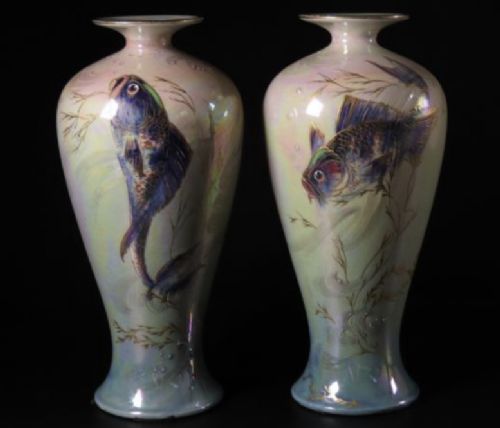
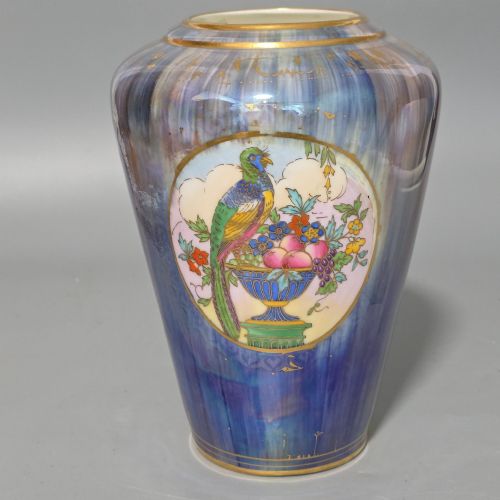
Kiln workers fired the pieces to set complex lustre glazes, which reflect light with iridescent sheen. Painters executed detailed figurative and natural motifs, from fish and parrots to deer and abstract geometric patterns.
Ceramic deer and swimming fish peer out from the glossy glaze of 1920s vessels, bringing miniature wildlife into the drawing room.
What varies in quality
Quality rests upon the crispness of the moulding and the precision of the hand-painted enamel and lustre work. Pieces decorated by named designers or prominent workshops show superior detail in their motifs.
The depth and uniformity of the glaze determine the visual impact of each vessel. Finer examples maintain crisp separation of colours and metals across complex surfaces.
Daisy Makeig-jones·Walter Slater·Robert T Lallement·Carlton Ware·Fielding’s Crown Devon·Royal Doulton·Richard Joyce·Royal Worcester·Mougin·Carter Stabler Adams
The 1920s Ceramic Urns Glossary
- Lustre glaze
- A type of ceramic glaze containing metallic oxides that produce an iridescent sheen upon firing. It catches the light differently depending on the viewing angle.
- Earthenware
- Porous pottery fired at lower temperatures, commonly used for decorative vases and jardinieres. It requires an applied glaze to become impermeable.
- Bone china
- A hard-paste porcelain containing bone ash, known for its bright white body and translucency. It allows for thin-walled vessels with delicate rims.
- Jardiniere
- A large ornamental pot or vase designed to hold plants or flowers. These items often stand on three handles or feet.
1920s Ceramic Urns: Frequently Asked Questions
How do I identify a lustre glaze?
A lustre glaze displays a metallic, rainbow-like iridescence that shifts in colour under changing light. This effect comes from bismuth or silver compounds fired into the surface.
These finishes appear frequently on English and studio pottery from the period, contrasting with plain matte or glossy white glazes.
Where were these pieces made?
The listings include wares from major English potteries, French ceramic artists, and Japanese kilns. English firms dominate the selection with specialised earthenware and bone china.
Continental European and Asian workshops contribute distinct painting techniques and glaze formulas.
How should I display a jardiniere?
Jardinieres function well as standalone decorative centerpieces on tables or pedestals. Their substantial forms allow them to anchor a room visually.
While originally intended to hold potted plants, many collectors exhibit them empty to showcase the painted or glazed exterior.